Leave Your Message
-
Phone
-
E-mail
-
Whatsapp
-
Whatsapp

Precision-manufactured titanium components trusted by semiconductor equipment engineers worldwide.
In modern semiconductor fabrication, the purity and chemical resistance of every material used within the process environment are non-negotiable. Weldable titanium pipe has emerged as a critical enabling material for semiconductor cleaning tools — including wet benches, single-wafer spray systems, chemical mechanical planarization (CMP) rinse stations, and advanced chemical delivery modules.
Unlike standard stainless steel or PVDF piping, weldable titanium pipe offers an exceptional combination of ultra-low metallic contamination, outstanding resistance to the aggressive acids and oxidizers used in semiconductor wet cleaning (such as HF, H₂SO₄, HNO₃, HCl, and SC1/SC2 chemistries), and the structural integrity required for high-pressure, high-purity fluid circuits.
🔬 Key insight: As semiconductor nodes shrink below 3nm, even parts-per-trillion (ppt) levels of metallic contamination from process piping can cause device failure. Weldable titanium pipe addresses this challenge directly, making it the material of choice for leading-edge fabs worldwide.
The term "weldable" refers to titanium alloy or commercially pure titanium tubing that has been specifically processed and certified for orbital or manual TIG welding — ensuring that joints in chemical delivery and cleaning circuits maintain the same purity, corrosion resistance, and mechanical integrity as the base tube itself. This is a critical distinction in semiconductor applications where every weld joint is a potential contamination or leak point.
The scale of titanium's role in semiconductor manufacturing continues to grow rapidly.
The global semiconductor equipment market has been experiencing unprecedented investment cycles, driven by the proliferation of AI chips, advanced memory (HBM, NAND), and next-generation logic devices. Each new fab or fab expansion requires extensive chemical delivery infrastructure — and weldable titanium pipe is at the heart of this infrastructure.
Major semiconductor equipment manufacturers such as ASML, Applied Materials, LAM Research, and Tokyo Electron now specify titanium piping in their wet cleaning and chemical delivery modules. Tier-1 fab operators including TSMC, Samsung, Intel, and Micron have adopted titanium piping standards in their process specifications, driving demand from their equipment supply chains.
From a commercial standpoint, the market for weldable titanium pipe in semiconductor applications is concentrated in East Asia (Taiwan, South Korea, Japan), the United States, and increasingly in Europe and Southeast Asia as new fab construction accelerates under government-backed semiconductor sovereignty programs (CHIPS Act, EU Chips Act, India Semiconductor Mission).
China's Baoji region — the world's largest titanium production hub — plays a pivotal role in supplying semiconductor-grade weldable titanium pipe to global equipment manufacturers. Suppliers from Baoji have invested heavily in vacuum annealing, electropolishing, and cleanroom packaging capabilities to meet the stringent cleanliness requirements of semiconductor customers. This gives buyers access to competitive pricing without compromising on technical performance.
Titanium resists HF, H₂SO₄, HNO₃, HCl, H₂O₂, and SC1/SC2 chemistries that rapidly corrode stainless steel and many polymers, ensuring zero metallic leaching into process fluids.
Electropolished inner surfaces achieve Ra <0.2µm, minimizing particle generation and metallic ion leaching to sub-ppt levels — critical for advanced node yield management.
Grade 2 and Grade 9 titanium tubes are optimized for orbital TIG welding, producing full-penetration, oxide-free welds with consistent mechanical properties throughout the joint.
Titanium's specific strength allows thinner wall designs that reduce system weight and thermal mass — important for mobile wet benches and modular chemical delivery units.
Maintains structural integrity from cryogenic temperatures up to 300°C, supporting both ambient and heated chemical bath applications in wet cleaning tools.
Titanium's passive oxide layer self-repairs in oxidizing environments, extending pipe service life to 15+ years in aggressive fab chemistries, reducing replacement downtime and waste.
Wet benches are the workhorses of semiconductor front-end-of-line (FEOL) cleaning. These systems process silicon wafers through sequential baths of piranha solution (H₂SO₄/H₂O₂), RCA cleans (SC1: NH₄OH/H₂O₂/H₂O; SC2: HCl/H₂O₂/H₂O), and HF dip steps. The chemical delivery manifolds, recirculation loops, and drain lines in these benches demand piping that can withstand continuous exposure to these highly oxidizing and acidic media.
Weldable titanium pipe — typically Grade 2 (commercially pure, ASTM B338) in OD sizes from ¼" to 2" — is the preferred choice for chemical delivery headers and recirculation lines in high-throughput wet benches. The ability to form leak-free orbital welds means that complex manifold assemblies can be fabricated off-tool and installed as modular units, reducing fab installation time and contamination risk.
As wafer sizes have moved to 300mm and now toward 450mm, single-wafer cleaning has become dominant. Systems such as spin-rinse-dryers (SRDs) and single-wafer spray tools require precision chemical injection nozzles and distribution rings. The nozzle bodies and internal fluid pathways in these systems are increasingly fabricated from weldable titanium tubing, particularly for HF-based cleaning sequences where PVDF or PFA alternatives may not provide sufficient mechanical rigidity at elevated temperatures.
CMP is one of the most chemically aggressive steps in wafer fabrication. Post-CMP cleaning modules use brushes, megasonic energy, and dilute chemical sprays to remove slurry residue and particles from polished wafer surfaces. The chemical distribution lines in post-CMP clean tools — especially those handling dilute HF, citric acid, and H₂O₂ mixtures — benefit significantly from titanium piping due to its resistance to mixed acid/oxidizer environments and its compatibility with ultrapure water (UPW) systems.
Hydrofluoric acid (HF) is unique in that it attacks most common piping materials including glass, stainless steel, and many ceramics. While PVDF and PFA are commonly used for HF distribution at room temperature, titanium offers a compelling alternative for heated HF applications (above 60°C) where polymer piping may soften or permeate. Weldable titanium pipe rated for dilute HF service (up to 10% concentration) is used in heated oxide strip and pre-diffusion clean modules.
Semiconductor fab exhaust scrubbers handle a mixture of acid vapors, oxidizers, and fluorinated compounds. The inlet ducting and spray nozzle manifolds in wet scrubbers — which are subjected to condensing acid mists — represent a demanding application for titanium pipe. Weldable titanium tubing used in scrubber inlet sections provides corrosion resistance that dramatically outlasts carbon steel or FRP alternatives, reducing maintenance intervals and unplanned downtime.
Some CMP slurries (particularly those using acidic or alkaline colloidal silica, ceria, or alumina abrasives) are distributed through titanium-lined or solid titanium piping to prevent metallic contamination from the pipe walls into the slurry — which would directly impact polishing uniformity and defect density on the wafer surface.
💡 Pro Tip for Engineers: When specifying weldable titanium pipe for semiconductor cleaning tools, always request electropolished (EP) inner surfaces with a documented surface roughness (Ra) certificate, and ensure the tube material is supplied with a full material test report (MTR) covering chemical composition, mechanical properties, and hardness per ASTM B338 or equivalent. For orbital welding applications, request tube with tight OD and wall thickness tolerances (±0.1mm) to ensure consistent weld joint fit-up.
Professional Titanium Product Supplier for Engineers, Innovators, and Businesses Worldwide.

We started with a simple principle: to resolve the complexities of global titanium product sourcing. We saw that engineers and innovators needed not just a supplier, but a partner who offers reliable materials and eliminates logistical hurdles.
We believe that true success is built on trust and long-term collaboration. Every bolt, tube, rod and plate we deliver carries our commitment to your project's success and our mutual growth.
We connect you to high-quality titanium components through flexible and responsive service, empowering your projects with performance, durability, and innovation.
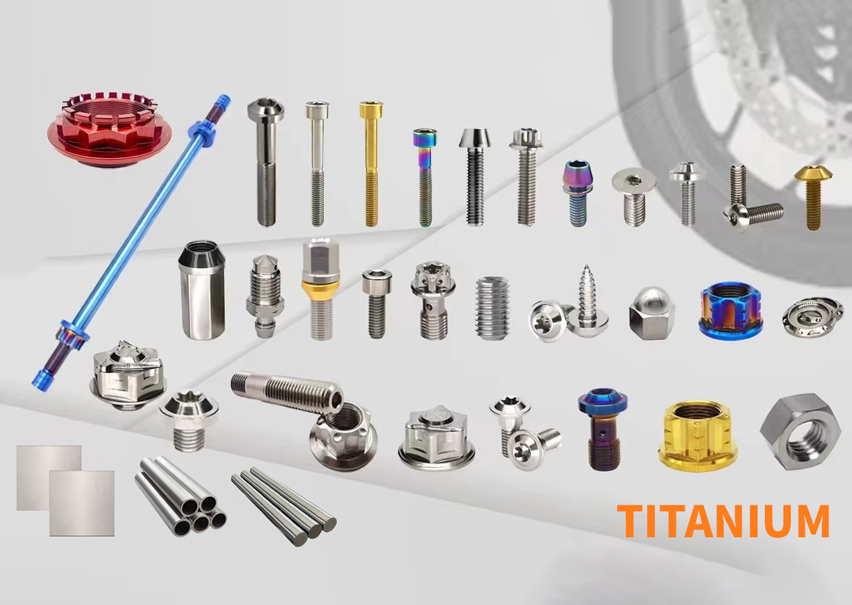
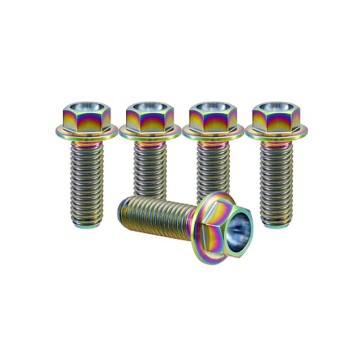
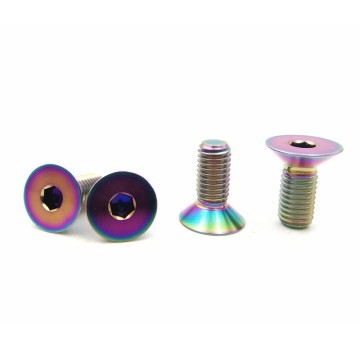
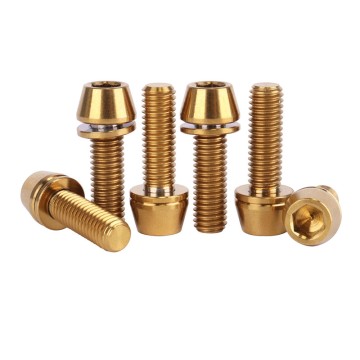
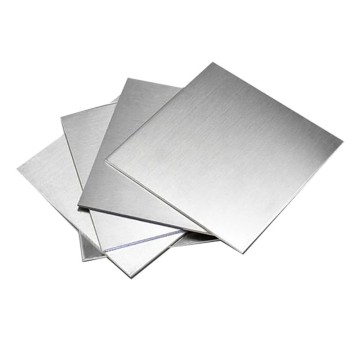
We specialize in titanium fasteners and components that meet the demands of industries worldwide. Our main product lines include:
Note: The above are our major product categories. Customized titanium parts — including weldable titanium pipe for semiconductor cleaning tools — are also available upon request.
Vision: To be the trusted partner for engineers, innovators, and businesses worldwide, delivering high-quality titanium components with flexible support and practical guidance.

We prioritize understanding our clients' needs, providing reliable materials, timely delivery, and flexible solutions.

We build transparent, long-term relationships based on honesty and shared success.

From material sourcing to final delivery, we uphold stringent quality control so you can specify with confidence.

We provide not just products, but practical guidance and innovative ideas to overcome technical hurdles.
Sourcing weldable titanium pipe for semiconductor cleaning tools demands a supplier with both technical depth and supply chain reliability. Here's why engineers choose us.


Choosing the correct weldable titanium pipe grade and specification for your semiconductor cleaning tool application requires consideration of several technical parameters:
Explore our full range of precision titanium components engineered for demanding applications.