Leave Your Message
-
Phone
-
E-mail
-
Whatsapp
-
Whatsapp

Essential hardware for professional performance tuning and fabrication.
For decades, the automotive performance tuning industry has relentlessly pursued the perfect balance between structural rigidity, heat management, and weight reduction. In this high-stakes engineering environment, Weldable Titanium Pipe For Automotive Performance Tuning has emerged as the ultimate material of choice. Historically reserved for elite aerospace applications and top-tier motorsport divisions like Formula 1, titanium has rapidly transitioned into the mainstream performance aftermarket, revolutionizing how custom exhaust systems, intake manifolds, and intercooler pipings are designed and fabricated.
The core appeal of titanium lies in its extraordinary physical properties. Offering a strength-to-weight ratio that eclipses stainless steel and aluminum, titanium allows builders to shave crucial pounds off a vehicle's chassis without sacrificing durability. However, the true game-changer in modern fabrication is the weldability of specific titanium grades. The ability to cut, shape, and flawlessly TIG weld titanium pipes into complex geometries—such as intricate pie-cut exhaust bends—has empowered fabricators to create automotive components that are not only functionally superior but also visually stunning.
Titanium is approximately 45% lighter than steel while maintaining equal or greater tensile strength, drastically reducing unsprung and overall vehicle weight to improve acceleration, braking, and handling.
Capable of withstanding extreme exhaust gas temperatures without warping or degrading, making it the premier choice for turbocharger downpipes, wastegate screamers, and full exhaust systems.
The commercial landscape for weldable titanium pipe has expanded exponentially. As consumer demand for high-end automotive tuning grows, the industrial supply chain has adapted to provide more accessible, high-quality raw materials. The global titanium market has seen a significant shift, with advanced manufacturing hubs streamlining the extraction, refining, and extrusion processes required to produce seamless and welded titanium tubing.
A critical factor in this industrial evolution is the optimization of global sourcing. Baoji, widely recognized as the heart of China's titanium industry, plays a pivotal role in supplying premium-grade titanium to international markets. Facilities in this region leverage state-of-the-art vacuum arc remelting (VAR) furnaces and precision extrusion machinery to produce ASTM B338 and ASTM B861 compliant pipes. This centralization of expertise ensures strict quality control, enabling suppliers to offer competitive pricing without compromising the metallurgical integrity required for high-stress automotive applications.
Furthermore, the industrial status of titanium has shifted from a "boutique" material to a standardized commodity in the performance sector. Workshops and tuning houses now purchase commercially pure (CP) Grade 2 and alloyed Grade 5 titanium pipes in bulk. This economies-of-scale effect has trickled down to the consumer, making full titanium exhaust systems and custom intake tracks a viable option for grassroots drifters, time-attack competitors, and street-car enthusiasts alike.
Professional Titanium Product Supplier for Engineers, Innovators, and Businesses Worldwide.
We connect you to high-quality titanium components through flexible and responsive service, empowering your projects with performance, durability, and innovation. We started with a simple principle: to resolve the complexities of global titanium product sourcing. We saw that engineers and innovators needed not just a supplier, but a partner who offers reliable materials and eliminates logistical hurdles.
We believe that true success is built on trust and long-term collaboration. Every bolt, tube, rod and plate we deliver carries our commitment to your project's success and our mutual growth.

Understanding the nuances of Weldable Titanium Pipe For Automotive Performance Tuning requires a deep dive into metallurgy and fabrication techniques. Not all titanium is created equal. In the automotive tuning world, Commercially Pure (CP) Grade 2 titanium is the gold standard for piping. Grade 2 offers the ideal combination of formability, corrosion resistance, and, most importantly, exceptional weldability. While Grade 5 (Ti-6Al-4V) is stronger and widely used for fasteners and machined parts, its rigidity makes it less suitable for the complex bending and shaping required in exhaust fabrication.
Welding titanium is a highly specialized skill that demands absolute precision and an uncompromisingly clean environment. Titanium is highly reactive at elevated temperatures. When heated above 400°C (752°F), it readily absorbs oxygen, nitrogen, and hydrogen from the atmosphere—a process that leads to embrittlement and catastrophic failure of the weld joint. To combat this, fabricators utilize Gas Tungsten Arc Welding (GTAW/TIG) coupled with rigorous argon gas shielding.
The hallmark of a professional titanium weld is the back-purging process. The interior of the titanium pipe must be completely flooded with 100% pure argon gas to displace any ambient air before the arc is struck. Additionally, a specialized trailing cup is attached to the TIG torch to bathe the cooling weld puddle in argon until it drops below the critical temperature threshold. The visual result of this meticulous process is the iconic "stack of dimes" weld bead, often accompanied by vibrant hues of gold, purple, and blue. While these colors are highly sought after for their aesthetic appeal in show cars, professional fabricators know that a perfectly shielded titanium weld should actually be bright silver, indicating zero atmospheric contamination.
The versatility of weldable titanium pipe has led to its integration across various critical systems within performance vehicles. Let's explore the most prominent application scenarios:
The most iconic use of titanium tubing is in custom exhaust fabrication. Due to titanium's resistance to mandrel bending without specialized tooling, fabricators often use "pie cuts"—slicing straight pipes at slight angles and welding them together to create ultra-tight, sweeping bends. This technique maximizes exhaust flow efficiency, reduces backpressure, and produces a distinct, high-pitched, exotic exhaust note that cannot be replicated by stainless steel.
For turbocharged and supercharged engines, forced induction systems require piping that can handle high boost pressures without expanding or failing. Titanium pipes are increasingly used for cold-side and hot-side intercooler piping. Their low thermal conductivity helps mitigate heat soak in the engine bay, ensuring that denser, cooler air reaches the intake manifold, thereby maximizing horsepower output.
The environment immediately exiting a turbocharger is incredibly hostile, with temperatures frequently exceeding 1000°C. Weldable titanium pipes excel in these conditions. They are used to fabricate downpipes and external wastegate dump tubes (screamer pipes), offering unparalleled thermal stability and rapid heat dissipation, protecting surrounding engine bay components from radiant heat.
Though less common due to cost and stringent racing regulations, high-grade titanium tubing is occasionally utilized in custom strut tower braces, subframe connectors, and specialized roll cage components in unlimited-class time attack cars, where every gram of weight savings is critical to lap times.
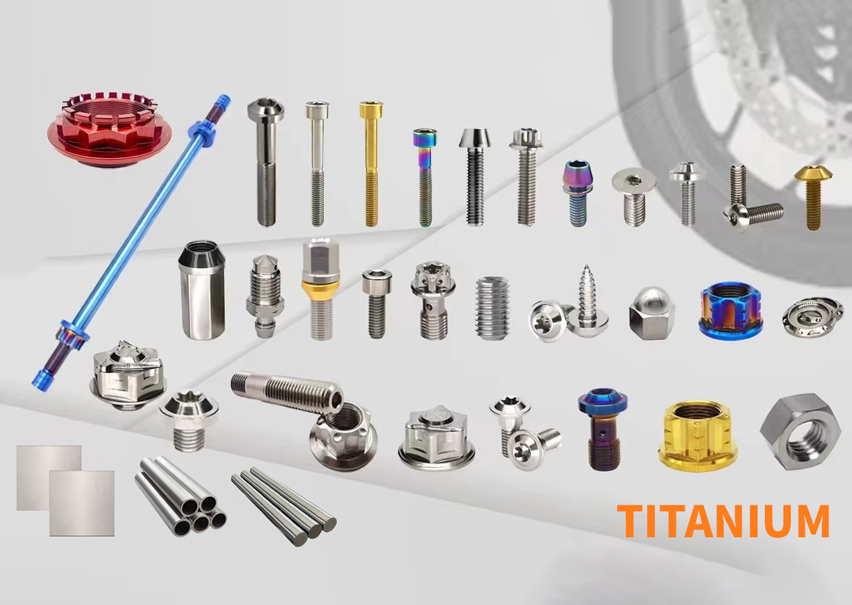
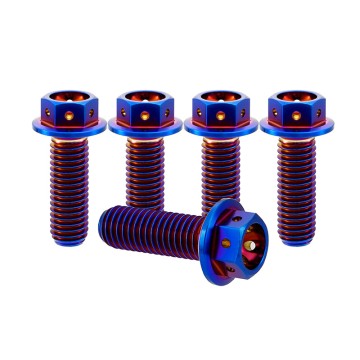
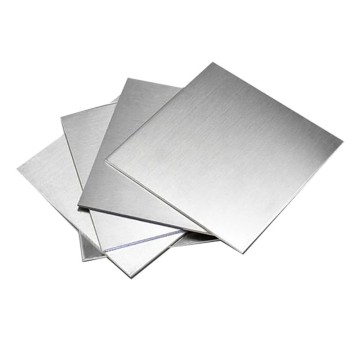
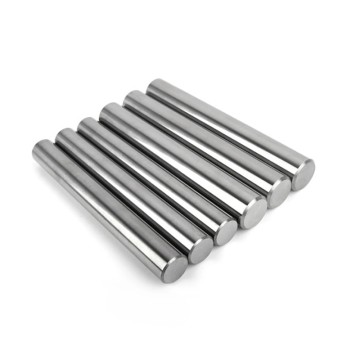
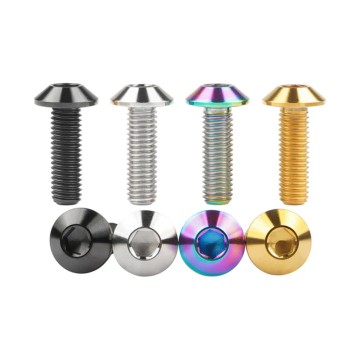
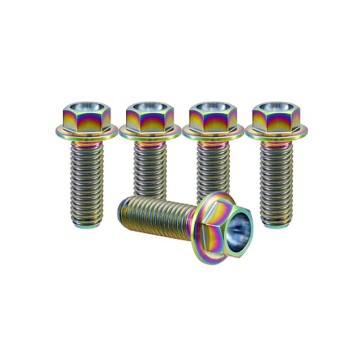
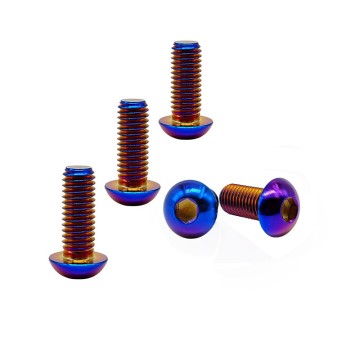
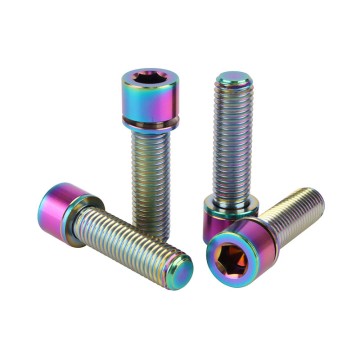
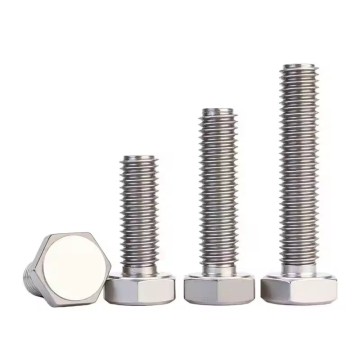
We specialize in titanium fasteners and components that meet the demands of industries worldwide. Our main product lines include:
Note: The above are our major product categories. Customized titanium parts are also available upon request.
Vision: To be the trusted partner for engineers, innovators, and businesses worldwide, delivering high-quality titanium components with flexible support and practical guidance. We understand that successful projects rely not only on materials but also on trust, support, and reliability.

We prioritize understanding our clients’ needs, providing reliable materials, timely delivery, and flexible solutions.

We build transparent, long-term relationships based on honesty and shared success.

From material sourcing to final delivery, we uphold stringent quality control so you can specify with confidence.

We provide not just products, but practical guidance and innovative ideas to overcome technical hurdles.
As we look to the future of automotive performance tuning, the trajectory for weldable titanium pipe is incredibly promising. One of the most significant emerging trends is the integration of hybrid manufacturing processes. Tuning shops are increasingly combining traditional TIG-welded titanium pipes with 3D-printed (Additive Manufacturing) titanium components. Complex merge collectors, turbo flanges, and sensor bungs are being 3D printed from titanium powder and seamlessly welded to extruded titanium pipes. This hybrid approach eliminates the restrictions of traditional machining, allowing for hyper-optimized fluid dynamics within the exhaust and intake tracts.
Another major frontier is the Electric Vehicle (EV) performance market. While EVs lack traditional exhaust systems, they require highly efficient, lightweight battery cooling networks and structural battery armor. Weldable titanium pipes are being researched for use in high-pressure coolant lines for hyper-EVs, where their corrosion resistance and low weight provide a distinct advantage over aluminum and heavy steel.
Finally, advancements in surface treatment technologies are expanding the aesthetic and functional lifespan of titanium. Specialized anodizing processes are being developed to create durable, heat-resistant color profiles on titanium pipes without compromising the material's structural integrity. As manufacturing technologies scale and raw material extraction becomes more efficient, we anticipate a continued decrease in the barrier to entry, allowing the next generation of automotive builders to fully embrace the power of titanium.