Leave Your Message
-
Phone
-
E-mail
-
Whatsapp
-
Whatsapp

Precision-engineered titanium fasteners designed for demanding high-speed rail ventilation environments.
High-speed rail (HSR) systems represent one of the most demanding engineering environments on Earth. Trains traveling at 250–400 km/h generate intense aerodynamic forces, vibration, thermal cycling, and exposure to moisture, salt, and industrial pollutants. Within these systems, ventilation infrastructure — including undercar air ducts, roof-mounted HVAC panels, inter-carriage airflow channels, and equipment bay covers — requires fasteners that can withstand all these stresses simultaneously without adding unnecessary weight.
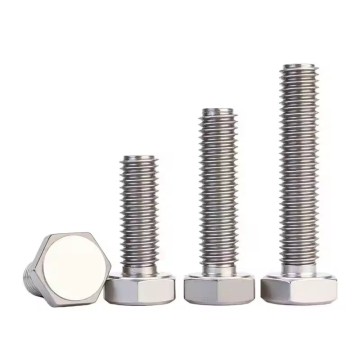
The titanium recessed bolt has emerged as the preferred fastening solution for HSR ventilation assemblies worldwide. Its combination of exceptional strength-to-weight ratio, corrosion immunity, non-magnetic properties, and aerodynamic flush-mount profile addresses every critical requirement that traditional steel or aluminum fasteners fail to meet comprehensively.
A single high-speed rail trainset may contain over 12,000 individual fasteners. Replacing conventional steel bolts with Grade 5 titanium recessed bolts across ventilation panels alone can reduce total fastener weight by up to 43% — a measurable contribution to energy efficiency and operational cost savings over a 30-year service life.
The global high-speed rail market is expanding rapidly. According to industry analysts, the HSR network is projected to grow from approximately 56,000 km today to over 80,000 km by 2030, driven by infrastructure investment in Asia, Europe, and emerging markets in the Middle East and North Africa. This expansion directly translates into surging demand for precision titanium fasteners across all subsystems — and ventilation systems represent one of the highest-consumption categories.
China, which operates the world's largest HSR network, has been a pioneer in adopting titanium fasteners for rail applications. The country's CR400AF and CR400BF Fuxing trains — capable of sustained operation at 350 km/h — use titanium bolts extensively in undercar equipment, pantograph assemblies, and ventilation panel mounting systems. European manufacturers including Alstom, Siemens Mobility, and Bombardier (now Alstom) have similarly standardized titanium fasteners in their Velaro, Avelia, and Zefiro platforms.
The commercial driver is straightforward: while titanium recessed bolts carry a higher upfront cost than stainless steel alternatives, their total cost of ownership over a 30-year operational life is significantly lower. Zero maintenance replacements due to corrosion, reduced unplanned downtime, and weight savings that improve energy efficiency all contribute to a compelling return on investment for rail operators.
From roof systems to undercar assemblies, titanium recessed bolts deliver unmatched performance across every ventilation touchpoint.
High-speed airflow over the train roof creates significant uplift forces on HVAC housings. Titanium recessed bolts with their flush countersunk profile minimize aerodynamic drag while their high fatigue strength (Grade 5: 550 MPa yield) ensures the mounting remains secure through millions of vibration cycles.
The undercar environment combines moisture, ballast impact, and chemical exposure from track treatments. Titanium's natural oxide layer provides self-healing corrosion protection — no coatings required — making it ideal for permanent undercar ventilation duct installations that must last the full service life of the rolling stock.
Traction motor cooling requires ventilation panels mounted adjacent to high-temperature components. Titanium retains its mechanical properties up to 300°C, and its low thermal conductivity (11.4 W/m·K vs. steel's 50 W/m·K) reduces heat transfer into surrounding structures — a critical advantage in motor bay ventilation design.
Rapid maintenance turnaround is essential for HSR operational efficiency. Titanium recessed bolts resist galling and thread seizure even after years of service, allowing maintenance crews to remove and reinstall ventilation panels quickly without damaged fasteners causing costly delays.
Pantograph assemblies require aerodynamic fairings with precisely flush fasteners. Any protruding bolt head at 300+ km/h creates turbulence that increases noise and drag. Titanium recessed bolts provide the necessary flush profile while their non-magnetic properties prevent interference with onboard electronics and signaling systems.
Rail lines passing through coastal regions or long tunnel sections face extreme humidity and salt exposure. Titanium's superior corrosion resistance in chloride environments (far exceeding 316L stainless steel) makes titanium recessed bolts the only practical choice for ventilation systems on these routes without costly periodic replacement programs.
Understanding why titanium recessed bolts outperform alternatives requires examining the specific engineering properties that matter most in high-speed rail ventilation applications.
Grade 5 titanium (Ti-6Al-4V) offers a tensile strength of approximately 950 MPa with a density of just 4.43 g/cm³ — roughly 57% of steel's density. This means a titanium bolt provides comparable clamping force to a steel bolt at 43% less mass. For a ventilation system with hundreds of fastening points, this weight reduction compounds significantly and contributes to overall trainset mass reduction, directly improving energy consumption per passenger-kilometer.
The recessed (countersunk) head design is not merely aesthetic — it is an aerodynamic necessity at HSR speeds. Computational fluid dynamics (CFD) studies have shown that even 2mm bolt head protrusion on ventilation panels can create measurable drag increases and acoustic resonance at speeds above 200 km/h. Titanium's machinability allows for precise countersink angles (typically 82° or 90°) that seat perfectly flush with composite or aluminum panel surfaces.
HSR ventilation panels experience continuous broadband vibration from wheel-rail interaction, aerodynamic excitation, and HVAC operation. Grade 5 titanium has a fatigue limit approximately 50% higher than comparable stainless steel fasteners, and critically, titanium does not exhibit the sharp fatigue threshold drop that affects steel at higher cycle counts — a property that translates directly to longer service intervals and reduced inspection frequency.
Independent testing by European rail certification bodies has demonstrated that Grade 5 titanium recessed bolts maintain over 95% of initial clamp load after 10 million vibration cycles — compared to 78% retention for equivalent stainless steel fasteners under identical conditions.
Modern HSR ventilation structures are predominantly aluminum alloy construction. When steel fasteners contact aluminum in the presence of moisture, galvanic corrosion rapidly degrades both the fastener and the parent material. Titanium's electrochemical potential is compatible with aluminum alloys, eliminating galvanic corrosion risk entirely — a critical advantage that extends the service life of the entire ventilation assembly, not just the bolt itself.
Multiple nations are developing maglev and ultra-high-speed rail systems targeting 400–600 km/h operational speeds. At these velocities, aerodynamic requirements become even more stringent, and titanium recessed bolts with precision-machined flush profiles will be mandatory for all external ventilation components. Japan's SCMaglev and China's 600 km/h maglev prototype programs are already specifying titanium fasteners throughout their ventilation subsystems.
The transition to hydrogen-powered rail introduces new ventilation requirements for fuel cell cooling and hydrogen management systems. Titanium's hydrogen embrittlement resistance (superior to high-strength steels) makes it the preferred fastener material for hydrogen rail ventilation panels, positioning titanium recessed bolts as a growth market as zero-emission rail deployment accelerates globally through 2030.
Emerging Industry 4.0 applications are embedding sensors within fastener heads to monitor clamp load, vibration signatures, and temperature in real time. Titanium's non-magnetic, non-conductive properties make it the ideal substrate material for smart fastener development — enabling predictive maintenance systems that alert operators to ventilation panel loosening before it becomes a safety issue.
3D printing of titanium fasteners using selective laser melting (SLM) is enabling complex internal geometries — including hollow-core recessed bolts that reduce weight by an additional 20–30% while maintaining structural integrity. Rail OEMs are beginning to qualify additively manufactured titanium fasteners for non-critical ventilation applications, signaling a shift toward fully customized fastener solutions for each train platform.

We connect you to high-quality titanium components through flexible and responsive service, empowering your projects with performance, durability, and innovation.
We started with a simple principle: to resolve the complexities of global titanium product sourcing. We saw that engineers and innovators needed not just a supplier, but a partner who offers reliable materials and eliminates logistical hurdles.
We believe that true success is built on trust and long-term collaboration. Every bolt, tube, rod and plate we deliver carries our commitment to your project's success and our mutual growth.
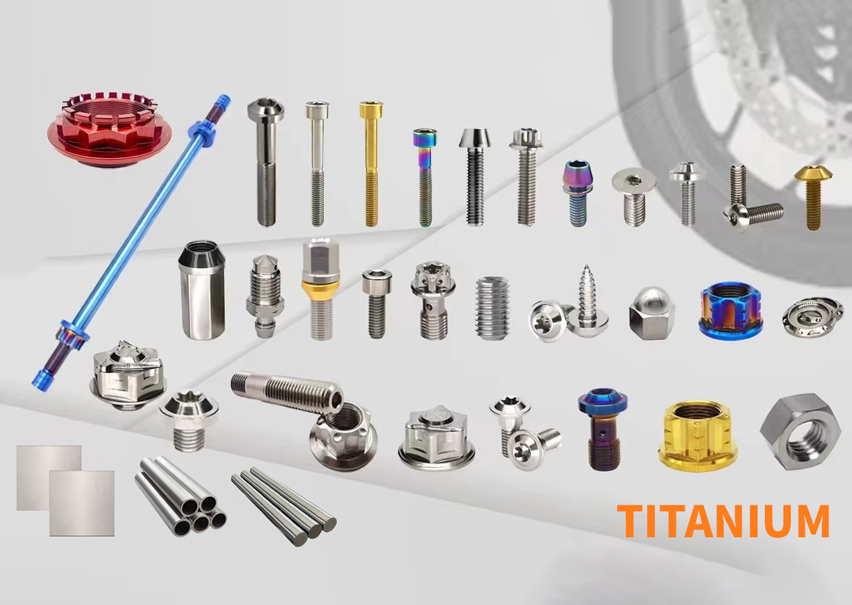
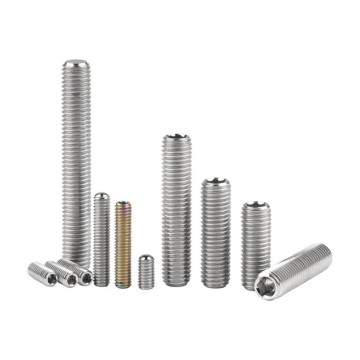
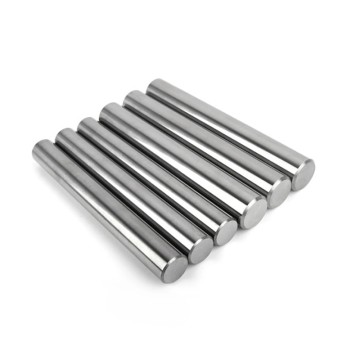
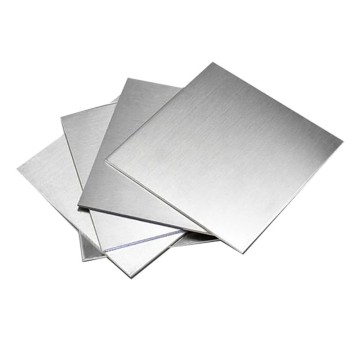
We specialize in titanium fasteners and components that meet the demands of industries worldwide. Our main product lines include:
To be the trusted partner for engineers, innovators, and businesses worldwide, delivering high-quality titanium components with flexible support and practical guidance. We understand that successful projects rely not only on materials but also on trust, support, and reliability. Trusted by engineers and innovators worldwide, we aim to empower every client with high-performance titanium solutions.

We prioritize understanding our clients' needs, providing reliable materials, timely delivery, and flexible solutions.

We build transparent, long-term relationships based on honesty and shared success.

From material sourcing to final delivery, we uphold stringent quality control so you can specify with confidence.

We provide not just products, but practical guidance and innovative ideas to overcome technical hurdles.


Explore our full range of precision titanium fasteners, rods, and sheet materials for every engineering requirement.