
Leave Your Message
-
Phone
-
E-mail
-
Whatsapp
-
Whatsapp

Explore our precision-manufactured titanium fasteners and hardware engineered specifically for high-performance and performance brake system assemblies.
A titanium panel in the context of performance brake systems refers to precision-formed titanium sheet components, mounting brackets, heat shields, caliper backing panels, and structural support members that are integrated directly into high-performance braking assemblies. These panels are engineered from aerospace-grade titanium alloys — predominantly Grade 5 (Ti-6Al-4V) — chosen for their exceptional combination of mechanical strength, thermal resistance, and remarkably low density.
Unlike conventional steel brake hardware, titanium panels offer a 40–45% weight reduction while retaining equivalent or superior structural integrity under repeated thermal cycling, hydraulic pressure, and vibration stress. This weight advantage translates directly into reduced unsprung mass, a critical factor for handling dynamics in motorsport, high-performance automotive, and advanced motorcycle applications.
The global market for advanced titanium components in automotive and motorsport brake systems has witnessed consistent double-digit annual growth over the last decade. As of 2024, the titanium fasteners and panels segment within the performance automotive market is estimated to represent a multi-billion dollar opportunity, driven by the accelerating adoption of lightweight architectures in electric vehicles (EVs), hybrid platforms, and next-generation motorsport regulations.
Regulatory pressure is a significant commercial catalyst. FIA Formula 1, FIA WEC, and MotoGP technical regulations increasingly mandate weight reduction strategies, pushing teams and OEM suppliers toward titanium as a preferred structural material. This motorsport-driven innovation cycle reliably trickles down into premium road car and aftermarket performance segments within 3–5 years of initial deployment.
Performance braking generates extreme thermal loads — brake rotors in motorsport regularly exceed 800°C. Titanium panels function as engineered heat shields that protect adjacent components including brake lines, caliper pistons, wheel bearings, and composite structural members from radiated and conducted heat. The thermal barrier capability of a well-designed titanium shield panel can reduce transmitted heat by 30–50% compared to aluminium alternatives.
Braking events impose highly dynamic mechanical loads on every component in the system. Titanium's modulus of elasticity (~114 GPa) allows panels to flex slightly without permanent deformation, absorbing vibration and shock inputs that would fatigue or crack more brittle materials over time. Grade 5 titanium achieves tensile strength exceeding 900 MPa, enabling thinner panel designs that maintain structural adequacy with reduced material mass.
Brake systems are exposed to salt, moisture, brake fluid, and cleaning chemicals throughout their service life. Titanium forms a stable passive oxide layer instantaneously upon exposure to oxygen, providing Class 1 corrosion resistance that requires no coatings, platings, or ongoing maintenance treatments. This is particularly valuable in motorsport where component inspection cycles are short and reliability is paramount.
In single-seater and GT racing, brake duct channel panels fabricated from 0.5–1.0 mm Grade 5 titanium sheet direct cooling airflow to the disc and caliper while forming part of the aerodynamic underfloor. These panels must survive stone impacts, continuous vibration at frequencies up to 200 Hz, and repeated thermal shock from 20°C ambient to 600°C disc temperatures within seconds of braking. Titanium outperforms carbon-fibre in these high-impact zones due to its ductility and resistance to catastrophic fracture.
Titanium bracket panels for superbike rear brake caliper mounting represent a high-growth aftermarket segment. A precision-machined Grade 5 titanium bracket can save 180–250 grams compared to an OEM steel equivalent per axle. At 180–300 km/h operating speeds, this reduction in unsprung mass directly improves suspension response, tire contact patch stability, and overall braking consistency — measurable improvements that performance riders and racing teams demand.
Electric vehicles present a unique brake system challenge: the regenerative braking system generates localized heat near battery management electronics and power inverters. Titanium panel heat shields positioned between the brake assembly and these sensitive components provide critical thermal isolation. As EV platforms adopt increasingly aggressive regenerative tuning, the role of titanium thermal panels becomes essential for protecting electronics with a lifecycle expectancy exceeding 15 years.
Crane brakes, offshore winch braking systems, and wave energy converters operate in persistently corrosive environments. Stainless steel panels in these applications require costly maintenance and replacement cycles. Titanium Grade 2 and Grade 5 panels deliver decades of maintenance-free performance in seawater splash zones, chlorinated industrial atmospheres, and high-humidity environments — a compelling total cost of ownership argument for industrial procurement.
The evolution of titanium panel technology in brake systems is accelerating across three parallel vectors: materials science, manufacturing process innovation, and systems integration.
In materials science, titanium aluminide (TiAl) intermetallic alloys and titanium metal matrix composites are entering advanced development for next-generation brake panel applications, targeting even lower density and higher service temperatures than conventional Ti-6Al-4V. These materials are currently evaluated in aerospace programs and are anticipated to enter motorsport applications by the late 2020s.
Additive manufacturing (3D printing) of titanium panels via selective laser melting (SLM) and electron beam melting (EBM) allows complex internal lattice structures that are impossible with conventional sheet forming or machining. Topology-optimized lattice brake shield panels have been demonstrated in Formula E programs, achieving 30–40% further mass reduction with equivalent stiffness — a development that will redefine what a "titanium panel" means in the context of performance braking.
On the fasteners side, titanium bolts and screws that secure brake panels are evolving toward surface-treated variants featuring anodized anti-galling coatings, ensuring reliable assembly and disassembly through multiple service cycles without thread seizure — a historically persistent challenge with bare titanium fasteners.
Six fundamental engineering properties that make titanium the material of choice for demanding brake system panel applications.
Grade 5 titanium delivers the same structural performance as steel at 55% of the mass, enabling lighter brake assemblies without compromising safety margins.
Low thermal conductivity (21.9 W/m·K) makes titanium panels the ideal thermal shield between brake heat zones and heat-sensitive brake fluid, seals, and electronics.
Self-forming titanium dioxide passivation layer provides lifelong corrosion protection with no maintenance coatings required — critical for motorsport reliability.
Advanced CNC machining of titanium panels achieves tolerances of ±0.01 mm, enabling complex geometries that integrate seamlessly into precision brake caliper assemblies.
Titanium's fatigue limit (approximately 50% of UTS) significantly outperforms aluminium, maintaining structural integrity across millions of braking cycles.
Titanium components last significantly longer than steel or aluminium equivalents, reducing replacement frequency and total lifecycle environmental impact.
Titanium brake duct panels and heat shields in Formula 1 and GT racing endure 800°C disc temperatures, stone impacts, and 200 Hz vibration — outperforming carbon fibre in high-impact brake zones.
Grade 5 titanium caliper mounting brackets and brake panel hardware save 180–250g per axle on superbikes, improving suspension response and braking consistency at racing speeds.
Titanium thermal panels protect battery management electronics and power inverters from regenerative braking heat — essential for EV platforms with 15+ year lifecycle requirements.
Crane, winch, and offshore energy braking hardware in corrosive environments achieves maintenance-free decades of service with titanium panels — delivering compelling total cost of ownership.
Formula 1 and MotoGP teams establish titanium panels as standard brake duct and heat shield material, driving initial supply chain development for precision titanium brake components.
Ferrari, Porsche, and BMW M incorporate titanium brake hardware into production hypercars and limited editions. Aftermarket performance segment for motorcycle titanium brake kits reaches significant commercial scale.
EV thermal management demands drive titanium panel adoption. SLM-printed topology-optimized titanium brake shields enter Formula E and advanced prototype programs, demonstrating 30–40% additional mass savings.
Next-generation titanium aluminide and metal matrix composite panels are in development for ultra-high-temperature brake applications. Integration of embedded sensors within titanium brake panel structures for real-time condition monitoring represents the frontier of brake system engineering.
We connect you to high-quality titanium components through flexible and responsive service, empowering your projects with performance, durability, and innovation. From performance brake system panels to precision fasteners and structural components, our expertise spans the full spectrum of titanium applications.
We started with a simple principle: to resolve the complexities of global titanium product sourcing. We saw that engineers and innovators needed not just a supplier, but a partner who offers reliable materials and eliminates logistical hurdles.
We believe that true success is built on trust and long-term collaboration. Every bolt, tube, rod and plate we deliver carries our commitment to your project's success and our mutual growth.

We specialize in titanium fasteners and components that meet the demands of industries worldwide. Our main product lines include:
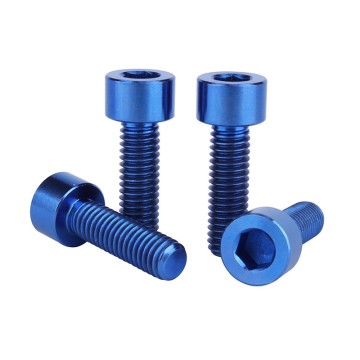
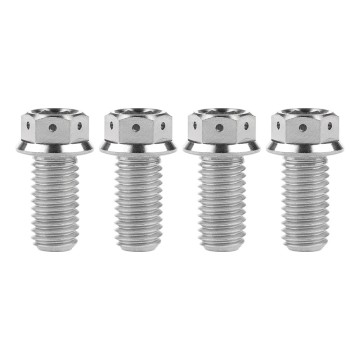
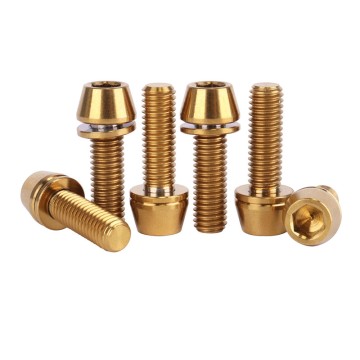
Titanium Fasteners: Bolts, nuts, and washers, commonly in M5–M30 sizes, available in Grades 2, 5, and 7. Widely used in automotive, motorcycles, marine, and industrial equipment.
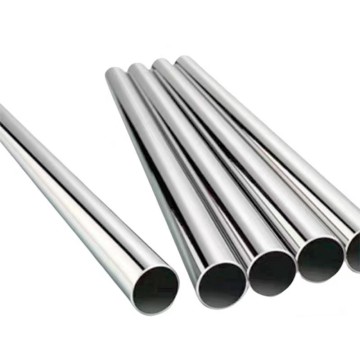
Titanium Tubes & Fittings: Durable and corrosion-resistant, suitable for piping, marine, and chemical applications.
Titanium Rods & Plates: Machined to custom specifications, supporting engineering projects and precision parts.
Note: The above are our major product categories. Customized titanium parts are also available upon request.
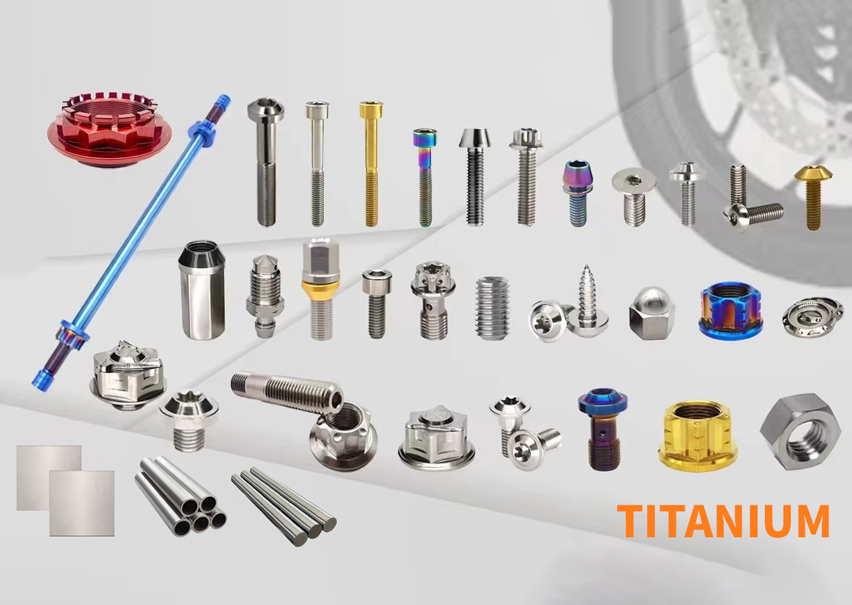
Vision: To be the trusted partner for engineers, innovators, and businesses worldwide, delivering high-quality titanium components with flexible support and practical guidance.
We understand that successful projects rely not only on materials but also on trust, support, and reliability. Trusted by engineers and innovators worldwide, we aim to empower every client with high-performance titanium solutions.

We prioritize understanding our clients' needs, providing reliable materials, timely delivery, and flexible solutions.

We build transparent, long-term relationships based on honesty and shared success.

From material sourcing to final delivery, we uphold stringent quality control so you can specify with confidence.

We provide not just products, but practical guidance and innovative ideas to overcome technical hurdles.
From Baoji — China's titanium capital — to performance brake system projects worldwide.


Browse our full range of precision titanium fasteners and hardware engineered for performance brake systems, motorsport, and high-performance automotive and motorcycle applications.
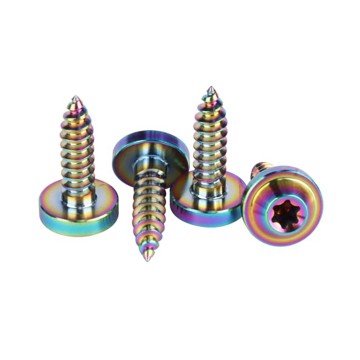
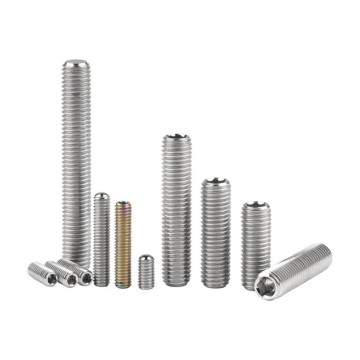
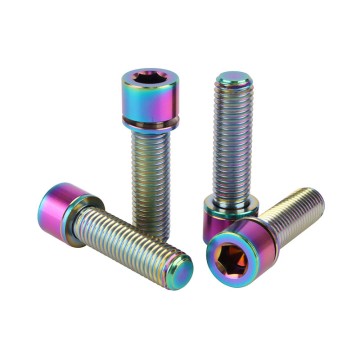
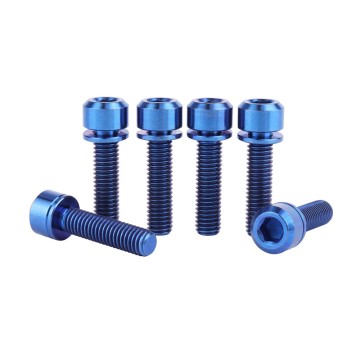
Our engineering team is ready to support your performance brake system project — from material selection to custom panel specifications. Contact us today for a consultation.
Get a Custom Quote →