Leave Your Message
-
Phone
-
E-mail
-
Whatsapp
-
Whatsapp

How commercially pure (CP) and alpha-beta titanium sheets solve complex aerodynamic drag, violent micro-pressure wave cycling, and severe environmental degradation.
In modern high-speed rail (HSR) rolling stock, such as the European Intercity-Express (ICE), French TGV, Japanese Shinkansen, and China Standardized CR400 Fuxing EMUs, thermal regulation and cabin air exchange present unprecedented engineering hurdles. Operating continuously at operational velocities between 250 km/h and 380 km/h, the train's exterior ventilation louvers, rooftop heating, ventilation, and air conditioning (HVAC) plenum enclosures, and undercar cooling duct systems face dynamic aerodynamic shear stresses far beyond conventional transit systems.
Traditionally, railway car builders relied heavily on aluminum alloys (such as AA5083, AA6061, and AA6082) or austenitic stainless steels (AISI 304 and 316L) for HVAC intake grills and interior ductwork. However, operating fleets across extreme geographic corridors—ranging from coastal maritime salt-spray tracks to desert zones subject to sand abrasion, and deep mountain tunnels with repetitive ±6 kPa to ±8 kPa pneumatic pressure shockwaves—has exposed the physical limitations of legacy materials. In response, Grade 1, Grade 2, and Grade 5 titanium metal sheets have rapidly transitioned from aerospace exclusivity into the core design philosophy of high-speed rail ventilation systems.
High-speed tunnel entries generate instantaneous piston-effect shock pulses. Titanium sheets boast an exceptional high-cycle fatigue limit, completely resisting low-cycle plastic deformation and fatigue cracking common in lightweight aluminum louvers.
The spontaneous formation of an ultra-dense titanium dioxide (TiO₂) passivation layer ensures immunity against chloride pitting, acid rain, tunnel exhaust condensation, and industrial soot without requiring toxic anti-corrosion coatings.
Perforated titanium ventilation sheets combined with high structural elasticity (Young's modulus ~105-115 GPa) decouple turbulent aerodynamic boundary layers, drastically reducing in-cabin passenger noise, vibration, and harshness (NVH).
From rooftop air scoops to bogie traction motor cooling, analyze how cold-rolled and CNC-perforated titanium sheets enhance system performance.
The roof of an EMU locomotive experiences complex 3D aerodynamic flow fields. Titanium sheets fabricated via laser cutting and continuous roll forming serve as external flush louvers. Due to their high specific yield strength (up to 880 MPa for Ti-6Al-4V), sheet gauges can be safely reduced to 0.8mm – 1.2mm, shedding over 40% of deadweight compared to stainless steel while sustaining continuous aerodynamic uplift and buffeting.
High-voltage traction transformers and IGBT converter modules located under the car floor generate massive thermal loads requiring continuous forced-air cooling. Intake ducts positioned beneath the chassis are routinely struck by ballast flying stones, ice fragments, and de-icing chemicals. Titanium metal sheet provides outstanding puncture toughness, erosion resistance, and cryogenic ductility down to -50°C in alpine winter rail operations.
Railway safety regulations (such as EN 45545-2 HL3 and NFPA 130) impose the strictest fire, smoke, and toxicity (FST) mandates on passenger carriage ventilation conduits. Titanium has a melting point of approximately 1668°C—vastly superior to aluminum (~660°C). In flashover fire events, titanium sheet ducting prevents structural collapse, blocks flame propagation through HVAC pathways, and emits zero toxic gases or heavy smoke particles.
By employing high-speed micro-hole CNC laser drilling (hole diameters 0.5mm to 1.5mm with 15% to 30% porosity), titanium sheets act as wide-band sound absorption baffles inside the main ventilation plenum. They damp out tonal hums generated by high-power centrifugal blower fans, maintaining cabin noise levels below 65 dBA even at maximum cruising velocity.
Comparative mechanical and physical parameters for high-speed railway ventilation enclosures.
| Material Metric / Parameter | Grade 2 Titanium (CP Ti) | Grade 5 Titanium (Ti-6Al-4V) | Aluminum 6061-T6 | Stainless Steel 316L |
|---|---|---|---|---|
| Density (ρ, g/cm³) | 4.51 | 4.43 | 2.70 | 8.00 |
| Tensile Yield Strength (MPa) | 275 – 350 | 830 – 920 | 276 | 290 |
| Specific Strength (kNm/kg) | 77.6 | 207.6 | 102.2 | 36.2 |
| Melting Point / Fire Threshold (°C) | 1665 | 1668 | 582 – 652 | 1375 – 1400 |
| Corrosion Resistance in Marine / Salt Spray | Immune (TiO&sub2; Passivated) | Immune (TiO&sub2; Passivated) | Moderate (Requires Anodizing) | Pitting susceptible in high Cl¯ |
| Fatigue Limit (Cycles @ ±150 MPa) | > 10&sup7; | > 10&sup8; | < 10&sup6; | ~ 10&sup7; |
| Thermal Expansion (10¯&sup6; / K @ 20–100°C) | 8.6 | 8.6 | 23.2 | 16.0 |

Professional Titanium Product Supplier for Engineers, Innovators, and Businesses Worldwide.
We connect you to high-quality titanium components through flexible and responsive service, empowering your projects with performance, durability, and innovation.
Our comprehensive production and inspection lines ensure that every cold-rolled sheet, perforated panel, and precision torx fastener meets strict ASTM, ASME, DIN, and ISO specifications for the international rail, aerospace, and motorsport industries.
We started with a simple principle: to resolve the complexities of global titanium product sourcing. We saw that engineers and innovators needed not just a supplier, but a partner who offers reliable materials and eliminates logistical hurdles.
We believe that true success is built on trust and long-term collaboration. Every bolt, tube, rod and plate we deliver carries our commitment to your project's success and our mutual growth.
Over the years, we have expanded our machining, cold-heading, vacuum annealing, and multi-axis CNC milling capabilities to serve mission-critical industrial applications, ensuring fast turnaround times for prototypes and scalable volume manufacturing.

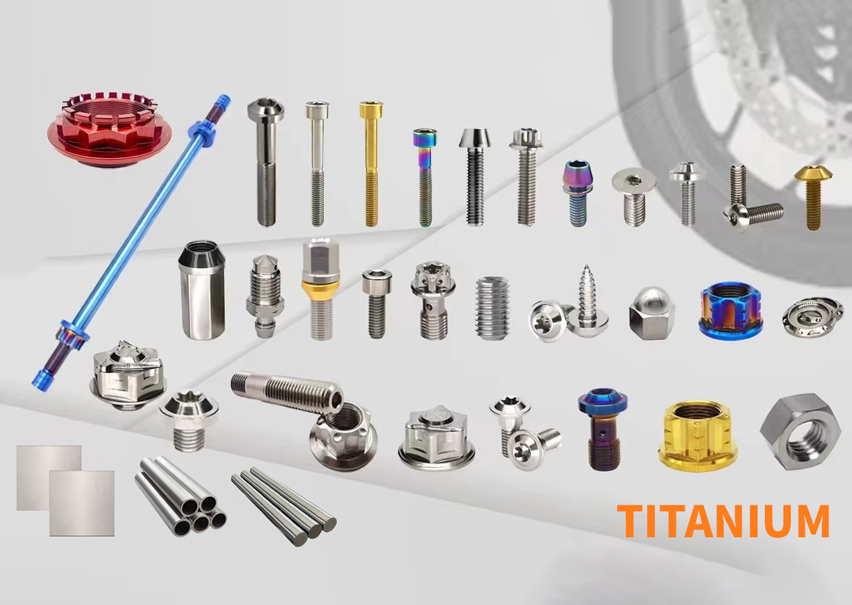
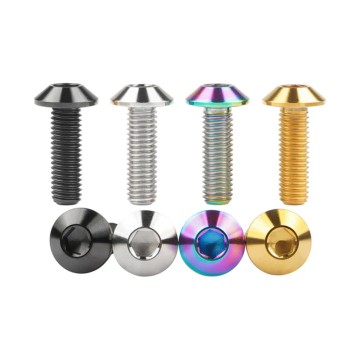
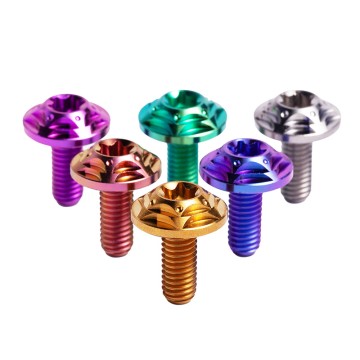
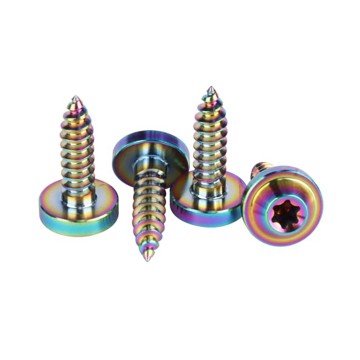
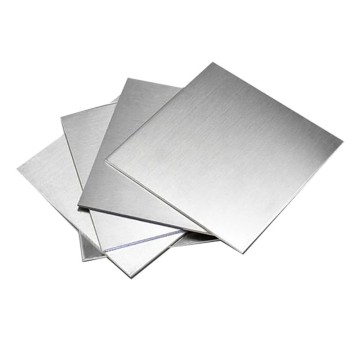
We specialize in titanium fasteners and components that meet the demands of industries worldwide. Our main product lines include:
Note: The above are our major product categories. Customized titanium parts, stamped sheets, and specialized ventilation grilles are also available upon request.
Transforming capital expenditure (CAPEX) into long-term operational profitability (OPEX) over a 30-year rolling stock lifecycle.
In transit economics, structural mass directly dictates traction power consumption and wheel-rail interface wear. By substituting heavy gauge stainless steel louver arrays with precision thin-wall titanium sheet structures (Grade 2 for duct stamping, Grade 5 for load-bearing ventilation structural ribs), a typical 8-car trainset can shed upwards of 320 kg to 580 kg of rooftop and undercarriage tare weight. In a 30-year operational horizon spanning 15 million kilometers, this weight reduction yields significant megawatt-hour energy savings.
Furthermore, life-cycle cost (LCC) models demonstrate that while initial raw material procurement for titanium exceeds that of standard aluminum, the Total Cost of Ownership (TCO) drops dramatically by year 7. Titanium sheets require zero periodic anti-rust painting, zero chemical stripping, zero protective film re-application, and zero replacement due to chloride or industrial sulfur corrosion. When trainsets undergo mid-life overhauls (C4 and C5 maintenance levels), titanium ventilation ducting exhibits negligible wall-thinning and zero stress-corrosion micro-cracks, delivering 100% recyclability at end-of-life.
Fabricating ventilation sheets for high-speed rail requires tight geometrical tolerances (under ±0.1mm) to preserve streamlined aerodynamic boundary layer profiles. Our Baoji processing hub employs state-of-the-art manufacturing techniques:
Every batch of titanium sheet and fastening hardware is validated under rigorous non-destructive and destructive testing routines:
Vision: To be the trusted partner for engineers, innovators, and businesses worldwide, delivering high-quality titanium components with flexible support and practical guidance.
We understand that successful projects rely not only on materials but also on trust, support, and reliability. Trusted by engineers and innovators worldwide, we aim to empower every client with high-performance titanium solutions.

We prioritize understanding our clients’ needs, providing reliable materials, timely delivery, and flexible solutions.

We build transparent, long-term relationships based on honesty and shared success.

From material sourcing to final delivery, we uphold stringent quality control so you can specify with confidence.

We provide not just products, but practical guidance and innovative ideas to overcome technical hurdles.
Delivering uncompromised quality, direct mill pricing, and end-to-end technical engineering support from China's premier Titanium Valley.