Leave Your Message
-
Phone
-
E-mail
-
Whatsapp
-
Whatsapp

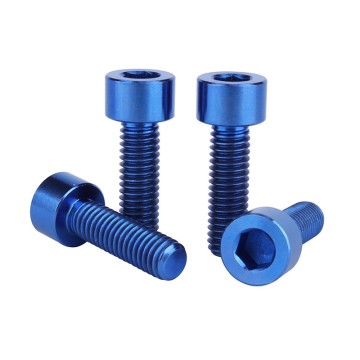
In the highly exacting world of semiconductor manufacturing, the cleaning process is arguably the most repeated and critical step. As fabrication nodes shrink below 5nm and push towards 2nm architectures, the tolerance for particulate contamination and metallic impurities approaches zero. It is within this ultra-strict environment that the Titanium Hex Cap Screw has emerged as a non-negotiable component for constructing and maintaining Semiconductor Cleaning Tools.
Wafer cleaning equipment, including automated wet benches and single-wafer spin processors, operates using some of the most aggressive chemicals known to industry. Standard solutions like the RCA clean (SC-1 and SC-2), Piranha etch (sulfuric acid and hydrogen peroxide), and dilute hydrofluoric acid (DHF) are routinely deployed to strip organics, remove native oxides, and eliminate trace metals from silicon wafers. Traditional stainless steel fasteners, even high-grade 316L, are susceptible to microscopic pitting, corrosion, and subsequent particle shedding when exposed to these harsh environments over time.
Titanium, specifically Grade 2 (commercially pure) and Grade 5 (Ti-6Al-4V), offers an extraordinary defense mechanism: a naturally occurring, instantly regenerating titanium dioxide (TiO2) passive film. This microscopic layer renders the Titanium Hex Cap Screw virtually immune to the corrosive effects of highly concentrated acids and bases used in semiconductor wet processes.
Furthermore, the hex cap design provides superior torque transfer and structural integrity. In automated cleaning tools where vibration from megasonic transducers and high-speed spin chucks is constant, the robust clamping force of a titanium hex cap screw ensures that fluid delivery manifolds, process chamber housings, and wafer handling robotics remain perfectly aligned without the risk of fastener degradation or galling.
Historically, the semiconductor industry relied heavily on specialized plastics (like PFA, PTFE) and coated metals for wet tool construction. However, plastics lack the mechanical strength required for high-pressure fluid delivery systems and heavy structural framing, while coated metals carry the risk of flaking—a catastrophic failure in a cleanroom environment. This gap has catalyzed a massive commercial shift towards solid titanium components.
Today, the demand for Titanium Hex Cap Screws tailored for semiconductor cleaning tools is growing at a double-digit CAGR. Original Equipment Manufacturers (OEMs) in regions like Silicon Valley, Japan, and the Netherlands are enforcing stringent Bill of Materials (BOM) requirements that mandate the use of ultra-high-purity titanium fasteners for any structural joint exposed to the chemical vapor environment.
The global supply chain for these specialized fasteners is highly concentrated. Producing a Titanium Hex Cap Screw that meets semiconductor standards is not merely about machining metal; it involves rigorous material sourcing to ensure low trace element content, precision CNC machining to prevent micro-burrs (which could trap contaminants), and advanced surface treatments such as electropolishing or specialized anodizing to eliminate outgassing.
This stringent requirement highlights the importance of partnering with established titanium hubs. Suppliers who can vertically integrate their processes—from raw titanium sponge refinement to the final threading of the hex cap screw—are dominating the market. They provide the necessary traceability, metallurgical certifications (such as EN 10204 3.1), and the scalability required to meet the volatile demands of global semiconductor fab expansions.
To truly appreciate the value of the Titanium Hex Cap Screw, we must examine its specific applications within the architecture of modern semiconductor cleaning equipment. These tools are complex mechatronic systems where fluid dynamics, robotics, and acoustics intersect.
Wet benches are the workhorses of batch wafer processing. They consist of multiple chemical baths where cassettes of wafers are sequentially submerged. Titanium Hex Cap Screws are extensively used to assemble the structural framework above the chemical baths, secure the exhaust plenums, and mount the robotic transfer hoists. Because these fasteners are constantly exposed to chemical fumes (like vaporized HF and ammonia), their absolute resistance to environmental stress cracking is vital for factory safety and yield preservation.
For advanced nodes, single-wafer cleaning is preferred to prevent cross-contamination. In these tools, a wafer is spun at high speeds while chemicals are dispensed onto its surface. Titanium hex cap screws are utilized to secure the spin motor housings, chemical dispense arms, and the splash guards. The high tensile strength of Grade 5 titanium ensures that the high-frequency vibrations generated by the spinning chuck do not loosen the fasteners, maintaining the sub-micron precision required for fluid dispensing.
Megasonic cleaning uses high-frequency acoustic waves to dislodge nano-scale particles from the wafer surface without damaging delicate transistor structures. The transducer arrays that generate these waves must be rigidly mounted to the process tank. Titanium Hex Cap Screws are the ideal choice here because titanium's acoustic impedance and mechanical rigidity ensure maximum energy transfer while preventing the galvanic corrosion that would occur if dissimilar metals were used in the conductive chemical bath.
As the semiconductor industry marches towards the Angstrom era, the evolution of equipment components must keep pace. The future of Titanium Hex Cap Screws in this sector is being shaped by several cutting-edge trends.
1. AI-Driven Manufacturing and Quality Control: The production of these fasteners is increasingly integrating Artificial Intelligence. Machine vision systems powered by AI are now used to inspect the thread profiles and surface finish of every single titanium screw, ensuring absolute zero-defect rates. Predictive maintenance algorithms in fabs also rely on the consistent mechanical properties of these fasteners to calculate the lifecycle of cleaning tool modules.
2. Advanced Surface Passivation: While titanium is naturally corrosion-resistant, future applications require even lower particulate generation. We are seeing trends towards advanced vacuum baking and specialized anodic oxidation processes that create a thicker, denser TiO2 layer on the hex cap screws, drastically reducing the potential for ionic leaching into ultra-pure water (UPW) systems.
3. Custom Alloy Development: Beyond standard Grade 2 and Grade 5, there is ongoing research into proprietary titanium alloys that offer the strength of Grade 5 without the presence of Vanadium or Aluminum, which are sometimes flagged as potential trace contaminants in highly sensitive EUV cleaning processes. These high-purity titanium-niobium or titanium-tantalum alloys will define the next generation of fasteners.
4. Miniaturization and Smart Fastening: As cleaning tools become more compact to save valuable cleanroom floor space, the demand for micro-sized titanium hex cap screws (M2, M3) with extraordinary yield strength is rising. Furthermore, the concept of "smart fasteners" embedded with passive RFID or strain gauges to monitor clamping force in real-time is moving from concept to reality in Industry 4.0 fab environments.

We connect you to high-quality titanium components through flexible and responsive service, empowering your projects with performance, durability, and innovation. In the demanding field of semiconductor equipment manufacturing, having a reliable material partner is the foundation of technological advancement.
We started with a simple principle: to resolve the complexities of global titanium product sourcing. We saw that engineers and innovators needed not just a supplier, but a partner who offers reliable materials and eliminates logistical hurdles.
We believe that true success is built on trust and long-term collaboration. Every bolt, tube, rod, and plate we deliver carries our commitment to your project's success and our mutual growth. Whether you are building next-generation semiconductor wet benches or advanced aerospace components, our dedication remains unwavering.

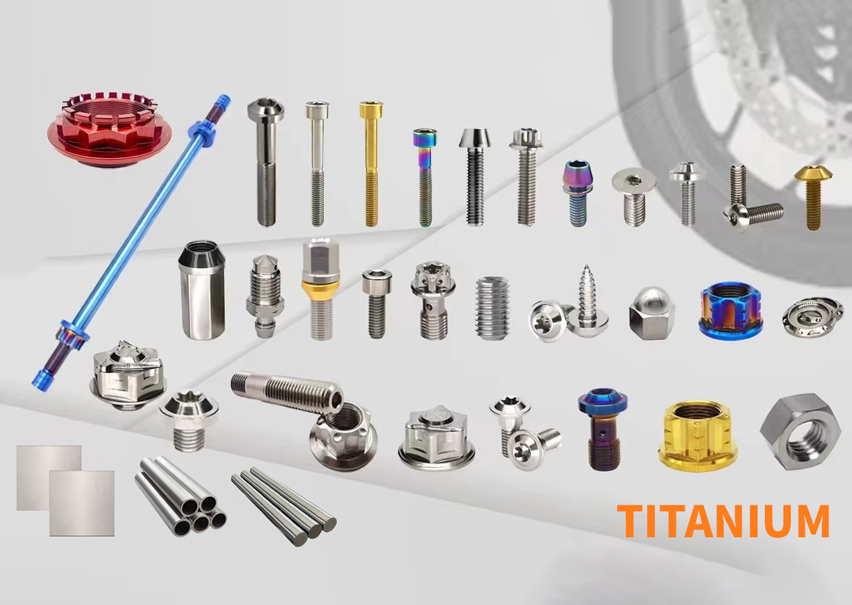
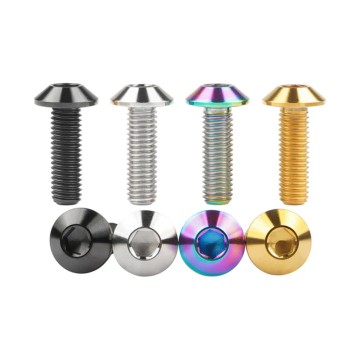
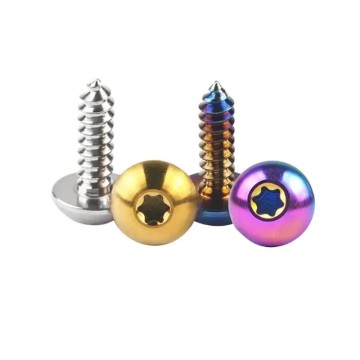
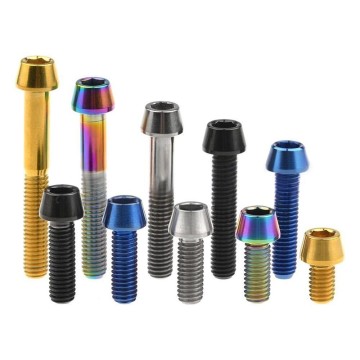
We specialize in titanium fasteners and components that meet the demands of industries worldwide. Our main product lines include:
Note: The above are our major product categories. Customized titanium parts are also available upon request.
Vision: To be the trusted partner for engineers, innovators, and businesses worldwide, delivering high-quality titanium components with flexible support and practical guidance. We understand that successful projects rely not only on materials but also on trust, support, and reliability.

We prioritize understanding our clients’ needs, providing reliable materials, timely delivery, and flexible solutions.

We build transparent, long-term relationships based on honesty and shared success.

From material sourcing to final delivery, we uphold stringent quality control so you can specify with confidence.

We provide not just products, but practical guidance and innovative ideas to overcome technical hurdles.

Reliable sourcing from the heart of China's titanium industry—Baoji

Strict quality control and certification compliant with international standards

Competitive pricing with guaranteed reliability

Responsive and attentive service for every client

Global logistics support for timely delivery