Leave Your Message
-
Phone
-
E-mail
-
Whatsapp
-
Whatsapp

In the highly demanding world of semiconductor manufacturing, the integrity of every single component within a fabrication facility (fab) is scrutinized to the microscopic level. Among the most critical yet frequently overlooked components are the fasteners holding the equipment together. When discussing semiconductor cleaning tools—such as wet benches, spin scrubbers, and megasonic cleaning tanks—the environment is incredibly hostile. These tools utilize highly aggressive chemicals like Hydrofluoric acid (HF), Sulfuric acid (H2SO4), Hydrogen Peroxide (H2O2), and various proprietary RCA cleaning solutions designed to strip organic and inorganic contaminants from silicon wafers.
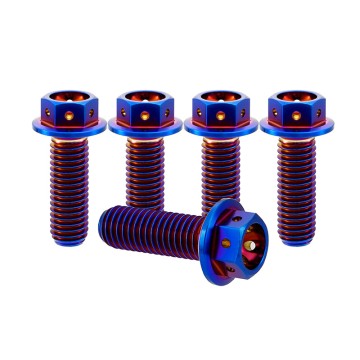
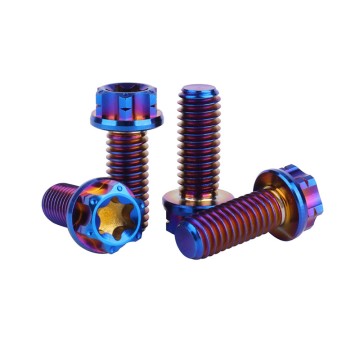
Standard stainless steel fasteners, or even advanced alloys, often fail in these ultra-pure environments. They are prone to chemical degradation, which leads to a catastrophic phenomenon known as "particle shedding" or outgassing. A single microscopic metallic particle flaking off a corroded bolt and landing on a wafer can short-circuit a transistor, ruining an entire batch of advanced microchips. This is precisely why the Titanium Hex Bolt for Semiconductor Cleaning Tools has become the absolute industry standard. Titanium's unique atomic structure allows it to form a stable, continuous, and highly adherent oxide film (TiO2) instantly upon exposure to moisture or oxygen, providing an impenetrable barrier against harsh chemical attacks.
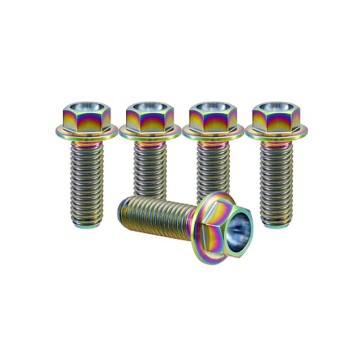
The selection of a Titanium Hex Bolt over other fastening geometries and materials is not arbitrary. The hexagonal head design provides a superior torque-to-stripping ratio, allowing maintenance technicians in restrictive cleanroom suits (bunny suits) to securely fasten or unfasten equipment without the risk of cam-out, which could generate unwanted metallic dust. But the true magic lies in the material properties of titanium itself.
In RCA-1 (Standard Clean 1) and RCA-2 processes, equipment is exposed to boiling mixtures of ammonium hydroxide, hydrogen peroxide, and hydrochloric acid. Titanium Grade 2 and Grade 7 fasteners exhibit near-zero corrosion rates in these solutions, ensuring no heavy metal ions leach into the ultra-pure water (UPW) systems.
Modern semiconductor metrology and electron-beam lithography tools are highly sensitive to magnetic interference. Titanium is inherently non-magnetic (paramagnetic), meaning a Titanium Hex Bolt will not disrupt the delicate magnetic fields required for sub-nanometer wafer inspection and patterning.
Robotic arms and automated wafer handling systems require lightweight components to minimize inertia and improve precision. Titanium provides the tensile strength of steel at roughly half the weight, reducing the mechanical strain on precision motors and actuators within the cleaning tool.
Professional Titanium Product Supplier for Engineers, Innovators, and Businesses Worldwide.
We connect you to high-quality titanium components through flexible and responsive service, empowering your semiconductor projects with performance, durability, and innovation. We specialize in titanium fasteners and components that meet the rigorous demands of ultra-pure industries worldwide.
*Customized titanium parts for specific semiconductor tool geometries are available upon request.
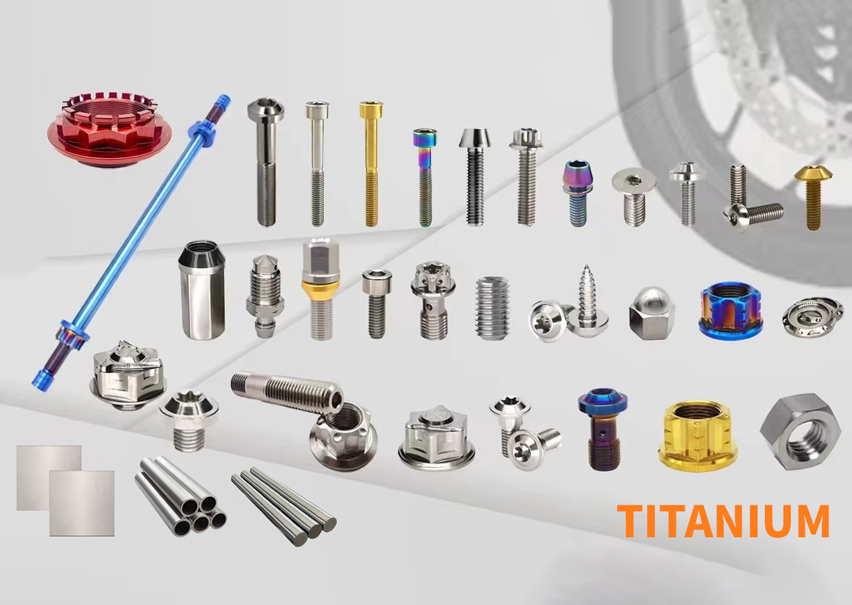
The deployment of a Titanium Hex Bolt for Semiconductor Cleaning Tools spans several critical areas within a modern 300mm or upcoming 450mm wafer fabrication facility. Let's delve into the specific application scenarios where these fasteners are not just preferred, but mandatory.
Wet benches are the workhorses of semiconductor cleaning. They consist of multiple chemical baths where wafers are submerged for etching and cleaning. The structural framework, the pump housings, and the chemical delivery manifolds are all fastened using titanium hex bolts. Because these benches handle Piranha solution (a volatile mixture of sulfuric acid and hydrogen peroxide used to remove photoresist), any fastener degradation could lead to catastrophic leaks or wafer contamination. Titanium ensures the structural integrity of the wet bench over a lifespan of 10 to 15 years.
Spin scrubbers utilize physical brushes combined with deionized water and mild chemicals to remove particles from the wafer surface. The spindles and rotating chucks operate at high RPMs. Grade 5 Titanium Hex Bolts (Ti-6Al-4V) are heavily utilized here due to their excellent fatigue resistance. They secure the rotating assemblies, ensuring that the vibration is minimized and that no metallic fatigue leads to component failure during high-speed wafer processing.
Megasonic cleaning uses high-frequency acoustic waves generated by piezoelectric transducers to remove sub-micron particles. The transducers are often bolted to the quartz or chemical tanks using titanium fasteners. The acoustic transparency and resilience of titanium prevent the dampening of megasonic waves, while its corrosion resistance ensures the bolts survive the continuous cavitation effects in the cleaning fluid.
We started with a simple principle: to resolve the complexities of global titanium product sourcing. We saw that engineers and innovators in high-tech sectors like semiconductor manufacturing needed not just a supplier, but a partner who offers reliable materials and eliminates logistical hurdles.
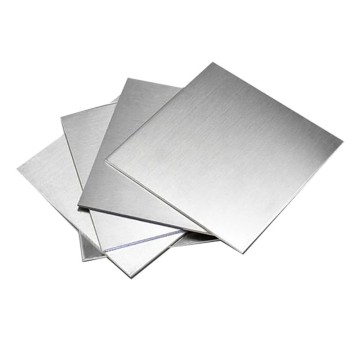
We believe that true success is built on trust and long-term collaboration. Every titanium hex bolt, tube, rod, and plate we deliver carries our commitment to your project's success, ensuring zero contamination in your critical environments.
To be the trusted partner for engineers, innovators, and businesses worldwide, delivering high-quality titanium components with flexible support and practical guidance. We understand that successful projects rely not only on materials but also on trust, support, and reliability.

The global push for semiconductor sovereignty has led to a massive boom in fab construction across North America, Europe, and Asia. This expansion has drastically increased the commercial demand for ultra-high-purity components, including the Titanium Hex Bolt for Semiconductor Cleaning Tools. While titanium fasteners carry a higher initial procurement cost compared to stainless steel or polymers, the Total Cost of Ownership (TCO) is significantly lower. In a modern fab, a single hour of downtime due to equipment failure or contamination can cost millions of dollars. Therefore, fab managers and equipment OEMs view titanium fasteners not as an expense, but as a critical insurance policy against yield loss.
As the semiconductor industry pushes beyond the 3-nanometer node towards the Angstrom era, the definition of "clean" is being rewritten. Even the slightest molecular outgassing is unacceptable for Extreme Ultraviolet (EUV) lithography and its associated cleaning steps. Future trends in titanium fasteners include advanced surface passivation techniques, such as electropolishing and anodic oxidation, to create an even smoother, particle-free surface.
Furthermore, the manufacturing of these bolts is becoming highly digitized. AI-driven quality control systems are being implemented to inspect the thread geometry and surface finish of every single titanium hex bolt before it enters the cleanroom supply chain. This ensures that only mathematically perfect fasteners are used in next-generation semiconductor cleaning tools, paving the way for the future of global computing.

Direct from the heart of China's titanium industry—Baoji.

Certification compliant with international semiconductor standards.

Cost-effective solutions with guaranteed reliability.

Attentive engineering support for every client.

Secure and timely delivery to your fab worldwide.