Leave Your Message
-
Phone
-
E-mail
-
Whatsapp
-
Whatsapp

Precision-engineered titanium bolts trusted by motorsport engineers and performance brake system builders worldwide.
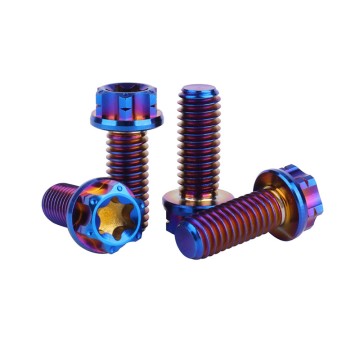
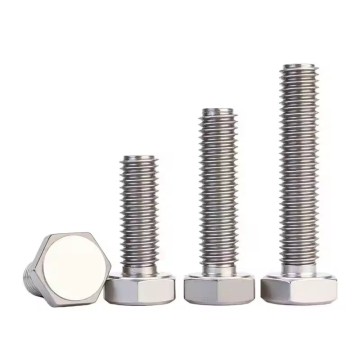
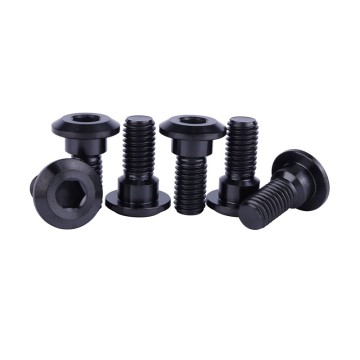
The titanium hemispheric bolt is no longer a niche curiosity confined to Formula 1 pit lanes. It has become a defining fastener in the architecture of modern high-performance brake systems — spanning motorsport, aerospace ground support, electric hypercars, and precision industrial machinery. Understanding why begins with the physics of braking itself.
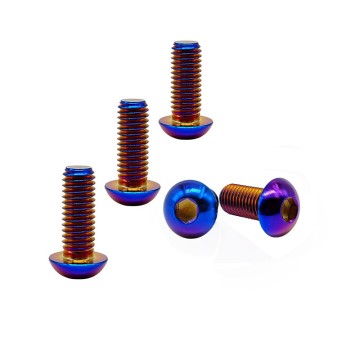
A titanium hemispheric bolt features a domed, rounded head profile that distributes clamping load across a broader contact surface compared to conventional flat-head or hex-head fasteners. When combined with Grade 5 titanium alloy (Ti-6Al-4V), the result is a fastener that delivers exceptional tensile strength — up to 950 MPa — at roughly 45% the weight of an equivalent steel bolt. The hemispherical geometry is not merely aesthetic; it reduces stress concentration at the bolt head-to-surface interface, a critical advantage in brake systems subjected to repeated thermal cycling and high-frequency vibration.
In performance brake systems, bolts must endure temperatures exceeding 700°C at the rotor surface, corrosive brake fluid exposure, and cyclic fatigue loads generated by thousands of braking events per race or service interval. Titanium's inherent thermal stability, corrosion immunity, and fatigue resistance make it uniquely suited to these demands.
⚡ Key Insight: In a single-seater race car, replacing all brake caliper bolts with Grade 5 titanium hemispheric bolts can reduce unsprung mass by 180–320 grams — a figure that directly improves suspension response, steering feel, and lap times.
The global titanium fastener market was valued at approximately USD 1.4 billion in 2023 and is projected to grow at a CAGR of 6.8% through 2030, driven significantly by the automotive performance aftermarket, electric vehicle (EV) platforms, and aerospace sub-systems. Within this, brake system fasteners represent one of the fastest-growing sub-segments, as OEM and aftermarket manufacturers increasingly specify titanium over stainless steel for weight-critical assemblies.
Major brake system manufacturers — including Brembo, AP Racing, Alcon, and StopTech — have progressively integrated titanium fastener specifications into their top-tier caliper designs. The trend has migrated from pure motorsport into high-performance road cars: the Ferrari SF90, Porsche GT3 RS, and Lamborghini Huracán STO all feature brake assemblies where titanium fasteners play structural roles.
On the industrial side, heavy-duty braking systems for wind turbine nacelles, mining conveyors, and rail rolling stock have begun adopting titanium hemispheric bolts in environments where corrosion from saltwater, chemicals, or humidity would rapidly degrade steel alternatives — reducing maintenance cycles and total cost of ownership.
Formula 1, MotoGP, WRC, and endurance racing series mandated titanium fastener use in brake calipers decades ago. Today, the performance aftermarket for road-legal track cars and motorcycles has created a multi-hundred-million-dollar demand for OEM-equivalent titanium brake hardware available to enthusiasts and small-batch builders.
EVs use regenerative braking as the primary deceleration mechanism, but friction brake systems remain essential for emergency stops and high-speed deceleration. EV platforms are highly weight-sensitive; titanium hemispheric bolts in brake assemblies contribute to extended range and improved handling dynamics in vehicles like the Rimac Nevera and Lotus Eletre.
Aircraft wheel brake assemblies operate under extreme thermal and mechanical loads during landing. Titanium fasteners are specified in wheel brake torque plates, heat shield mounts, and caliper assemblies across commercial and military aviation platforms where weight, reliability, and corrosion resistance are non-negotiable.
Wind turbines, mining hoists, and marine winches rely on disc brake systems that operate in corrosive, high-humidity, or chemically aggressive environments. Titanium hemispheric bolts eliminate the galvanic corrosion risk present when steel fasteners contact aluminum caliper bodies — a failure mode that has caused costly unplanned shutdowns in offshore installations.
Brake Caliper Body Assembly: The caliper body is typically machined from 7075 aluminum or cast iron. Titanium hemispheric bolts used to assemble multi-piece caliper halves must maintain consistent clamping force across thousands of thermal cycles without seizing or galling — a common failure mode with stainless steel in aluminum bores. Titanium's lower modulus of elasticity (114 GPa vs. 200 GPa for steel) acts as a natural spring, maintaining bolt preload as the caliper expands and contracts thermally.
Rotor Hat-to-Bell Interface: Two-piece brake rotors use a floating hat-to-bell connection to allow differential thermal expansion between the iron rotor ring and the aluminum bell. The fasteners at this interface — often titanium drive pins or bolts — must resist shear loads and fretting fatigue while remaining removable for rotor replacement. Hemispheric bolt heads provide a smooth, low-profile surface that avoids interference with caliper bridges during full rotor float travel.
Brake Duct and Shield Mounting: Carbon fiber brake ducts and heat shields are secured to suspension uprights and caliper brackets with titanium bolts. The hemispheric head profile distributes load across the composite laminate, reducing the risk of delamination under vibration — a critical consideration in carbon fiber composite structures where point loading causes progressive damage.
Brake Master Cylinder and Pedal Box: In racing pedal box assemblies, titanium hemispheric bolts secure master cylinders, bias bars, and pedal pivots. The weight savings at this location reduce cockpit mass and improve the driver's pedal feel precision by minimizing flex in the mounting structure.
Several converging technology and market trends are accelerating the adoption of titanium hemispheric bolts in brake systems across industries:
Metal 3D printing of titanium components is enabling complex internal geometries within brake caliper bodies and brackets, while conventionally machined titanium hemispheric bolts continue to serve as the primary fastening solution. The synergy between printed structures and precision titanium fasteners is redefining brake system architecture in prototype and low-volume production vehicles.
Physical vapor deposition (PVD) coatings — including titanium nitride (TiN) and diamond-like carbon (DLC) — applied to titanium hemispheric bolts are increasing surface hardness from ~350 HV to over 2,000 HV, dramatically improving wear resistance in high-cycle brake environments without adding significant weight.
As automotive OEMs pursue carbon-neutral manufacturing targets, titanium's 100% recyclability and 20–30 year service life in non-corrosive environments make it a preferred choice in lifecycle cost analyses. Brake systems designed with titanium fasteners demonstrate lower total cost of ownership versus steel alternatives when maintenance, replacement, and disposal costs are factored in.
Engineering simulation platforms now incorporate AI-assisted fastener selection tools that analyze brake system FEA models and automatically recommend titanium hemispheric bolt specifications — diameter, thread pitch, head geometry, and surface treatment — based on predicted load cases, thermal profiles, and weight targets. This is accelerating the design-to-production cycle for performance brake systems.
🌐 Global Supply Chain Note: Baoji, China — known as the "Titanium Valley" — produces over 60% of the world's industrial titanium products. V Star Titanium sources directly from this hub, ensuring consistent alloy certification, competitive pricing, and rapid fulfillment for brake system manufacturers across North America, Europe, and Asia-Pacific.
Professional Titanium Product Supplier for Engineers, Innovators, and Businesses Worldwide.
We connect you to high-quality titanium components through flexible and responsive service, empowering your projects with performance, durability, and innovation.
Our Story: We started with a simple principle: to resolve the complexities of global titanium product sourcing. We saw that engineers and innovators needed not just a supplier, but a partner who offers reliable materials and eliminates logistical hurdles.
We believe that true success is built on trust and long-term collaboration. Every bolt, tube, rod and plate we deliver carries our commitment to your project's success and our mutual growth.

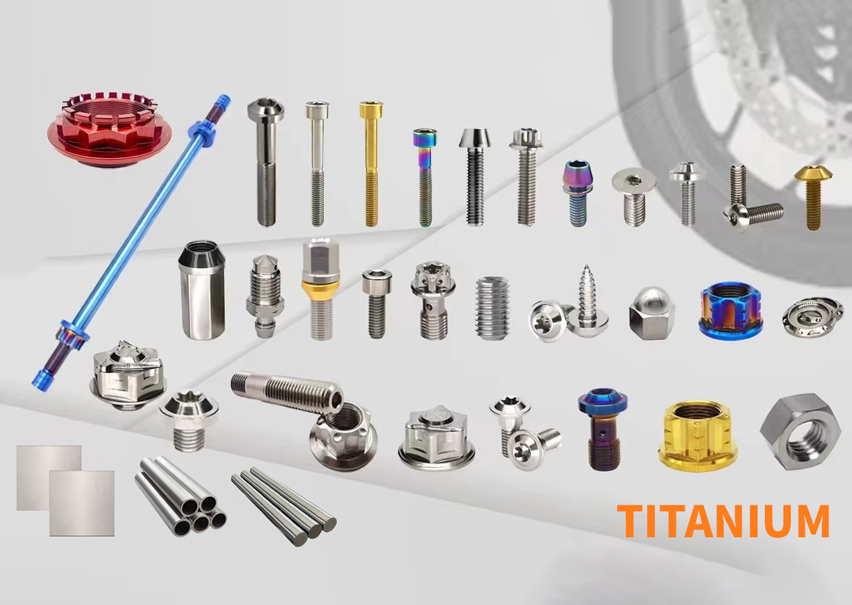
We specialize in titanium fasteners and components that meet the demands of industries worldwide. Our main product lines include:
Titanium Fasteners: Bolts, nuts, and washers, commonly in M5–M30 sizes, available in Grades 2, 5, and 7. Widely used in automotive, motorcycles, marine, and industrial equipment.
Titanium Tubes & Fittings: Durable and corrosion-resistant, suitable for piping, marine, and chemical applications.
Titanium Rods & Plates: Machined to custom specifications, supporting engineering projects and precision parts.
Note: The above are our major product categories. Customized titanium parts are also available upon request.
Vision: To be the trusted partner for engineers, innovators, and businesses worldwide, delivering high-quality titanium components with flexible support and practical guidance. We understand that successful projects rely not only on materials but also on trust, support, and reliability.

We prioritize understanding our clients' needs, providing reliable materials, timely delivery, and flexible solutions.

We build transparent, long-term relationships based on honesty and shared success.

From material sourcing to final delivery, we uphold stringent quality control so you can specify with confidence.

We provide not just products, but practical guidance and innovative ideas to overcome technical hurdles.


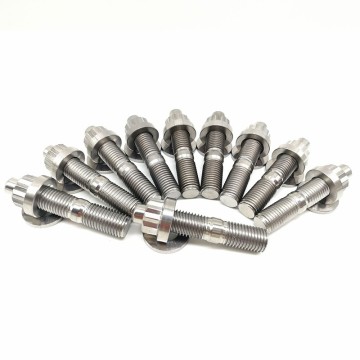
From race-spec dual-drive bolts to exhaust stud kits — every component engineered for performance brake system excellence.