
The Evolution of Support Systems: Why Titanium Rules High-End Photography
In the competitive arena of professional photography and cinematography, stability is the ultimate metric of performance. Whether capturing a 10-minute long exposure of the aurora borealis in sub-zero Arctic conditions or stabilizing a heavy-duty ARRI Alexa cinema rig on a windswept coastal cliff, the integrity of the camera support system is non-negotiable. For decades, manufacturers relied on stainless steel and high-grade aluminum alloys to construct core locking components, ball heads, and leveling bases. However, as camera sensors increase in resolution and carbon fiber technology pushes tripod leg weights to absolute minimums, traditional metals have met their physical limitations.
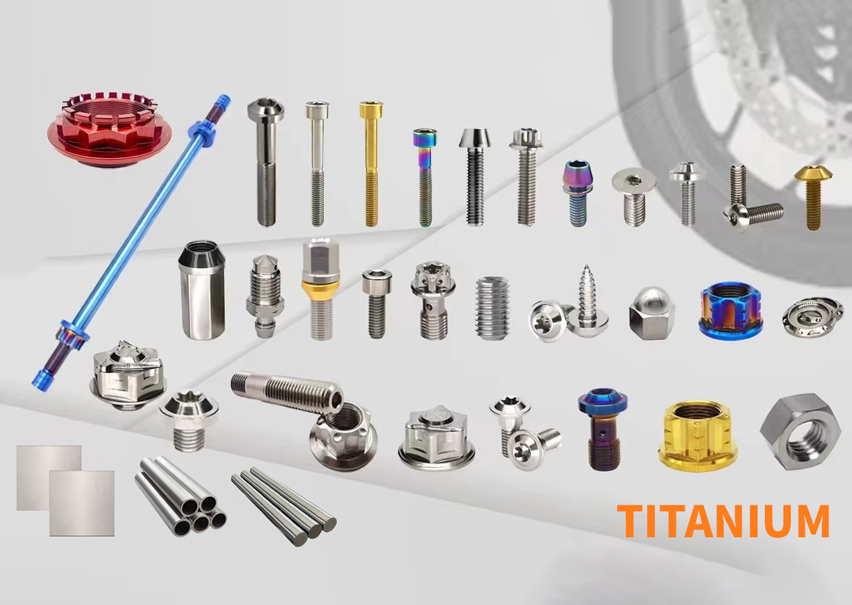
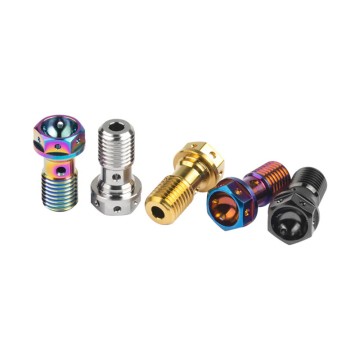
Enter the Titanium Hemispheric Bolt. Specifically engineered for high-end photography tripods, this highly specialized fastener leverages the unique physical and chemical properties of Grade 5 Titanium (Ti-6Al-4V) to solve the critical engineering trade-offs between weight, structural rigidity, and environmental resilience. Today, as high-end tripods transition from simple utility tools to highly engineered instruments of precision, titanium components have become the gold standard for elite manufacturers and discerning professionals worldwide.
"In professional photography, a single micro-vibration can ruin a 100-megapixel capture. The integration of titanium hemispheric bolts into ball heads provides the precise tension control and vibration dampening required to eliminate shutter-induced blur entirely."
Anatomy of the Hemispheric Bolt in Tripod Ball Heads & Leveling Bases
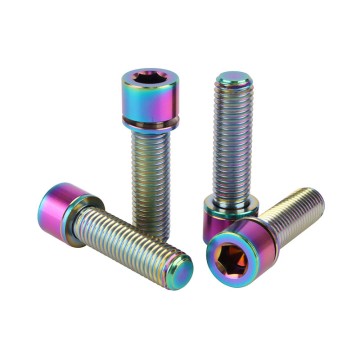
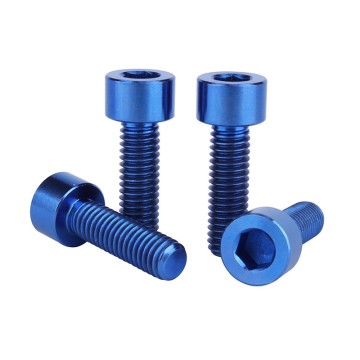
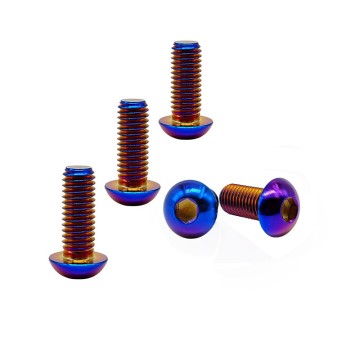
To understand the significance of a hemispheric bolt, one must examine the mechanics of tripod ball heads and leveling platforms. Unlike standard hex bolts or flat-head screws, a hemispheric bolt features a perfectly machined semi-spherical contact surface. This unique geometry allows for multi-directional pivoting and self-alignment when mating with a socket or clamping collar.
In high-end tripod leveling bases, the hemispheric bolt serves as the central axis pivot. It must withstand massive clamping pressures to lock the leveling platform in place while allowing smooth, fluid adjustments when unlocked. Grade 5 Titanium is uniquely suited for this application because of its low coefficient of friction when properly finished, preventing the stick-slip phenomenon (commonly known as "stiction") that plagues steel and aluminum fasteners. This ensures that when a photographer makes micro-adjustments to level their horizon, the movement is smooth and predictable, without sudden jerks that could misalign the camera rig.
Industrial and Commercial Landscape: The Rise of Premium Hardware
The global market for professional photography gear is experiencing a significant shift toward premiumization. With the rise of mirrorless cameras featuring ultra-high resolutions (60MP to 100MP+) and the surging popularity of outdoor adventure photography, content creators are demanding support gear that is both lighter and more rigid. Aluminum tripods are increasingly relegated to entry-level markets, while carbon fiber dominates the mid-to-high tier.
However, pairing carbon fiber legs with cheap steel or aluminum hardware creates a weak link. Steel fasteners add unnecessary weight and are prone to rust when exposed to moisture. Aluminum fasteners, while light, lack the tensile strength required for high-load locking mechanisms and are susceptible to thread stripping over repeated use. This material gap has driven a surge in commercial demand for titanium components. High-end tripod brands are now actively marketing "Titanium Editions" or integrating titanium hardware as a standard feature in their flagship models. The industrial landscape has evolved from treating titanium as an exotic, custom-only material to incorporating it as a vital engineering component for mass-premium production.
Technical Depth: The Mechanical Superiority of Grade 5 Titanium
Why do engineers favor Grade 5 Titanium (Ti-6Al-4V) over other grades and materials for hemispheric bolts? The answer lies in its mechanical properties:
- Unrivaled Strength-to-Weight Ratio: Grade 5 Titanium possesses a tensile strength of over 950 MPa, comparable to high-tensile steel, yet it is roughly 45% lighter. This allows tripod designers to reduce the physical footprint of locking knobs and bolts without sacrificing load capacity.
- Vibration Dampening: Titanium has a significantly lower elastic modulus than steel (approx. 110 GPa vs. 200 GPa). This lower modulus gives titanium excellent natural vibration-dampening characteristics, absorbing micro-oscillations caused by wind or mirror slap before they reach the camera sensor.
- Thermal Stability: Tripods are subjected to extreme temperature swings, from desert heat to glacial cold. Titanium's coefficient of thermal expansion is much closer to carbon fiber than aluminum. This prevents the locking mechanisms from seizing up or loosening due to thermal expansion/contraction.
- Galvanic Corrosion Prevention: When aluminum or steel comes into direct contact with carbon fiber in the presence of moisture, galvanic corrosion occurs, degrading both the metal and the carbon composite. Titanium is electrochemically compatible with carbon fiber, eliminating this risk entirely.
Deep Application Scenarios: Where Titanium Saves the Shot
1. Coastal and Marine Landscape Photography
Landscape photographers frequently position their tripods directly in saltwater surf to capture dramatic coastline images. Saltwater is highly corrosive to steel, causing rapid rusting of internal springs and bolts, while it oxidizes aluminum, leading to jammed joints. A Titanium Hemispheric Bolt is completely impervious to chloride attack and seawater corrosion, ensuring the tripod remains fully functional season after season without requiring tedious teardowns and freshwater rinses.
2. High-Altitude Mountaineering & Expeditionary Work
For alpine photographers, every gram of gear carried up a mountain is a physical liability. By swapping heavy steel components for titanium, manufacturers can shave hundreds of grams off a tripod's total weight. Furthermore, in sub-zero temperatures, standard metal lubricants freeze, and aluminum components contract, causing locking collars to lock up permanently. Titanium's low thermal expansion and self-lubricating properties ensure smooth operation even in the coldest environments on Earth.
3. Professional Cinematography and Heavy Gimbal Rigs
Cinema cameras rigged with matte boxes, follow-focus systems, and heavy anamorphic lenses can easily weigh upwards of 25kg. Supporting this payload on a fluid head requires immense clamping force at the base. A titanium hemispheric bolt can withstand the extreme torque required to lock down these heavy rigs without risk of shearing or thread deformation, providing peace of mind to camera operators handling equipment worth tens of thousands of dollars.
Future Trends: Coatings, Additive Manufacturing, and Beyond
The development of titanium components for photography equipment is far from static. One of the most exciting trends is the application of advanced surface treatments, such as Diamond-Like Carbon (DLC) coatings and physical vapor deposition (PVD) anodizing. These coatings not only allow for customized aesthetics (such as matte black or gold finishes) but also reduce the friction coefficient of the hemispheric bolt head to near-zero, eliminating the need for grease which can attract dust and sand in the field.
Furthermore, additive manufacturing (3D printing) of titanium is beginning to enter the high-end photography space. By utilizing Selective Laser Melting (SLM), manufacturers can design hollow or topologically optimized hemispheric bolts that maintain maximum structural rigidity while reducing weight by an additional 30% compared to solid CNC-machined bolts. As these technologies mature, titanium will continue to redefine the boundaries of what is possible in camera support engineering.