Leave Your Message
-
Phone
-
E-mail
-
Whatsapp
-
Whatsapp

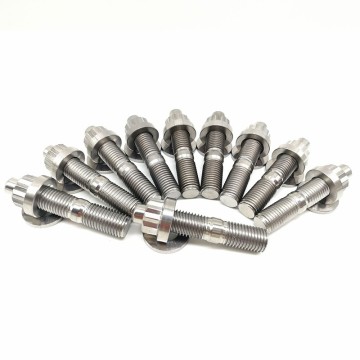
In the world of high-end photography, stability is not merely a preference; it is the boundary between a masterpiece and a discarded frame. As cameras evolve to capture ultra-high-resolution images and complex cinematic sequences, the support structures—specifically tripods and fluid heads—must meet unprecedented standards of rigidity, weight reduction, and durability. At the heart of these precision assemblies lies a small but critical component: the Titanium Flat Head Bolt.
Traditionally, manufacturers relied on stainless steel or aluminum fasteners. However, as outdoor photography pushes into extreme environments—from freezing arctic tundras to corrosive coastal shorelines—these traditional materials show their limitations. Stainless steel adds unnecessary weight to gear that photographers must carry for miles, while aluminum lacks the tensile strength required for high-torque joints and is highly susceptible to wear and galvanic corrosion when in contact with carbon fiber. Grade 5 Titanium (Ti-6Al-4V) has emerged as the ultimate material solution, offering the strength of steel at nearly half the weight, paired with absolute immunity to environmental degradation.
The choice of a flat head (countersunk) profile is deliberate in camera tripod design. Tripods require smooth, aerodynamic, and snag-free surfaces, especially around the leg pivots, center column clamps, and quick-release plates. A protruding bolt head can catch on clothing, camera straps, or carrying bags, potentially destabilizing a setup worth tens of thousands of dollars. By using flat head bolts, engineers can design flush joints that maintain a sleek aesthetic while maximizing structural contact area. The countersunk design distributes load forces evenly across the mating components, reducing stress concentrations and preventing material fatigue over thousands of setup cycles.
SEO Technical Insight: Grade 5 Titanium boasts a tensile strength of over 950 MPa and a yield strength of 880 MPa, making it more than double the strength of typical 316 stainless steel while being 45% lighter. This unmatched strength-to-weight ratio is why professional tripod manufacturers are shifting their bills of materials (BOM) toward titanium fasteners.
The global market for high-end photography equipment is experiencing a significant shift. The rise of mirrorless cameras, heavy-duty gimbal heads for wildlife photography, and portable cine rigs for independent filmmakers has driven the demand for premium travel tripods. Brands are competing fiercely on weight reduction. Every gram shaved off a tripod's total weight without sacrificing payload capacity is a major marketing victory.
Consequently, the industrial demand for precision-machined titanium fasteners has surged. Once reserved for aerospace and military applications, titanium is now a standard indicator of premium quality in consumer and professional electronics. High-end tripod manufacturers are actively highlighting "Titanium Hardware" as a key selling point. The integration of titanium flat head bolts in the leg hinges and mounting plates has transitioned from a custom modification to a standard requirement for flagship product lines.
Modern high-end tripods are almost exclusively constructed using carbon fiber tubes due to their superior vibration dampening and low weight. However, carbon fiber is an electrical conductor. When carbon fiber is placed in direct contact with aluminum or standard steel in the presence of moisture (especially saltwater), it creates a galvanic cell. The aluminum or steel acts as an anode and corrodes rapidly, leading to joint failure.
Titanium is uniquely compatible with carbon fiber. Its electrochemical potential is highly compatible, meaning it does not induce galvanic corrosion. This makes titanium flat head bolts the only logical choice for securing the aluminum or magnesium castings of the tripod spider to the carbon fiber legs, ensuring the tripod remains structurally sound even after years of exposure to ocean spray and rain.
| Material Property | Grade 5 Titanium (Ti-6Al-4V) | 316 Stainless Steel | 6061-T6 Aluminum |
|---|---|---|---|
| Density (g/cm³) | 4.43 | 8.00 | 2.70 |
| Tensile Strength (MPa) | 950 | 580 | 310 |
| Yield Strength (MPa) | 880 | 290 | 276 |
| Corrosion Resistance | Outstanding (Immune to Saltwater) | Moderate (Pitting in marine environments) | Poor (Prone to galvanic corrosion with carbon) |
| Strength-to-Weight Ratio | High | Medium | Medium |
The leg hinges of a tripod endure constant friction and high torque. Photographers frequently adjust the leg angles to adapt to uneven terrain. The bolts holding these hinges together must withstand constant shear stress without stretching or loosening. Standard bolts wear down, leading to "floppy" tripod legs. Titanium flat head bolts, with their high fatigue limit and precision tolerances, maintain consistent tension over decades of use, ensuring the legs deploy smoothly and lock securely.
Quick-release plates (such as the Arca-Swiss standard) are mounted directly to the camera base. The connection must be absolutely rigid to prevent micro-movements during long exposures. A titanium flat head bolt provides the necessary clamping force while remaining completely flush with the plate surface. This ensures the camera sits perfectly flat against the rubber or cork padding, maximizing friction and preventing rotation.
Inside a high-end ball head, internal locking mechanisms require high-strength fasteners to lock heavy camera payloads at extreme angles. Titanium flat head bolts are utilized within the internal chassis of these heads to secure locking plates and panoramic pan bases. The low thermal expansion coefficient of titanium ensures that the lock tension remains consistent whether shooting in sub-zero arctic temperatures or scorching desert heat.
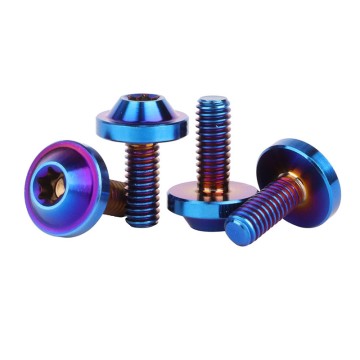
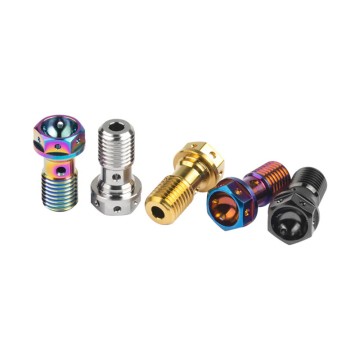
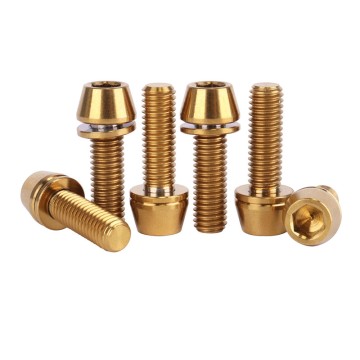
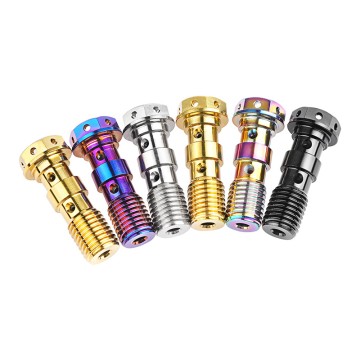
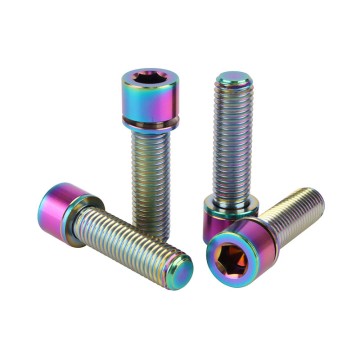
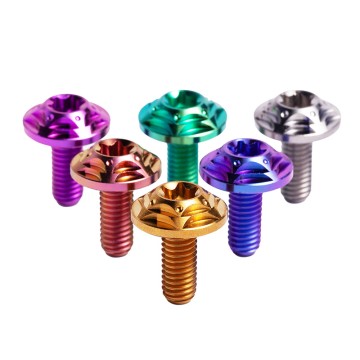
As the photography industry continues to demand highly personalized and aesthetically striking gear, the finish of titanium bolts has become a focal point. Titanium can be anodized in a wide range of colors (gold, blue, purple, and bronze) without losing its physical properties. This allows tripod brands to create signature color schemes (e.g., carbon weave paired with gold titanium accents). Furthermore, Physical Vapor Deposition (PVD) coatings, such as Diamond-Like Carbon (DLC), are being applied to titanium bolts to reduce friction coefficients and increase surface hardness, making the threads virtually wear-proof.

Professional Titanium Product Supplier for Engineers, Innovators, and Businesses Worldwide.
We connect you to high-quality titanium components through flexible and responsive service, empowering your projects with performance, durability, and innovation. Whether you are developing next-generation photography tripods, aerospace components, or high-performance automotive systems, our precision-engineered fasteners provide the structural reliability your designs demand.
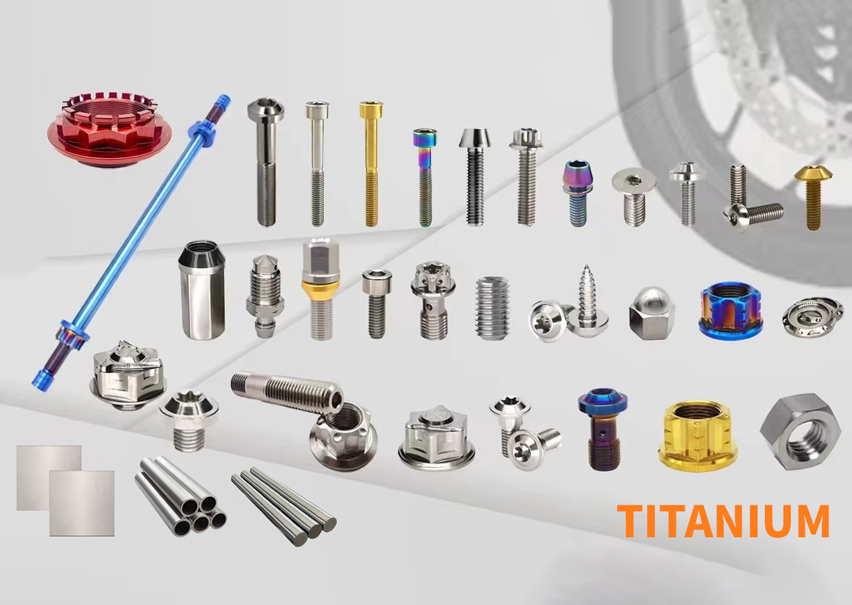

We started with a simple principle: to resolve the complexities of global titanium product sourcing. We saw that engineers and innovators needed not just a supplier, but a partner who offers reliable materials and eliminates logistical hurdles.
We believe that true success is built on trust and long-term collaboration. Every bolt, tube, rod and plate we deliver carries our commitment to your project's success and our mutual growth. From custom camera mounting threads to heavy-duty industrial fasteners, we stand behind the quality of every thread we cut.
We specialize in titanium fasteners and components that meet the demands of industries worldwide. Our main product lines include:
Bolts, nuts, and washers, commonly in M5–M30 sizes, available in Grades 2, 5, and 7. Widely used in automotive, motorcycles, marine, photography tripods, and industrial equipment.
Durable and corrosion-resistant, suitable for piping, marine, exhaust systems, and chemical processing applications requiring maximum environmental tolerance.
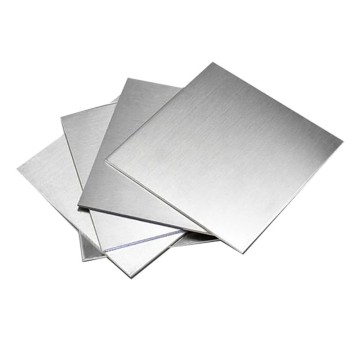
Machined to custom specifications, supporting engineering projects, CNC prototyping, custom camera gimbals, and precision aerospace parts.
Note: The above are our major product categories. Customized titanium parts are also available upon request.
Vision: To be the trusted partner for engineers, innovators, and businesses worldwide, delivering high-quality titanium components with flexible support and practical guidance.

We prioritize understanding our clients’ needs, providing reliable materials, timely delivery, and flexible solutions.

We build transparent, long-term relationships based on honesty and shared success.

From material sourcing to final delivery, we uphold stringent quality control so you can specify with confidence.

We provide not just products, but practical guidance and innovative ideas to overcome technical hurdles.