Leave Your Message
-
Phone
-
E-mail
-
Whatsapp
-
Whatsapp

Explore our precision-crafted titanium fastener solutions engineered specifically for high-speed rail ventilation and structural applications.
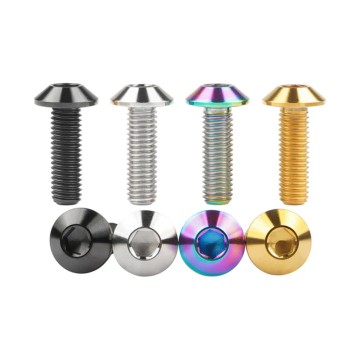
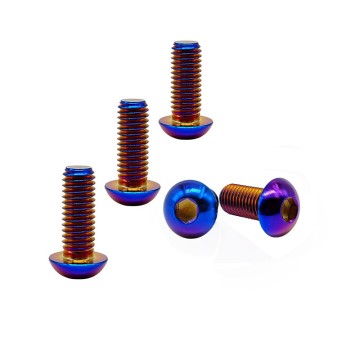
A titanium dome head bolt — also referred to as a mushroom head or oval head bolt — features a smooth, rounded convex profile that sits flush or slightly proud of the surface. This geometry is not merely aesthetic: the dome contour distributes clamping loads over a wider area, reduces stress concentration, and presents minimal aerodynamic drag. When combined with the intrinsic properties of titanium alloy, these fasteners become an engineering asset for any weight-sensitive, vibration-intensive, or corrosion-exposed application.
In high-speed rail ventilation systems, where every gram of unsprung mass, every millimeter of panel gap, and every hour of maintenance downtime carries real operational cost, the titanium dome head bolt has evolved from a specialty item into a critical infrastructure component.
🔩 Key Insight: Titanium's density is approximately 4.51 g/cm³ — roughly 57% lighter than steel (7.85 g/cm³) — yet Grade 5 titanium (Ti-6Al-4V) achieves tensile strengths exceeding 895 MPa, matching or surpassing many high-strength steel alloys. For high-speed rail ventilation panels, this translates directly into reduced structural load, lower energy consumption, and extended service intervals.
The global high-speed rail (HSR) industry has undergone transformative growth over the past two decades. China alone operates the world's largest HSR network, exceeding 42,000 kilometers as of 2024, with ongoing expansion projects adding thousands of kilometers annually. Europe, Japan, South Korea, and emerging markets in Southeast Asia and the Middle East are investing heavily in next-generation rail infrastructure. This expansion creates an enormous, sustained demand for precision-engineered components — and titanium dome head bolts for ventilation systems sit at the intersection of several critical engineering requirements.
Ventilation systems in high-speed rail encompass a broad range of assemblies: undercar air deflectors, roof-mounted HVAC intake covers, tunnel pressure-relief panels, inter-car gangway seals, and interior cabin air circulation grilles. Each of these assemblies requires fasteners that can withstand:
Traditional stainless steel and high-strength alloy steel fasteners have served these roles historically, but the tightening of energy efficiency standards — particularly the EU's TSI (Technical Specifications for Interoperability) and China's GB/T standards for EMU rolling stock — is driving procurement engineers toward titanium alternatives that offer a superior strength-to-weight ratio without compromising fatigue life or corrosion resistance.
The dome head profile is particularly well-suited to ventilation panel fastening for several interconnected reasons. First, the smooth convex surface presents no sharp edges or recesses that could accumulate condensation, particulate matter, or biological growth — a significant maintenance advantage in enclosed tunnel environments where cleaning access is limited.
Second, the dome geometry creates a natural aerodynamic fairing. At 300+ km/h, even small protrusions on the train exterior generate measurable drag. CFD (Computational Fluid Dynamics) studies conducted by leading rail OEMs have demonstrated that replacing conventional hex-head bolts with dome-profile fasteners on undercar ventilation covers can reduce local drag coefficients by 8–15%, contributing to measurable reductions in traction energy consumption over a full service cycle.
Third, the rounded head distributes clamping pressure uniformly across composite and polymer ventilation panel materials, which are increasingly used to replace aluminum alloy panels in weight-reduction programs. This load distribution prevents surface crazing and delamination — failure modes that are particularly costly to repair on in-service rolling stock.
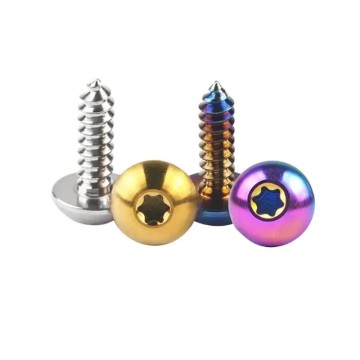
💡 Engineering Note: Titanium dome head bolts in Grade 5 (Ti-6Al-4V) are typically specified with a Torx or internal hex drive to maintain the clean dome exterior profile. This drive selection also enables higher torque transmission in confined installation spaces — a critical advantage when fastening ventilation panels in the undercar equipment bay where tool access is restricted.
Titanium naturally forms a stable TiO₂ passive layer that resists chloride, sulfide, and acidic attack. In tunnel environments saturated with de-icing salt aerosols and exhaust residues, titanium dome head bolts maintain structural integrity where steel fasteners would require periodic replacement.
Grade 5 titanium delivers 895 MPa tensile strength at just 4.43 g/cm³ density. A full set of titanium dome head bolts on a single ventilation panel assembly can save 40–60% of fastener mass compared to equivalent steel hardware — directly reducing axle load and energy consumption.
The low-profile convex head minimizes aerodynamic drag on exterior ventilation covers and undercar panels. CFD-validated geometry reduces turbulence at fastener locations, contributing to overall train energy efficiency and noise reduction at high operating speeds.
Titanium maintains mechanical properties from -196°C to +315°C, covering the full operational envelope of high-speed rail from arctic winter tunnels to summer desert routes. Thermal expansion coefficients are compatible with aluminum and composite panel materials, minimizing differential expansion stress.
The fatigue endurance limit of titanium alloys is approximately 50–60% of ultimate tensile strength — significantly better than many steel alloys in corrosive environments. For ventilation panels subjected to millions of aerodynamic load cycles per year, this translates into dramatically extended maintenance intervals.
Titanium is non-magnetic and non-sparking, making it compatible with rail signaling systems and safe for use in environments with flammable dust or gases. These properties are particularly relevant in tunnel ventilation systems where electromagnetic compatibility (EMC) is a design requirement.
The undercar equipment bay of a modern EMU (Electric Multiple Unit) train houses traction inverters, battery systems, and brake resistors — all of which require ventilated enclosures. These ventilation panels are exposed to the full aerodynamic wake of the train and to ballast impact, water spray, and chemical contamination from the trackbed. Titanium dome head bolts in M6–M10 sizes, Grade 5, with Torx T30–T50 drives, are specified for these assemblies because they resist loosening under vibration (titanium's natural micro-friction characteristics reduce self-loosening tendency) while offering the corrosion immunity needed in this harsh environment.
Roof-mounted air conditioning and ventilation units are among the most aerodynamically critical components of a high-speed train. The intake and exhaust cover panels must be fastened securely against uplift forces that can exceed several kilonewtons at maximum speed, while maintaining a smooth exterior profile to minimize drag and noise. Titanium dome head bolts provide the required clamping force with a head profile that conforms to the aerodynamic surface, and their light weight contributes to the roof's center-of-gravity optimization — important for train stability at high speed.
When a high-speed train enters a tunnel, it generates a compression wave that propagates at the speed of sound, creating rapid pressure fluctuations that can reach ±7 kPa on exterior panels. Pressure-relief panels in the train's side skirts and undercar fairings are designed to flex and vent these pressure spikes. The fasteners securing these panels must accommodate repeated cyclic deformation without fatigue failure. Titanium dome head bolts, with their superior fatigue endurance ratio and corrosion resistance, are the preferred choice for these safety-critical assemblies in leading HSR rolling stock programs.
Inside the passenger cabin, air circulation grilles and overhead ventilation panel trim pieces are fastened with visible hardware. Here, the aesthetic quality of the titanium dome head — its smooth, silver-gray luster and clean profile — is as important as its mechanical performance. Grade 2 titanium, which offers excellent formability and corrosion resistance at a lower cost point than Grade 5, is typically specified for interior trim fasteners where loads are lower but visual quality and passenger safety (no sharp edges) are paramount.
The flexible gangway connecting adjacent rail cars incorporates a complex seal frame that must withstand both lateral dynamic loads and the cyclic compression/extension of the gangway bellows. The frame fasteners are subject to fretting fatigue — a wear mechanism where small oscillatory movements between clamped surfaces cause surface damage and accelerate fatigue cracking. Titanium's natural oxide layer provides a degree of fretting resistance, and the dome head geometry's uniform load distribution reduces peak contact stresses at the fastener–panel interface, extending the service life of both the bolt and the panel.
| Parameter | Grade 2 (Commercially Pure) | Grade 5 (Ti-6Al-4V) | Application Zone |
|---|---|---|---|
| Tensile Strength | 345 MPa min. | 895 MPa min. | Interior / Structural |
| Yield Strength | 275 MPa min. | 828 MPa min. | Interior / Structural |
| Density | 4.51 g/cm³ | 4.43 g/cm³ | All zones |
| Size Range | M4 – M16 | M5 – M30 | Panel / Structural |
| Drive Type | Torx / Hex Socket | Torx / Hex Socket | All zones |
| Surface Finish | Natural / Anodized | Natural / Anodized / PVD | Exterior / Interior |
| Corrosion Standard | ASTM B117 1000h+ | ASTM B117 1000h+ | Tunnel / Exterior |
| Temperature Range | -196°C to +260°C | -196°C to +315°C | All zones |
Projects such as China's CR450 platform and Europe's proposed Very High Speed (VHS) corridor are targeting operational speeds of 400 km/h, where aerodynamic loads on ventilation panels increase by approximately 78% compared to 350 km/h operation. This step change in loading makes titanium dome head bolts not merely preferable but technically necessary for reliable fastening of exterior ventilation assemblies.
Regulatory frameworks in the EU (EN 14363, TSI) and China (GB/T 5599) are progressively tightening axle load limits and energy consumption targets for rolling stock. Rail operators are implementing systematic lightweighting programs where titanium fasteners — despite their higher unit cost — deliver a positive lifecycle cost balance through reduced energy consumption and extended maintenance intervals.
The integration of IoT-enabled sensor technology into rail infrastructure is creating demand for "smart fasteners" — bolts with embedded strain gauges or RFID tags that enable real-time monitoring of clamping force and fatigue status. Titanium's non-magnetic properties and biocompatibility with electronic components make it the preferred substrate material for these next-generation sensor-integrated fastener systems.
Rail operators and rolling stock manufacturers are under increasing pressure to demonstrate sustainable procurement practices. Titanium's exceptional longevity — ventilation panel fasteners can remain in service for 25–30 years without replacement — and its 100% recyclability at end of life align with circular economy principles and contribute to lower lifecycle carbon footprints compared to steel fasteners that require periodic replacement.
The International Union of Railways (UIC) projects that global HSR network length will exceed 100,000 km by 2030, with major expansion in Southeast Asia, India, the Middle East, and North Africa. Each new HSR line represents a substantial procurement opportunity for titanium fastener suppliers capable of meeting international standards and providing reliable global logistics support.
Advances in titanium powder bed fusion (PBF) additive manufacturing are enabling the production of complex dome head bolt geometries — including integrated washers, anti-vibration features, and optimized head profiles — that are impossible or prohibitively expensive to produce by conventional machining. This technology is beginning to influence the design of next-generation ventilation panel fasteners for bespoke rolling stock programs.
Professional Titanium Product Supplier for Engineers, Innovators, and Businesses Worldwide.
We connect you to high-quality titanium components through flexible and responsive service, empowering your projects with performance, durability, and innovation.
We started with a simple principle: to resolve the complexities of global titanium product sourcing. We saw that engineers and innovators needed not just a supplier, but a partner who offers reliable materials and eliminates logistical hurdles.
We believe that true success is built on trust and long-term collaboration. Every bolt, tube, rod and plate we deliver carries our commitment to your project's success and our mutual growth.

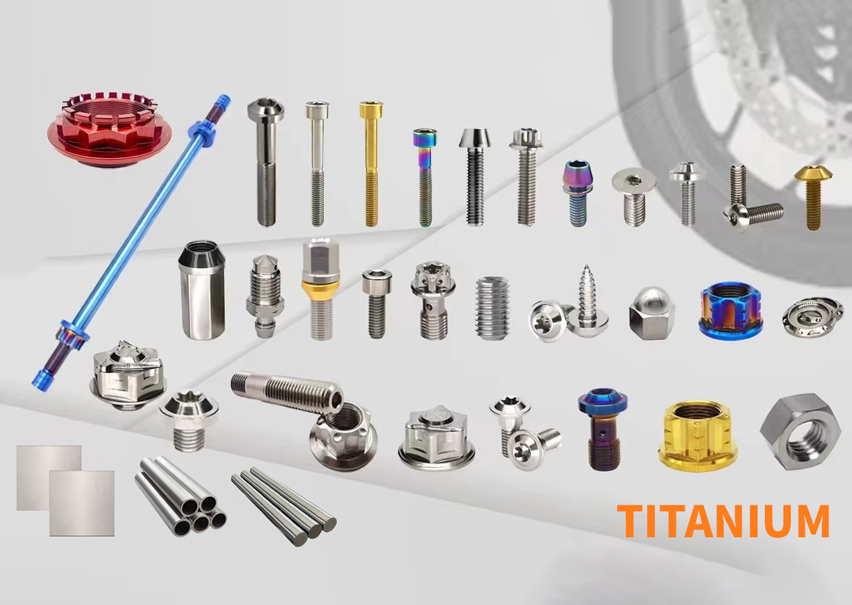
We specialize in titanium fasteners and components that meet the demands of industries worldwide. Our main product lines include:
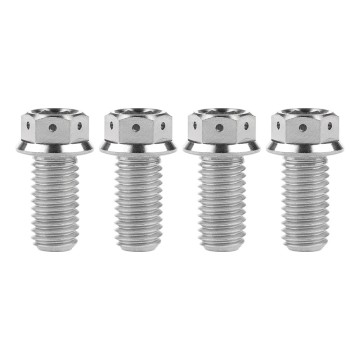
Titanium Fasteners: Bolts, nuts, and washers, commonly in M5–M30 sizes, available in Grades 2, 5, and 7. Widely used in automotive, motorcycles, marine, and industrial equipment.
Titanium Tubes & Fittings: Durable and corrosion-resistant, suitable for piping, marine, and chemical applications.
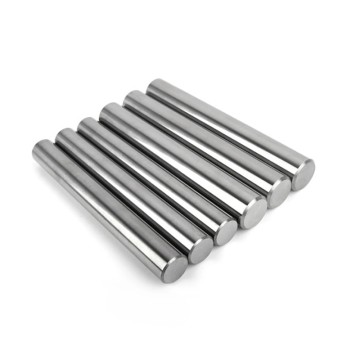
Titanium Rods & Plates: Machined to custom specifications, supporting engineering projects and precision parts.
Note: The above are our major product categories. Customized titanium parts are also available upon request.
Vision: To be the trusted partner for engineers, innovators, and businesses worldwide, delivering high-quality titanium components with flexible support and practical guidance.

We prioritize understanding our clients' needs, providing reliable materials, timely delivery, and flexible solutions.

We build transparent, long-term relationships based on honesty and shared success.

From material sourcing to final delivery, we uphold stringent quality control so you can specify with confidence.

We provide not just products, but practical guidance and innovative ideas to overcome technical hurdles.


Browse our complete range of precision titanium fasteners engineered for high-performance rail ventilation, automotive, marine, and industrial applications.