Starting a project that calls for tough, dependable fasteners? Picking the right parts is kind of a big deal if you want everything to go smoothly. Take the Titanium Hex Cap Screw, for example—it's super popular because it's incredibly strong while staying lightweight, and it resists corrosion like a champ. No wonder industries like aerospace, automotive, and marine rely on it so much. That said, with so many options out there, it can get a little overwhelming trying to choose the perfect one.
In this article, I’ll share my top 10 tips to help you pick the best Titanium Hex Cap Screw for whatever you’re working on. Whether you’re tackling a complex engineering project or just doing a small DIY fix, it’s super important to understand what these screws are all about—think material qualities, size, thread type, and all that. These tips are designed to help you make smarter choices so your project isn’t just successful but also built to last. With a bit of know-how, you'll be able to pick the right screw that checks all the boxes and keeps your project standing strong for years to come.
Understanding Titanium Hex Cap Screws and Their Applications
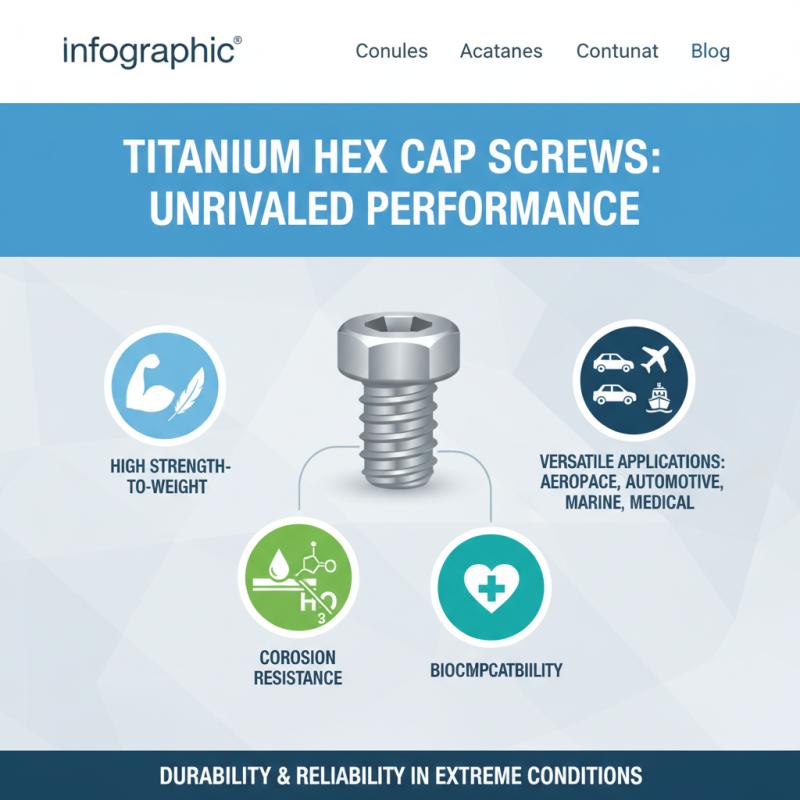
Titanium hex cap screws are essential fasteners widely used in various industries due to their outstanding strength-to-weight ratio, corrosion resistance, and biocompatibility. These screws are particularly advantageous in aerospace, automotive, marine, and medical applications, where high-performance materials are crucial. The unique properties of titanium make it suitable for environments that demand durability and reliability under extreme conditions, such as high temperatures and corrosive atmospheres.
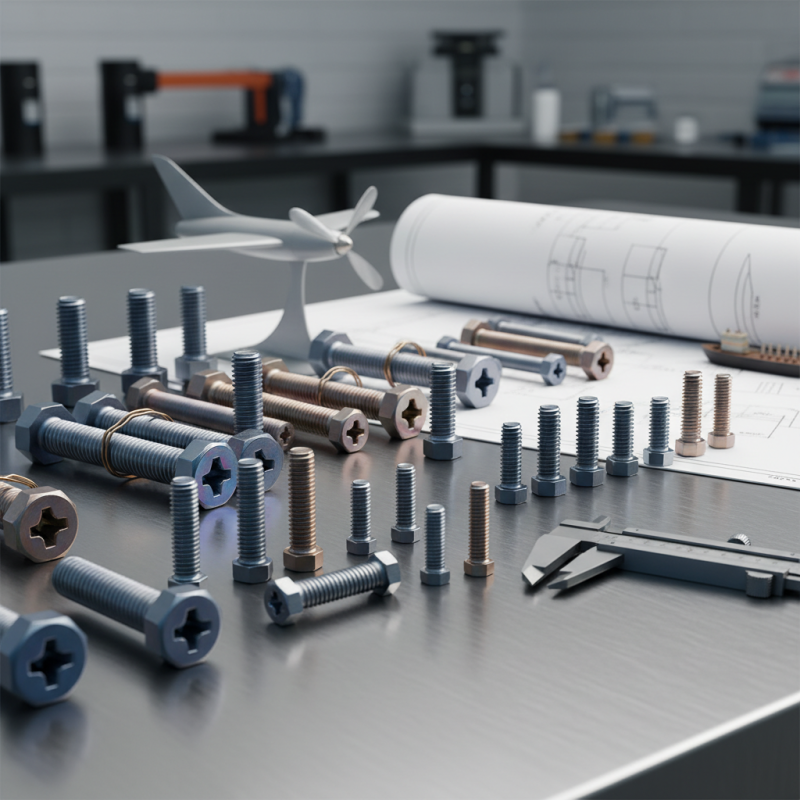
Understanding the specifications and characteristics of titanium hex cap screws is vital for selecting the right fastener for specific projects. Key factors to consider include the grade of titanium, threading types, and the necessary dimensions to ensure proper fit and performance. By assessing the environmental conditions and mechanical stresses that the screws will encounter, engineers and designers can make informed decisions that enhance the longevity and effectiveness of their assemblies. Overall, titanium hex cap screws represent a superior choice for projects that require both functionality and resilience.
Key Factors to Consider When Selecting Titanium Hex Cap Screws
When selecting titanium hex cap screws for your projects, there are several key factors to consider to ensure optimal performance and compatibility. First and foremost, assess the grade of titanium used in the screws. Different grades, such as Grade 2, Grade 5, or Grade 23, offer various strengths, weights, and corrosion resistance levels. Understanding the specific requirements of your application will help you choose the appropriate grade that meets both structural and environmental demands.
Another critical consideration is the screw dimensions, including diameter, length, and thread pitch. These factors influence the screw's fit and function within your assembly, so it’s essential to match these specifications closely to your project’s needs. Additionally, consider the finish of the screws; a proper coating or treatment can enhance corrosion resistance and improve aesthetic appeal. Lastly, evaluate the cost-effectiveness of the screws, taking into account the long-term benefits of choosing high-quality titanium options versus potential replacements or maintenance costs due to inferior materials.
Evaluating the Strength and Durability of Titanium Screws
When selecting titanium hex cap screws for various projects, understanding their strength and durability is crucial. Titanium screws are known for their exceptional tensile strength and corrosion resistance, making them ideal for applications in harsh environments. According to a report from the International Journal of Engineering, titanium has a tensile strength ranging from 434 to 1,140 MPa, depending on the alloy used. This high strength-to-weight ratio enables engineers to design lighter and more efficient structures without compromising integrity.
Durability is another vital factor when evaluating titanium screws. Their toughness makes them resistant to wear and fatigue, which is particularly important in applications subject to repeated stress and movement. A study published in the Journal of Materials Science indicates that titanium screws exhibit significantly lower fatigue failure rates compared to standard steel screws. Furthermore, their ability to withstand extreme temperatures and aggressive chemical exposure adds to their longevity, making them a preferred choice across industries like aerospace, automotive, and marine. With the right considerations, titanium hex cap screws can enhance the overall reliability and performance of projects, ensuring long-lasting results even in the most challenging conditions.
Choosing the Right Size and Thread Type for Your Projects
When selecting the right titanium hex cap screw for your projects, understanding the appropriate size and thread type is crucial. The size of the screw directly impacts its load-bearing capacity and fit within your assembly. Usually, hex cap screws come in various diameters, lengths, and thread pitches. It’s important to measure the dimensions accurately, including the diameter and the length of the screw, ensuring it aligns with the specifications of the materials you are working with. A screw that is too short may fail to secure components adequately, while an excessively long screw can lead to problems such as excessive torque or interference with other parts.
Equally important is the thread type. Titanium hex cap screws are available in different thread forms such as coarse, fine, and specialty threads designed for specific applications. Coarse threads typically provide better grip in softer materials and are easier to install, whereas fine threads are often utilized in applications requiring higher precision and greater resistance to loosening. It’s essential to match the thread type of the screw with the tapped hole or nut that it will be engaging with, to prevent stripping and ensure optimal performance. By considering both the size and thread type carefully, you can enhance the reliability and effectiveness of your project while leveraging the unique properties of titanium.
Top 10 Tips for Choosing the Right Titanium Hex Cap Screw
This chart illustrates the recommended torque values for various sizes of titanium hex cap screws. It is essential to choose the right size and thread type for your specific project requirements to ensure optimal performance and safety.
Understanding Finish and Coating Options for Titanium Screws
When selecting
titanium hex cap screws for your projects, understanding the
finish and coating options available is crucial to ensure optimal performance and longevity. Titanium is naturally
corrosion-resistant; however, applying different coatings can further enhance its properties, making it suitable for various environments.
For instance,
anodizing can improve surface hardness and resistance to wear while also allowing for color variation that may be
aesthetically pleasing or functional for identification purposes.
Another popular option is a
passivation treatment, which enhances the natural oxide layer on titanium. This treatment not only boosts corrosion resistance but also
minimizes the risk of galling when the screw is in contact with other metal components. Additionally, coatings such as
PTFE (polytetrafluoroethylene) can provide a low-friction surface that reduces the risk of seizing, making assembly smoother and easier, especially in applications
involving critical tolerances.
When choosing a finish or coating for your titanium screws, consider the specific requirements of your project, including
environmental exposure and
mechanical stresses, to ensure the best performance and durability.
Assessing Cost vs. Performance in Titanium Hex Cap Screws
When selecting titanium hex cap screws for your projects, evaluating the cost against performance is crucial to making an informed decision. Titanium, known for its excellent strength-to-weight ratio and corrosion resistance, comes with a higher price tag than conventional materials like steel or aluminum. However, understanding the long-term benefits of titanium can justify the initial investment. The durability and lightweight properties of titanium hex screws make them ideal for high-stress applications, where performance is paramount, reducing the risk of failure and potential costs associated with replacements and maintenance.
It's important to assess the specific requirements of your project when balancing cost and performance. Consider factors such as load-bearing capacity, environmental conditions, and the lifespan of the components. In instances where weight reduction is critical, titanium hex cap screws offer significant advantages, leading to enhanced overall efficiency. Conversely, for applications with lower performance demands, exploring more economical materials might be a viable option. Ultimately, the goal is to find a solution that aligns with both your budget and the performance standards necessary for the success of your project.
Sourcing Quality Titanium Screws: Tips for Reliable Suppliers
When it comes to sourcing quality titanium hex cap screws, partnering with reliable suppliers is essential for ensuring the integrity and performance of your projects.
Start by conducting thorough research on potential suppliers. Look for companies with a solid reputation in the industry, which can be verified through customer testimonials, reviews, and case studies. A trustworthy supplier should also have relevant certifications, demonstrating their commitment to quality manufacturing practices and adherence to industry standards.
Additionally, consider the supplier's experience and specialization in titanium products. Suppliers who focus exclusively on titanium fasteners are more likely to understand the nuances of the material, including its properties and appropriate applications. Engaging in direct communication with suppliers can further reveal their expertise; ask questions about their sourcing, production processes, and lead times.
Finally, ensure that the supplier can provide detailed documentation, such as material certification and traceability, to assure you of the screw's quality and compliance with your project's specifications.
Enhancing Motorcycle Performance: Insights from Industry Reports on the Benefits of Titanium Chamfered Hex Socket Cap Bolts
The enhancement of motorcycle performance hinges on the fine details of its components, and the use of titanium chamfered hex socket cap bolts is a prime example. Engineered to provide a stable clamp load, these bolts are essential for ensuring reliable installations in environments prone to vibration, making them ideal for various applications, including motorcycles and bicycles. The unique design featuring a chamfered hex socket cap enhances accessibility and ease of installation, further supporting efficient assembly in lightweight configurations.
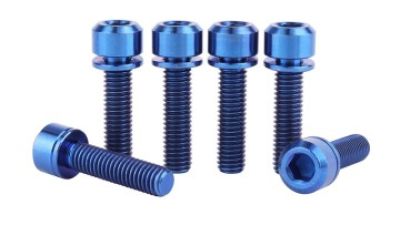
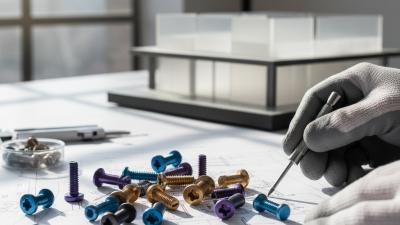
Constructed from Grade 5 Titanium (Ti-6Al-4V), these bolts deliver lightweight yet robust performance, meeting the rigorous demands of modern motorized vehicles. Available in various sizes from M5 to M8 and lengths between 10mm to 40mm, they cater to a wide range of applications, allowing customization based on specific needs. Additionally, potential surface finish options like anodized or PVD treatments enable aesthetic flexibility, available in colors such as blue, black, gold, silver, and rainbow finishes, allowing riders to customize their vehicles without compromising functionality. This balance of performance, appearance, and reliability solidifies the role of titanium chamfered hex socket cap bolts in the motorcycle industry.
FAQS
: Titanium hex cap screws are fasteners known for their excellent strength-to-weight ratio, corrosion resistance, and biocompatibility, making them essential in industries like aerospace, automotive, marine, and medical applications where high-performance materials are needed.
Key factors include the grade of titanium, threading types, necessary dimensions, environmental conditions, and mechanical stresses the screws will encounter to ensure proper fit and performance.
Partnering with reliable suppliers ensures the integrity and performance of projects, as they can provide high-quality products that meet industry standards and specifications.
You can verify reliability by researching their reputation, checking customer testimonials and reviews, and ensuring they have relevant certifications that demonstrate quality manufacturing practices.
Look for suppliers who specialize exclusively in titanium fasteners, as they are likely to have a better understanding of the material's properties and appropriate applications.
A reliable supplier should provide detailed documentation, such as material certification and traceability, to assure the quality and compliance of the screws with your project's specifications.
Engaging in direct communication allows buyers to ask questions about sourcing, production processes, and lead times, which can reveal the supplier's expertise and reliability.
Common applications for these screws include use in aerospace, automotive, marine, and medical fields, where durability and reliability are critical.
The unique properties of titanium, such as high strength and corrosion resistance, make these screws suitable for extreme conditions, ensuring longevity and effectiveness in demanding applications.
The grade of titanium determines its specific properties, including strength, corrosion resistance, and biocompatibility, which can significantly impact the screw's performance in different applications.
Conclusion
Choosing the right Titanium Hex Cap Screw for your projects involves understanding their unique properties and applications. Key factors to consider include the strength and durability of the titanium material, which is crucial for ensuring the longevity of your assembly. Additionally, selecting the correct size and thread type is essential for achieving a secure fit, while understanding the available finish and coating options can enhance performance and resistance to environmental factors.
Cost vs. performance is another critical aspect to evaluate, helping you balance your budget while ensuring that you don’t compromise on quality. Finally, sourcing from reliable suppliers is vital to ensure that you are purchasing high-quality Titanium Hex Cap Screws that meet your project requirements. By keeping these considerations in mind, you can make informed decisions that lead to successful outcomes in your engineering and manufacturing endeavors.