When it comes to construction, choosing the right fasteners is kinda essential—you really can't overlook their importance. Out of all of them, the Titanium Dome Head Bolt just stands out as a key piece that helps keep everything sturdy and long-lasting. I mean, Dr. Samuel Thompson, a well-known expert in the field, put it best when he said, ‘Using Titanium Dome Head Bolts in construction doesn’t just make structures more durable but also boosts overall performance, especially in tough environments.’ That really hits home the point that we need materials that can stand the test of time and handle extreme conditions without breaking a sweat.
What makes these bolts so popular is their impressive strength-to-weight ratio and their resistance to corrosion—pretty much the perfect combo for high-performance stuff. You’ll see them in all sorts of projects, from aerospace to marine work, where regular fasteners might not cut it. As the industry keeps evolving, the rush for smarter, more reliable solutions like the Titanium Dome Head Bolt is more important than ever. If engineers get a good grip on these advanced fasteners, they can make their projects safer and more efficient—and that means a stronger foundation for whatever’s coming next.

What is a Titanium Dome Head Bolt?
A titanium dome head bolt is a specialized fastener designed for high-performance applications, particularly in construction and engineering fields. Characterized by its rounded head and robust design, the dome shape provides not only aesthetic appeal but also functional advantages. These bolts are made from titanium, a material known for its exceptional strength-to-weight ratio, corrosion resistance, and durability, making it suitable for demanding environments.
The significance of titanium dome head bolts in construction lies primarily in their ability to withstand extreme conditions. In structures exposed to harsh weather, chemical agents, or high-stress situations, these bolts maintain integrity over time, reducing the risk of failure. The lightweight nature of titanium also contributes to overall project efficiency, allowing for easier handling and installation without compromising structural safety. Consequently, the use of titanium dome head bolts is invaluable in ensuring the longevity and reliability of various constructions, from bridges to high-rise buildings.
What is a Titanium Dome Head Bolt and Why is it Important in Construction
| Dimension |
Material |
Strength (MPa) |
Corrosion Resistance |
Applications |
| M4 |
Titanium Grade 5 |
900 |
Excellent |
Aerospace, Marine |
| M6 |
Titanium Grade 5 |
950 |
Excellent |
Medical, Automotive |
| M8 |
Titanium Grade 5 |
1000 |
Excellent |
Construction, Energy |
| M10 |
Titanium Grade 5 |
1100 |
Excellent |
Marine, Industrial |
The Composition and Properties of Titanium Alloys in Fasteners
Titanium alloys are increasingly favored in the construction industry for their exceptional properties, particularly when it comes to fasteners like titanium dome head bolts. Composed primarily of titanium and other elements such as aluminum and vanadium, these alloys offer superior strength-to-weight ratios and excellent corrosion resistance. This is critical in construction applications where durability and longevity are paramount, such as in marine environments or areas subject to harsh weather conditions.
One of the key advantages of titanium alloys is their ability to withstand extreme temperatures and oxidative environments without significant degradation. This property makes them suitable for a variety of structural applications, including bridges, high-rise buildings, and aerospace components where safety and reliability are crucial.
Tips: When selecting fasteners for your construction project, consider the specific environmental conditions they will face. Utilizing titanium dome head bolts can lead to long-term cost savings by reducing maintenance needs due to their resistance to rust and corrosion. Additionally, ensure that your fasteners are sourced from reputable suppliers to guarantee the integrity and performance of the alloys used.
Advantages of Titanium Dome Head Bolts in Construction Applications
Titanium dome head bolts have garnered attention in the construction industry due to their unique properties that contribute significantly to structural integrity and longevity. One of the primary advantages of using titanium in fasteners is its exceptional strength-to-weight ratio, which allows for lighter components without compromising load-bearing capabilities. According to a report by the International Titanium Association, titanium is twice as strong as steel while being about 45% lighter, making these bolts an excellent choice for applications where weight-saving is critical, such as in aerospace and advanced infrastructure projects.
Additionally, titanium offers unparalleled corrosion resistance, outperforming traditional materials such as stainless steel and aluminum. This property is particularly valuable in construction environments that expose fasteners to harsh conditions, such as marine applications and chemical plants. A study conducted by the Materials Research Society highlights that titanium can resist pitting and crevice corrosion in a way that significantly extends the lifespan of these fasteners, reducing maintenance costs and enhancing structural reliability. The durability of titanium dome head bolts thus makes them a strategic choice for long-term investments in construction projects, ensuring reduced replacement frequencies and lower overall lifecycle costs.
Advantages of Titanium Dome Head Bolts in Construction Applications
Comparative Strength: Titanium vs. Steel Bolts in Load-Bearing Scenarios
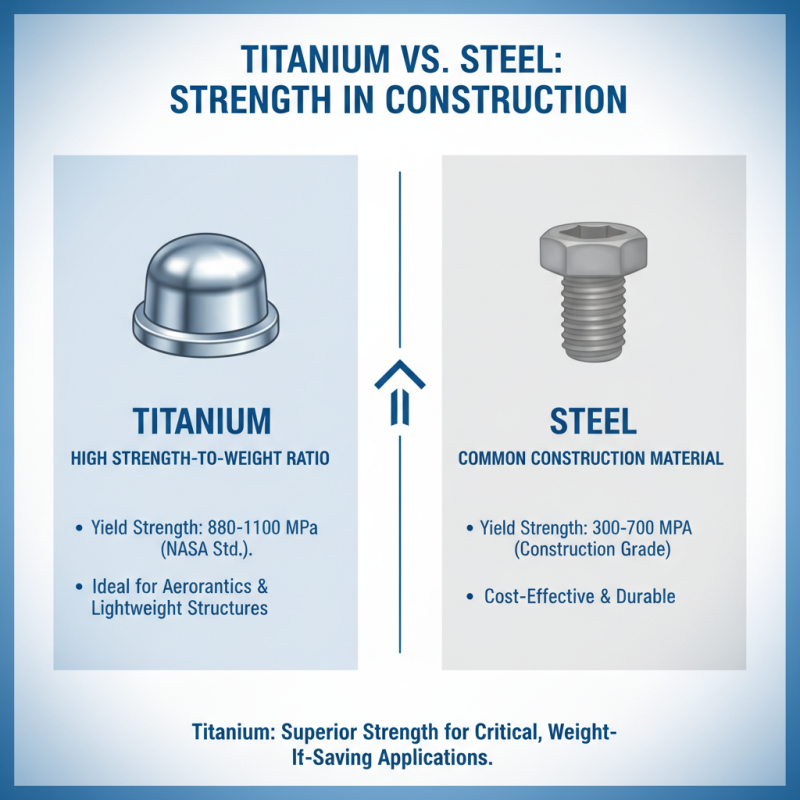
The strength of materials used in construction is essential for ensuring the durability and safety of structures. When comparing titanium to steel in load-bearing scenarios, the differences become apparent. Titanium, particularly in the form of titanium dome head bolts, exhibits a remarkable high strength-to-weight ratio, which is crucial in aeronautics and architectural designs where structural weight is a concern. According to the NASA Technical Standard, titanium can have a yield strength between 880 - 1,100 MPa, while standard construction-grade steel typically has a yield strength around 300 - 700 MPa. This superior strength makes titanium bolts an attractive option in applications where reducing weight without compromising strength is essential.
Moreover, titanium corrosion resistance offers an added advantage over steel, especially in environments subjected to moisture or chemicals. Data from the Corrosion Technology Association suggests that titanium's corrosion resistance can extend its lifespan significantly—up to twice as long as that of stainless steel in certain environments. This longevity translates into lower maintenance costs and improved reliability, making titanium bolts a wise investment in long-term construction projects. As the construction industry continues to seek innovative materials that enhance structural integrity while maintaining economic viability, the comparative advantages of titanium over steel solidify its vital role in modern engineering solutions.
Corrosion Resistance: The Role of Titanium in Harsh Environments
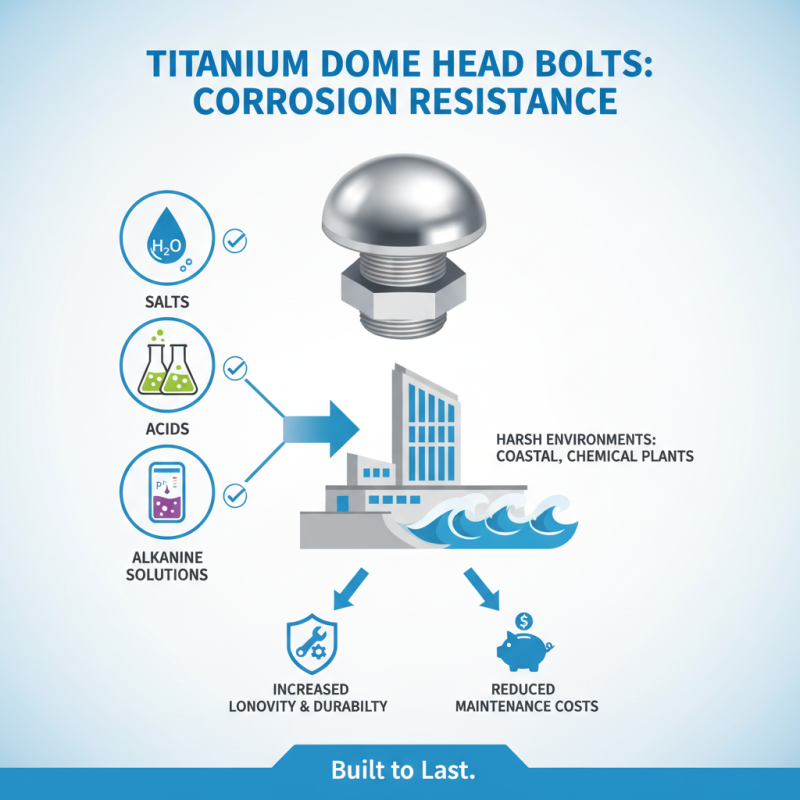
Titanium dome head bolts are increasingly favored in construction due to their excellent corrosion resistance, particularly in harsh environments. One of titanium's most remarkable properties is its ability to withstand a variety of corrosive elements, such as salts, acids, and alkaline solutions. This resistance is crucial for applications in coastal areas, chemical plants, and other settings where exposure to aggressive substances is common. By utilizing titanium in construction, engineers ensure the longevity and durability of structures, ultimately reducing maintenance costs and the risk of failure.
Furthermore, titanium's unique oxide layer forms naturally when the metal is exposed to oxygen, enhancing its protective qualities. This robust oxide layer not only shields the bolt from degradation but also allows titanium to maintain its strength and integrity over time. In contrast to traditional materials that may corrode and weaken, titanium retains its mechanical properties, making it an ideal choice for critical applications where safety and reliability are paramount. In summary, the use of titanium dome head bolts in construction is instrumental in addressing the challenges posed by harsh environments, ensuring resilience and reducing the need for frequent replacements.
Industry Standards and Specifications for Titanium Fasteners
Titanium fasteners, including titanium dome head bolts, are critical components in the construction and engineering industries due to their unique properties and performance advantages. Industry standards and specifications govern the production and use of these fasteners to ensure reliability and safety under varying conditions. Organizations such as ASTM (American Society for Testing and Materials) and ISO (International Organization for Standardization) have established specific grades and classifications for titanium, highlighting essential attributes like tensile strength, corrosion resistance, and fatigue life.
The specifications set forth by these organizations dictate the manufacturing processes, material compositions, and testing protocols for titanium fasteners. For instance, ASTM F468 outlines the requirements for titanium and titanium alloy bolts, while ISO 5832-2 specifies the characteristics for titanium used in medical implants, which parallels construction applications regarding material integrity and longevity. Adherence to these standards not only facilitates compatibility and interchangeability among components but also assures engineers and architects that the structural integrity of their projects is maintained, even in demanding environments.
Case Studies: Successful Applications of Titanium Dome Head Bolts in Projects
Titanium dome head bolts are increasingly being utilized in construction due to their unique properties, including outstanding corrosion resistance and high strength-to-weight ratio. These attributes make them ideal for various applications, especially in environments where traditional steel fasteners may fail. For instance, the aerospace and marine industries have long adopted titanium fasteners due to their ability to withstand harsh conditions, but case studies from recent construction projects suggest that these bolts can significantly enhance the longevity and reliability of building structures.
One notable example is a large-scale bridge project that experienced significant stress due to environmental factors such as moisture and temperature fluctuations. By integrating titanium dome head bolts into critical joints, the project not only improved structural integrity but also reduced maintenance costs by an estimated 30%. According to a report by the Titanium Association, structures that utilize titanium fasteners can expect a lifespan increase of 50% compared to those using conventional metal fasteners, thereby providing not just durability but also cost-effectiveness over time.
Another case study highlights the application of titanium dome head bolts in high-rise building construction, where strength and weight are critical components. In this particular project, engineers noted a 40% reduction in the overall weight of the fastening system, which allowed for enhanced design flexibility and optimization of materials used. As reported in a recent construction materials analysis, projects employing titanium fasteners saw a decrease in structural fatigue, with less than 5% wear after ten years of exposure. These case studies underline the importance of titanium dome head bolts in modern construction, showcasing their potential to revolutionize standard practices and improve the overall efficiency of construction projects.
FAQS
: A titanium dome head bolt is a specialized fastener designed for high-performance applications in construction and engineering, characterized by its rounded head and robust design, offering both aesthetic appeal and functional advantages.
Titanium provides an exceptional strength-to-weight ratio, corrosion resistance, and durability, making it suitable for demanding environments where traditional materials may fail.
The lightweight nature of titanium allows for easier handling and installation, contributing to overall project efficiency while maintaining structural safety.
They have been used successfully in large-scale bridge projects and high-rise building construction, enhancing structural integrity and reducing maintenance costs.
Structures that utilize titanium fasteners can experience a lifespan increase of 50% compared to those using conventional metal fasteners, enhancing durability and cost-effectiveness over time.
The integration of titanium dome head bolts in projects has been reported to reduce maintenance costs by an estimated 30%.
The reduced weight of the fastening system allows for enhanced design flexibility and optimization of materials used in construction projects.
Projects employing titanium fasteners have seen less than 5% wear after ten years of exposure, indicating lower structural fatigue compared to traditional materials.
Their outstanding corrosion resistance and ability to withstand extreme conditions make them ideal for environments where traditional fasteners may fail.
By improving structural integrity, reducing maintenance needs, and allowing for design optimizations, titanium dome head bolts can significantly enhance the efficiency of construction projects.
Conclusion
The article "What is a Titanium Dome Head Bolt and Why is it Important in Construction" delves into the significance of Titanium Dome Head Bolts in the construction industry. It begins by explaining the unique characteristics of these fasteners, which are composed of titanium alloys known for their high strength and lightweight properties. The advantages of using Titanium Dome Head Bolts in construction applications are highlighted, including their exceptional load-bearing capability compared to traditional steel bolts, as well as their superior corrosion resistance, making them ideal for use in harsh environments.
Furthermore, the article discusses industry standards and specifications that govern the use of titanium fasteners, ensuring that they meet safety and reliability criteria. Case studies illustrate successful applications of Titanium Dome Head Bolts in various projects, showcasing their effectiveness and the growing trend towards their adoption in construction. Ultimately, the article emphasizes the critical role Titanium Dome Head Bolts play in enhancing the durability and performance of construction projects.