When you're diving into construction or design projects, picking the right materials is a pretty big deal—and one standout is definitely the Titanium Decorative Screw. These screws aren’t just tough; they also add a sleek touch that can really elevate the look of any project. Dr. Emily Carson, a well-known expert in the industry, puts it nicely: “Choosing the right fastener is just as important as choosing the right material. Titanium Decorative Screws aren’t just durable—they also make your work look even better.” Her words remind us why it’s so important to think carefully about these fasteners and what they bring to the table.
More and more, architects, builders, and even DIY folks are turning to these screws because they resist corrosion and are super lightweight. Whether you’re designing a modern piece of furniture or working on an intricate architectural detail, knowing what makes these screws tick and how to pick the right ones is key. So, in this guide, I’ll walk you through ten essential tips to help you make smart choices that not only make your project functional but also give it that wow factor. Trust me, a little knowledge here can go a long way in nailing that perfect finish.
Importance of Material Selection in Decorative Screws
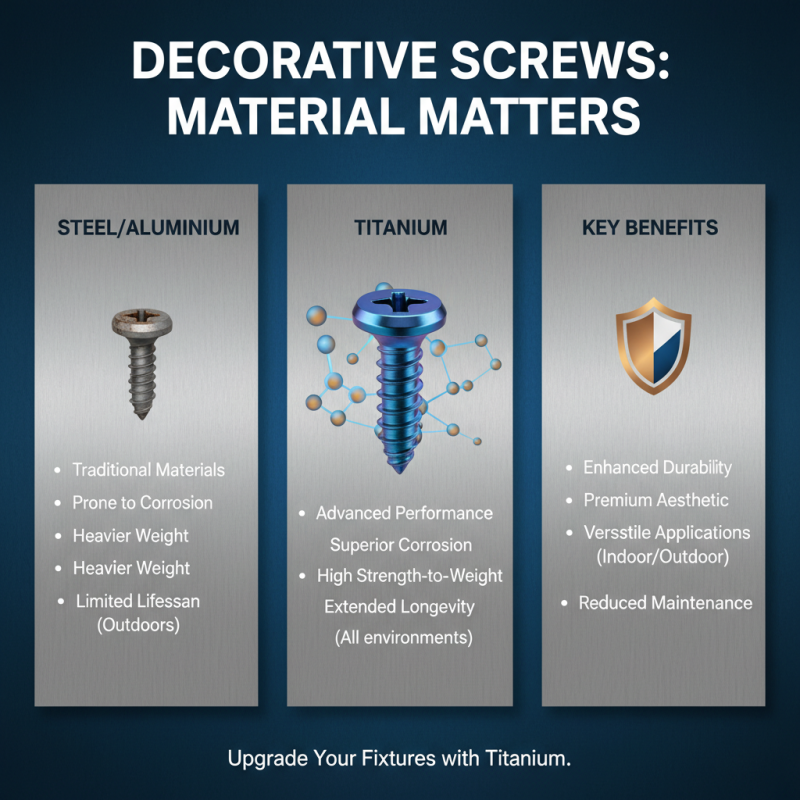
When it comes to decorative screws, material selection plays a crucial role in determining both the aesthetic appeal and functional longevity of your projects. Titanium, known for its outstanding strength-to-weight ratio and corrosion resistance, is an increasingly popular choice for those looking to enhance the durability of their decorative fixtures. Unlike traditional materials such as steel or aluminum, titanium offers superior performance in various environments, making it an ideal candidate for both indoor and outdoor applications.
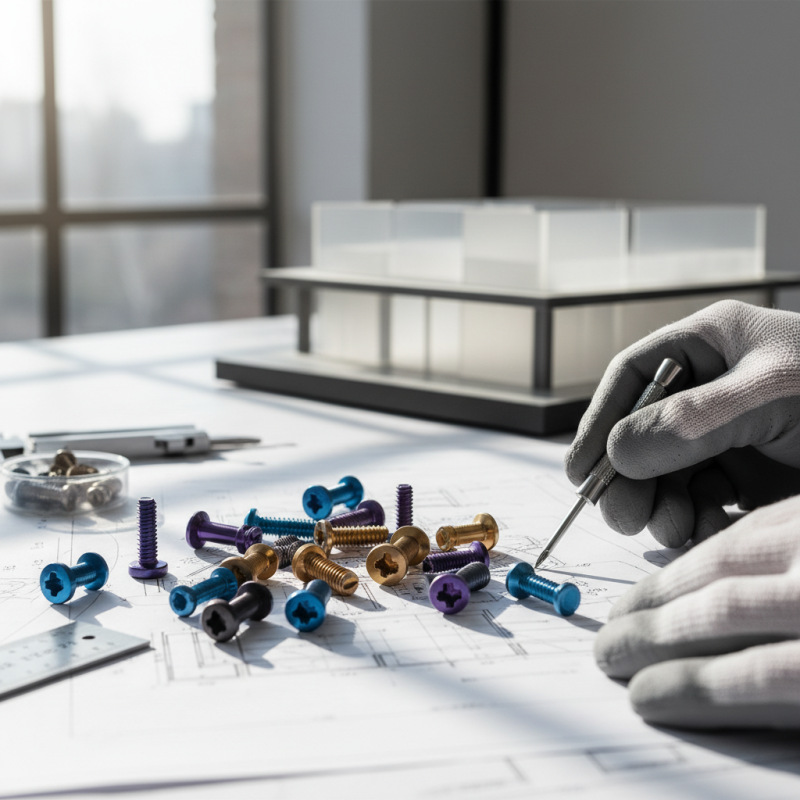
Furthermore, the visual properties of titanium screws cannot be overlooked. The natural sheen and ability to finish titanium in various colors allow designers and builders to create striking visual accents that complement a wide range of design themes. When choosing screws, it is essential to consider not only how they will look but also how well they will hold up under stress and exposure to environmental factors. By prioritizing material selection, especially opting for titanium, you ensure that your decorative screws not only add beauty to your projects but also provide the reliability and performance needed for long-term use.
Understanding Titanium Alloys: Strength and Corrosion Resistance
Titanium alloys have gained significant popularity in various industries due to their exceptional strength-to-weight ratio and outstanding corrosion resistance. Notably, titanium's corrosion resistance is attributed to its ability to form a passive oxide layer, which effectively protects the underlying metal from environmental factors. According to the European Titanium Association, titanium and its alloys can withstand harsh conditions, including exposure to saline environments, making them an ideal choice for marine applications and outdoor structures. This property is especially critical when selecting decorative screws for projects that require durability and long-lasting performance.
In addition to corrosion resistance, titanium alloys are known for their robustness in terms of strength. The tensile strength of titanium is about 63% greater than that of stainless steel, which allows for a reduced material thickness without compromising structural integrity. Research from the ASM International highlights that titanium screws can endure high levels of stress while remaining lightweight—an essential consideration for architects and engineers who prioritize both function and aesthetics in their designs. Thus, understanding the properties of titanium alloys is essential when selecting decorative screws, ensuring that both practical and aesthetic project requirements are met.
Cost Comparison: Titanium Screws vs. Other Materials
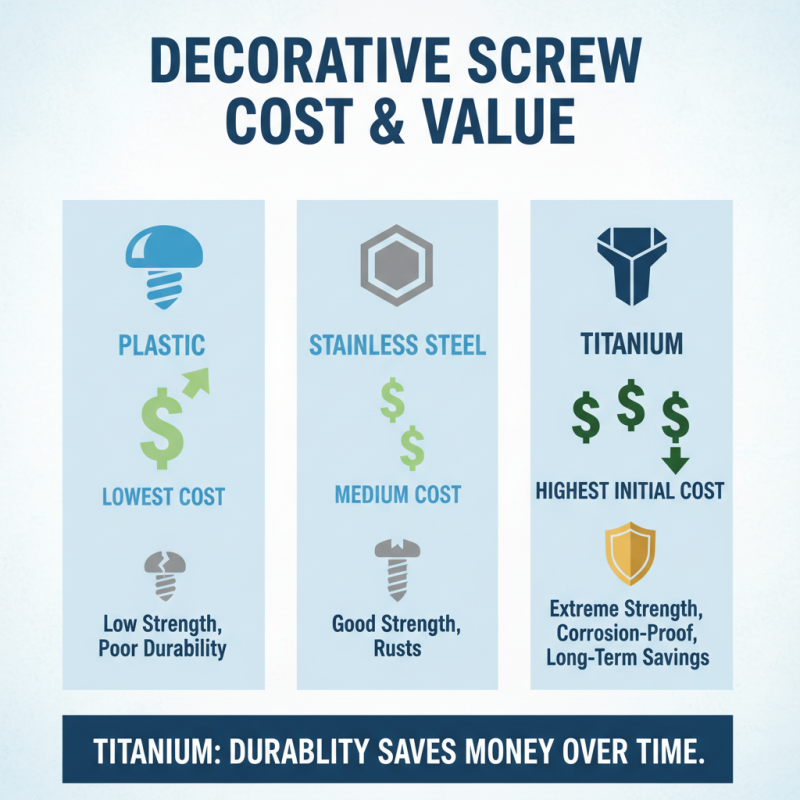
When considering decorative screws for your projects, a cost comparison between titanium screws and other materials is essential. Titanium screws, while generally more expensive than both stainless steel and plastic alternatives, offer unparalleled strength and corrosion resistance. Their durability makes them ideal for projects exposed to harsh environments, potentially saving money in the long run due to reduced replacement and maintenance costs.
One critical tip when selecting titanium screws is to assess the specific requirements of your project. For lightweight projects, stainless steel screws may suffice; however, for applications that demand high tensile strength and lightweight characteristics, titanium is preferable. Additionally, evaluate the aesthetic quality of the screws, as titanium provides a sleek, modern look that can enhance the overall appearance of your work.
Another factor to consider is the quantity needed for your project. While the upfront cost of titanium screws can be a deterrent, buying in bulk or choosing the right size and type for your application can optimize your budget. Remember, investing in high-quality materials like titanium can lead to significant long-term benefits, making it a smart choice for serious projects.
Factors Influencing Screw Size and Thread Type Selection
When selecting titanium decorative screws for your projects, understanding the factors influencing screw size and thread type is crucial. The application and load requirements dictate the required screw dimensions. For instance, larger screws generally provide better strength and stability, making them ideal for structural applications.
It's important to consider the thickness of the materials being fastened together, as well as any environmental conditions that may affect performance, such as moisture or temperature fluctuations.
Thread type is another significant factor that should not be overlooked. Different thread designs can impact the screw's gripping ability and overall holding power. Coarse threads are typically better suited for softer materials, allowing for easier insertion and improved engagement. Conversely, fine threads offer better tensile strength and resistance to stripping in harder materials. Therefore, assessing the compatibility of the thread type with the specific materials in your project can enhance the durability and effectiveness of your work, ensuring that the decorative aspect does not compromise structural integrity.
Importance of Coatings: Enhancing Durability of Titanium Screws
Coatings play a critical role in enhancing the durability of titanium decorative screws, providing an extra layer of protection against environmental factors and wear. Titanium itself is known for its excellent strength-to-weight ratio and corrosion resistance, but when exposed to harsh conditions, such as moisture or chemicals, even titanium can suffer degradation. Applying a suitable coating can significantly extend the lifespan of these screws, ensuring they maintain their aesthetic appeal and structural integrity in various applications.
Various coating options are available, each offering unique benefits depending on the specific requirements of your project. For instance, anodizing can increase surface hardness and improve corrosion resistance, while powder coating provides a colorful finish along with protection from UV rays and abrasions. Additionally, certain coatings can enhance adhesion properties, allowing for better bonding with other materials. When selecting titanium decorative screws, it is crucial to consider the environment in which they will be installed, as this will inform the best coating choice to achieve maximum durability and performance.
10 Essential Tips for Choosing Titanium Decorative Screws for Your Projects
| Tip Number |
Tip Description |
Importance of Coatings |
| 1 |
Determine the specific application for your screws. |
Coatings can provide additional protection against corrosion. |
| 2 |
Check the diameter and length required. |
Properly coated screws can enhance thread strength. |
| 3 |
Assess the environment where they will be used. |
Coatings can reduce the risk of galling under high friction. |
| 4 |
Evaluate the load and stress conditions. |
Special coatings may improve fatigue resistance. |
| 5 |
Consult technical data for torque specifications. |
Coating can minimize slippage and enhance grip. |
| 6 |
Choose the right head style for your application. |
A good coating can improve aesthetic appeal and corrosion resistance. |
| 7 |
Verify compatibility with materials being joined. |
Coatings can prevent galvanic corrosion in dissimilar metals. |
| 8 |
Consider the finish and color requirements. |
Coloring treatments can enhance aesthetic integration. |
| 9 |
Research manufacturer certifications and quality. |
High-quality coatings provide better durability and longevity. |
| 10 |
Seek expert advice if unsure about your choice. |
Expertly-coated screws can enhance overall project performance. |
Evaluating Load Capacity and Performance for Decorative Uses
When selecting titanium decorative screws for your projects, evaluating load capacity and performance is crucial, especially given the specific demands of decorative applications. Titanium screws are renowned for their high strength-to-weight ratio, making them ideal for situations where both aesthetics and functionality are essential. According to industry reports, titanium screws can withstand tensile strengths up to 140,000 psi, significantly outperforming traditional materials like steel. This strength allows for reliable performance even in challenging conditions, minimizing the risk of failure while enhancing the visual appeal of your installation.
Additionally, load capacity should be assessed in the context of the intended application. For decorative uses, the screws often need to support not only their weight but also contribute to the overall structural integrity of the installation. Research indicates that appropriate sizing and threading can enhance load distribution, optimizing the performance of these screws. For example, long-thread screws may distribute load more evenly across the material surface, reducing stress concentrations and potential damage. Considering these factors in your selection process ensures that your decorative choices are not just visually appealing but also robust enough to endure everyday use.
Load Capacity of Titanium Decorative Screws
Industry Standards and Certifications for Quality Assurance in Screws
When selecting titanium decorative screws for your projects, understanding industry standards and certifications is crucial to ensure quality and reliability. Certified screws meet rigorous criteria set by organizations such as ASTM (American Society for Testing and Materials) and ISO (International Organization for Standardization). These certifications often verify the material properties, tensile strength, and corrosion resistance of titanium screws, ensuring they perform well in various applications, from architectural designs to aerospace uses.
In addition to checking for certifications, it's essential to consider the specific standards pertaining to the intended use of the screws. For instance, ANSI (American National Standards Institute) specifications often provide guidelines for the dimensions and tolerances of screws. Choosing screws that comply with these standards can enhance the integrity of your projects, minimize installation issues, and ultimately prolong the lifespan of the installations. Therefore, before making a purchase, it's advisable to confirm that the titanium decorative screws you select are compliant with relevant industry standards, which can significantly enhance the quality assurance of your projects.
Innovative Aesthetic Solutions: The Benefits of Low Profile Titanium Dome Head Bolts in Modern Design
In the realm of modern design, the aesthetic appeal of any product can be significantly enhanced by the choice of fastening components. The innovative low-profile titanium dome head bolt stands out due to its unique combination of visual elegance and robust functionality. Constructed from lightweight Grade 5 titanium, specifically Ti-6Al-4V, these bolts exemplify durability and corrosion resistance, making them ideal for demanding applications. According to industry reports, titanium components are increasingly favored in both automotive and aerospace sectors, where strength-to-weight ratios are critical, and aesthetics matter just as much.
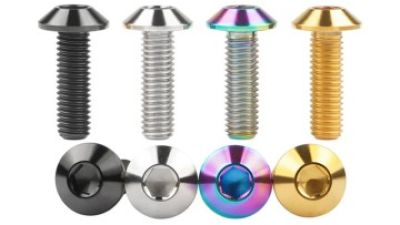
With sizes ranging from M5 to M8 and lengths from 12 to 25 mm, these dome head bolts offer versatility for various applications, particularly in motorcycles and bicycles where minimizing weight without compromising structural integrity is essential. The head’s sleek design not only secures fastening but also minimizes the visual bulk typically associated with traditional fasteners. Furthermore, the array of finish options, including silver, gold, blue, black, and rainbow titanium, allows designers to synchronize the bolts with the overall design, thus providing an added layer of visual sophistication.
The market for lightweight and high-performance materials is predicted to expand significantly, driven by trends focusing on sustainability and premium design. The incorporation of such fasteners not only meets the demands of modern engineering but also aligns with consumer preferences for aesthetically pleasing, high-end mechanical components. As industries continue to innovate, low-profile titanium dome head bolts will undoubtedly play a crucial role in the evolution of design and functionality.
FAQS
: Material selection is crucial as it impacts both the aesthetic appeal and functional longevity of projects. The right materials enhance durability and resist environmental factors.
Titanium screws offer a superior strength-to-weight ratio, outstanding corrosion resistance, and better performance in various environments, making them suitable for both indoor and outdoor applications.
Titanium screws have a natural sheen and can be finished in various colors, allowing designers to create striking visual accents that complement different design themes.
Yes, titanium screws are typically more expensive than stainless steel and plastic alternatives, but their durability can save money in the long run due to reduced replacement and maintenance costs.
If your project requires high tensile strength or lightweight characteristics, titanium screws are preferable, while stainless steel may suffice for lighter projects.
Assessing the size and type of screws for your application can optimize your budget. Buying in bulk can also help manage costs despite the higher upfront price of titanium screws.
Titanium screws can withstand tensile strengths up to 140,000 psi, significantly outperforming traditional materials like steel and ensuring reliable performance in challenging conditions.
Load capacity should be evaluated based on the intended application, as screws must support their weight and contribute to the structural integrity of the installation.
Proper sizing and threading enhance load distribution, which can minimize stress concentrations and potential damage, ensuring the screws are robust for everyday use.
Prioritize material selection and consider factors like load capacity, visual appeal, and project requirements to ensure your decorative screws are aesthetically pleasing and reliable.
Conclusion
When selecting Titanium Decorative Screws for your projects, understanding the importance of material selection is crucial. Titanium alloys are renowned for their exceptional strength and resistance to corrosion, making them a superior choice in environments where durability is paramount. A cost comparison reveals that while titanium screws may have a higher initial price, their longevity and performance often justify the investment.
Several factors influence the selection of screw size and thread type, tailored to meet the specific needs of decorative applications. Additionally, coatings can significantly enhance the durability and aesthetic appeal of Titanium Decorative Screws. It’s important to evaluate the load capacity and performance of these screws to ensure they meet the requirements of your project. Lastly, familiarity with industry standards and certifications can provide further assurance of quality, making your decision-making process more informed and effective.