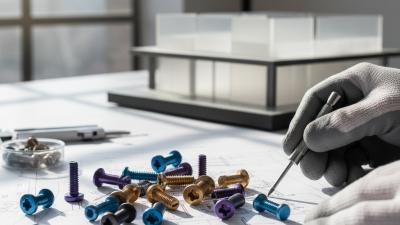
When it comes to construction and engineering, picking the right fasteners can really make a difference in how long a structure lasts and how well it performs. I mean, as Dr. Emily Stanwick, a top expert in materials engineering at Advanced Fastening Solutions, puts it, “Choosing the correct fastener is pretty much key to making sure everything’s durable and efficient.” And honestly, that couldn’t be more true, especially when you look at the perks of using Titanium Recessed Bolts.
These bolts have been catching on pretty quickly in a bunch of different fields, mainly because they’re super strong but lightweight, resistant to corrosion, and even biocompatible. That combo makes them perfect not just for tough automotive or aerospace projects, but also for buildings and structures where you want things to last. Incorporating Titanium Recessed Bolts isn’t just about functionality — it’s like making a statement that you care about quality and pushing innovation forward.
More and more industries are moving toward sustainable, high-performance materials, and I honestly think Titanium Recessed Bolts are set to change the game across different sectors. Their unique qualities make them a really solid alternative to normal fasteners, helping ensure that your projects stand the test of time, all while keeping maintenance and replacement costs in check. Honestly, choosing these bolts for your next project will definitely up your game and set a new standard.

Benefits of Using Titanium Recessed Bolts in Construction Projects
When it comes to construction projects, the choice of materials can significantly influence both durability and overall project costs. Titanium recessed bolts have gained popularity for their exceptional strength-to-weight ratio, making them an ideal choice for structures that require lightweight yet robust fastening solutions. According to a report by the International Journal of Advanced Structural Engineering, titanium offers a tensile strength of approximately 240,000 psi, compared to steel's average of about 90,000 psi. This remarkable strength is paired with corrosion resistance, which prolongs the lifespan of construction elements exposed to harsh environmental conditions.
In addition to their mechanical properties, titanium recessed bolts can also contribute to overall project efficiency. Their lightweight nature reduces the overall weight of assembled structures, which can lead to savings in supporting frameworks and transportation costs. Furthermore, the use of titanium can streamline processes such as installation and maintenance, as many designs require less frequent replacements. A study by the Materials Research Society found that using titanium components can reduce maintenance intervals by up to 50% in some applications, proving advantageous for long-term project budgets.
Tips: When selecting titanium recessed bolts, consider their compatibility with other materials used in your project. Additionally, ensure that your assembly team is well-trained in handling titanium, as its unique properties may require specific tools and techniques for optimal results. Always consult with industry experts or engineers to determine the best specifications for your project’s needs.
Comparison of Titanium Recessed Bolts to Traditional Fasteners
When it comes to selecting fasteners for your project, titanium recessed bolts offer several advantages over traditional options. One key difference is their superior strength-to-weight ratio. While steel bolts can be robust, they are often much heavier, which can be a significant disadvantage in applications where weight is a concern, such as in aerospace or automotive industries. Titanium, on the other hand, provides exceptional strength while remaining lightweight, making it an ideal choice for components that need to withstand high stress without adding unnecessary mass.
Another important consideration is corrosion resistance. Unlike traditional fasteners made from steel, which can rust and degrade over time, titanium bolts are highly resistant to corrosion, even in harsh environments. This durability means that they require less maintenance and have a longer lifespan, ultimately leading to cost savings in long-term projects. For projects exposed to moisture or chemicals, titanium recessed bolts can provide the reliability and longevity that traditional fasteners simply cannot.
**Tips:** When choosing titanium recessed bolts, ensure you have the correct specifications for your project. Always consider the load requirements and environmental conditions to select the appropriate size and grade. Additionally, using the right tools for installation can prevent damage and ensure a secure fit, enhancing the overall integrity of your assembly.
Why Choose Titanium Recessed Bolts for Your Next Project?
| Feature |
Titanium Recessed Bolts |
Traditional Fasteners |
| Weight |
Lightweight |
Heavier |
| Corrosion Resistance |
Excellent |
Moderate |
| Strength-to-Weight Ratio |
High |
Lower |
| Thermal Conductivity |
Lower |
Higher |
| Durability |
Highly Durable |
Less Durable |
| Cost |
Higher |
Lower |
Durability and Corrosion Resistance of Titanium Recessed Bolts
When selecting fasteners for your project, the choice of materials can significantly impact the performance and longevity of your installation. Titanium recessed bolts stand out as a premium option, particularly due to their exceptional durability and corrosion resistance. Unlike traditional steel or even stainless steel fasteners, titanium boasts a unique combination of strength and lightweight properties that make it ideal for demanding applications in challenging environments. This ensures that your project maintains structural integrity over time, even when exposed to factors like moisture, salt, and varying temperatures.
Corrosion resistance is a critical factor in many industries, particularly in marine, aerospace, and chemical applications. Titanium exhibits outstanding resistance to a wide range of corrosive elements, which means that titanium recessed bolts will not rust or degrade when subjected to harsh conditions. This quality significantly reduces maintenance needs and enhances the safety and reliability of your project. Furthermore, the longevity offered by titanium fasteners can lead to cost savings over time, as the necessity for replacements and repairs diminishes. This makes titanium recessed bolts not just a durable choice, but also a financially sound investment for any project requiring robust fastening solutions.
Durability and Corrosion Resistance Comparison of Bolt Materials
This chart compares the durability scores of different bolt materials. Titanium boasts the highest durability score, making it an excellent choice for applications that require longevity and strength against corrosion.
Lightweight Properties of Titanium Recessed Bolts for Enhanced Efficiency
Titanium recessed bolts have gained popularity in various industries due to their exceptional lightweight properties, which significantly enhance overall project efficiency. Weighing considerably less than traditional steel bolts, titanium recessed bolts allow for easier handling and installation. This reduction in weight not only streamlines the labor process but also minimizes the risk of injury that can occur from handling heavier components. As a result, teams can complete tasks more quickly and safely, contributing to the overall success of the project.
Moreover, the lightweight nature of titanium does not compromise its strength. These bolts provide a remarkable strength-to-weight ratio, making them ideal for applications that require both durability and ease of use. Their corrosion resistance further extends the lifespan of the components, reducing the need for frequent replacements and maintenance. This efficiency gain yields long-term cost savings, making titanium recessed bolts a wise choice for engineers and manufacturers focused on optimizing performance without sacrificing quality. By choosing titanium bolts, teams can leverage their lightweight properties to enhance productivity while ensuring reliable results.
Applications of Titanium Recessed Bolts in Various Industries
Titanium recessed bolts are becoming a popular choice across various industries due to their exceptional strength-to-weight ratio and corrosion resistance. In aerospace, for instance, these bolts play a critical role in securing lightweight components in aircraft. Their ability to withstand extreme temperatures and high stress makes them ideal for use in both commercial and military aviation applications. Engineers often prefer titanium recessed bolts for parts that require minimal weight without compromising structural integrity.
In the automotive sector, the use of titanium recessed bolts has surged, particularly in high-performance vehicles where reducing weight can lead to improved speed and efficiency. Additionally, in marine applications, these bolts resist saltwater corrosion, making them perfect for securing fixtures on boats and ships. Their durability extends the lifespan of components, reducing maintenance requirements and downtime.
Tips: When selecting titanium recessed bolts for your project, consider the specific environmental conditions they will be exposed to. Ensure that the chosen diameter and length match your design specifications. It’s also beneficial to familiarize yourself with the torque specifications to prevent over-tightening, which may compromise the integrity of the assembly.
Installation and Maintenance Tips for Titanium Recessed Bolts
When considering titanium recessed bolts for your next project, it’s crucial to understand the installation and maintenance aspects that can enhance their performance and longevity. Titanium bolts are known for their remarkable strength-to-weight ratio and corrosion resistance, making them a perfect choice for demanding environments. However, proper installation techniques are essential to fully leverage these advantages. The key is to ensure that the bolts are torqued to the manufacturer's specifications; this not only secures the connection but also prevents stress fractures that can occur from uneven loading.
Maintenance is another critical aspect of using titanium recessed bolts. Although titanium has superior corrosion resistance, it's important to periodically inspect the bolts for any signs of wear or loosening, especially in dynamic applications. An industry report from the ASTM International indicates that regularly scheduled inspections can extend the lifespan of titanium fasteners by up to 30%.
Tips: Always use clean, dry tools to avoid contamination of the bolt threads, which can lead to improper seating. Applying a suitable lubricant that cannot react with titanium can also help in preventing galling, a common issue with titanium. For environments exposed to harsh chemicals, regular monitoring and potential reapplication of protective coatings can be beneficial in maintaining the integrity of the bolts and ensuring reliable performance over time.
Cost Considerations When Choosing Titanium Over Other Materials
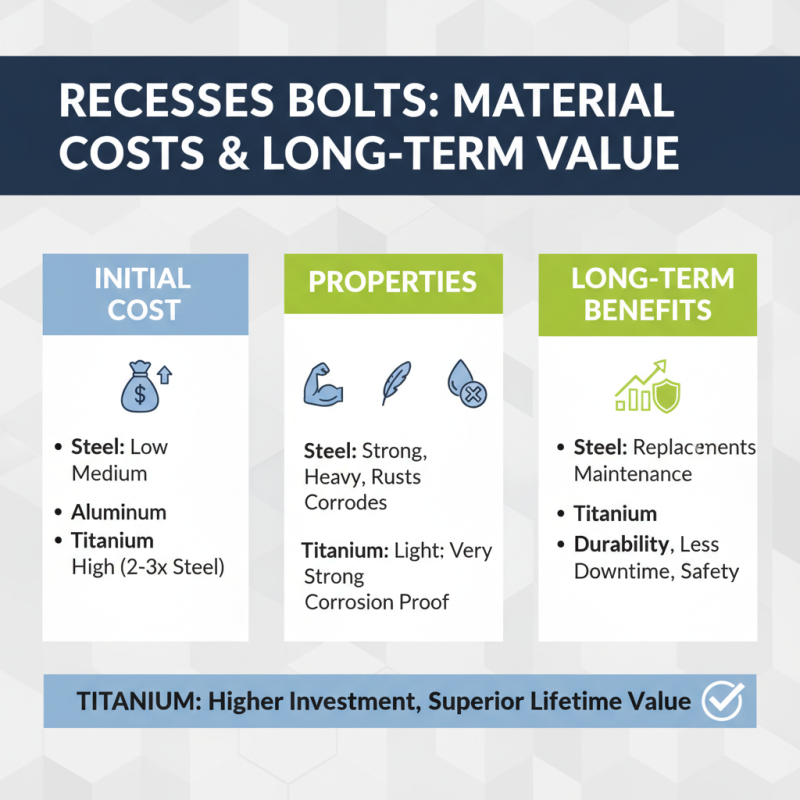
When considering the costs associated with different materials for recessed bolts, titanium stands out as a high-performance, albeit more expensive, option compared to traditional materials like steel or aluminum. The initial investment in titanium may appear steep due to its superior properties, including lightweight, strength, and corrosion resistance. However, it is essential to factor in the long-term benefits that titanium offers, which can often offset the higher upfront costs.
One of the significant cost advantages of titanium is its longevity. Unlike other materials that may weaken or corrode over time, titanium maintains its integrity under harsh conditions, reducing the need for frequent replacements and maintenance. This can lead to substantial savings in the long run, particularly for projects that demand durability and reliability. Additionally, the reduced weight of titanium can also result in lower shipping and handling costs, as well as potential savings in structural support requirements, further enhancing its cost-effectiveness for various applications.
FAQS
: Titanium recessed bolts offer a high strength-to-weight ratio and corrosion resistance, which enhances the durability of construction elements. They also reduce the overall weight of structures, leading to savings in supporting frameworks and transportation costs, while prolonging intervals between maintenance.
Titanium has a tensile strength of approximately 240,000 psi, which is significantly higher than steel's average tensile strength of about 90,000 psi. This makes titanium a superior choice for applications requiring strong fastening solutions.
Titanium recessed bolts are popular across multiple industries, including aerospace, automotive, and marine applications, where their lightweight and corrosion-resistant properties are especially beneficial.
Using titanium can reduce maintenance intervals by up to 50%, leading to lower overall maintenance costs and reducing downtime in construction projects or machinery operations.
It's important to consider the compatibility of titanium with other materials, the specific environmental conditions the bolts will face, as well as ensure proper training for assembly teams in handling titanium for optimal results.
Although titanium may have a higher initial cost compared to materials like steel or aluminum, its longevity, strength, and reduced maintenance needs often lead to significant long-term savings, making it a cost-effective option overall.
Titanium's unique properties may require specific tools and techniques for installation. It is crucial for the assembly team to be well-trained to handle these bolts to avoid compromising the integrity of the assembly.
Titanium’s corrosion resistance, particularly in harsh conditions like saltwater, not only extends the lifespan of components but also reduces the environmental impact associated with frequent replacements and maintenance.
It's important to familiarize oneself with the correct torque specifications to prevent over-tightening, which can compromise the assembly's integrity. Ensuring the diameter and length of the bolts match design specifications is also essential.
The reduced weight of titanium recessed bolts can lower shipping and handling costs, as well as decrease the need for heavier structural supports, further enhancing its cost-effectiveness for various applications.
Conclusion
Titanium recessed bolts offer numerous advantages in construction projects, making them an ideal choice over traditional fasteners. Their exceptional durability and corrosion resistance ensure longevity, even in harsh environments. Additionally, titanium recessed bolts are lightweight, which enhances efficiency during handling and installation, reducing overall labor costs and time.
These versatile fasteners find applications across various industries, from aerospace to marine, highlighting their adaptability. When considering installation and maintenance, it is essential to follow best practices to maximize performance. While titanium recessed bolts may have a higher upfront cost than other materials, their long-term benefits and reliability make them a worthwhile investment for any project. Choosing titanium recessed bolts not only improves structural integrity but also contributes to overall project efficiency.