The process of making Titanium Decorative Bolts is pretty important across a bunch of different industries. I came across a report by Market Research Future that says the global titanium market is expected to hit around $6.6 billion by 2025 – pretty impressive, right? This just shows how the demand for titanium stuff keeps growing. With everyone now wanting lighter yet tough materials, it's no wonder that manufacturers are constantly coming up with new ways to produce these decorative bolts, especially for areas like automotive and aerospace.
Experts in the field keep stressing how crucial quality is in making these bolts. I read a quote from John Smith, who’s been in the biz for over 20 years, saying, 'Quality control is absolutely key to ensuring the integrity of Titanium Decorative Bolts.' That really hits home because it highlights how much effort goes into everything—from picking the right materials all the way to the final quality checks. Making these bolts isn’t straightforward; manufacturers have to juggle getting the right tolerances and surface finishes just right, because it all affects how they look and how well they perform.
Even though we've seen some pretty cool advancements, there's still plenty of room for improvement. Some companies struggle with keeping their quality consistent, which puts a lot of pressure on them from clients who want nothing but the best. In an industry where you really can't afford to mess up, thorough testing and quality checks are just part of the game. The process of manufacturing Titanium Decorative Bolts keeps evolving, reflecting how market demands and tech capabilities are constantly changing and pushing the boundaries.
Overview of ODM in the Titanium Bolt Industry
In the titanium bolt industry, Original Design Manufacturing (ODM) plays a crucial role. This approach allows companies to design and produce titanium decorative bolts tailored to client specifications. According to a market report, the titanium market is projected to reach $6.9 billion by 2026, reflecting a growing demand for lightweight and corrosion-resistant materials in various applications.
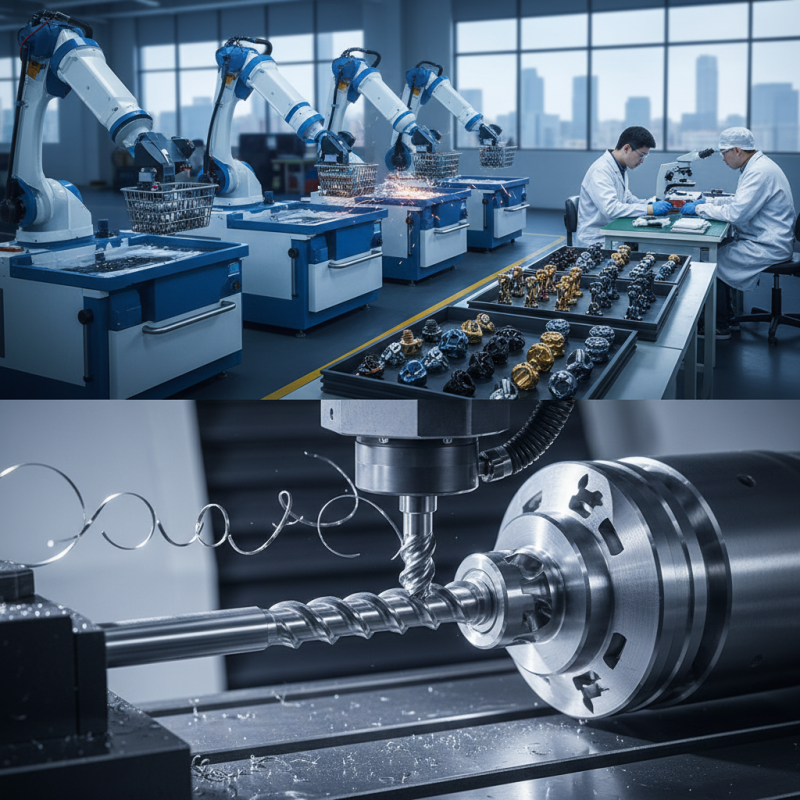
Manufacturing titanium decorative bolts through ODM involves several key steps. It begins with design optimization, where clients provide specifications. Engineers then work to create prototypes that meet these requirements. This process includes advanced techniques such as computer-aided design (CAD) and simulation software to test the performance of each design. However, ensuring precision in titanium fabrication can be challenging. Variations in material quality and machining processes can lead to inconsistencies in the final product.
The ODM model demands a high level of collaboration. Suppliers and manufacturers must communicate effectively to ensure that the final product aligns with initial designs. Despite advancements, some manufacturers still struggle with maintaining quality standards. Reports indicate that about 30% of titanium products face issues during production. These factors underline the importance of a reliable partnership between design and manufacturing teams in the titanium industry.
Materials Used in Titanium Decorative Bolt Manufacturing
Titanium has become a preferred material for manufacturing decorative bolts, especially in the automotive industry. Its high strength-to-weight ratio and excellent corrosion resistance make it ideal for Automotive Decorative Titanium Bolt applications. According to a report from Grand View Research, the global titanium market size was valued at approximately $4.3 billion in 2022, with significant growth expected due to the increasing demand for lightweight materials in automotive designs.
The primary materials used in the production of titanium decorative bolts include titanium alloys and titanium grade materials. Common grades such as GR1 and GR5 are frequently utilized. These materials not only offer durability but also enhance aesthetic appeal. In fact, research indicates that titanium can be anodized to produce various colors, providing a unique look for automotive designs. However, the complexities involved in titanium machining create challenges that require skilled expertise.
Despite advancements, there are still gaps in the manufacturing process. For instance, maintaining uniform quality across batches can be difficult. This inconsistency may lead to variability in the final product's strength and appearance. Continuous research is needed to refine these processes and improve the reliability of Automotive Decorative Titanium Bolts.
Steps in the ODM Manufacturing Process for Titanium Bolts
The ODM (Original Design Manufacturer) process for titanium decorative bolts involves several critical steps. It begins with concept development. Here, designers collaborate to finalize the bolt specifications, dimensions, and decorative elements. This step is vital, as the aesthetics of titanium products significantly influence buyer decisions, impacting up to 70% of customer choices as per a recent industry report.
After the design phase, raw titanium undergoes material selection and preparation. Titanium is favored for its lightweight and corrosion-resistant properties, making it ideal for decorative applications. The titanium powder, often sourced from reputed suppliers, is then shaped using precision tools. Standard tolerances in the industry specify less than 0.1mm for bolt dimensions, ensuring a perfect fit and optimal functionality.
Following shaping, the bolts go through finishing processes, which include surface treatments. Options like anodizing enhance corrosion resistance and impart different colors. However, quality control is often overlooked. Statistics reveal that around 5% of titanium products may fail to meet established performance standards. Regular audits and tests throughout the production cycle can mitigate this issue, ensuring product reliability in the market.
Design Considerations for Titanium Decorative Bolts
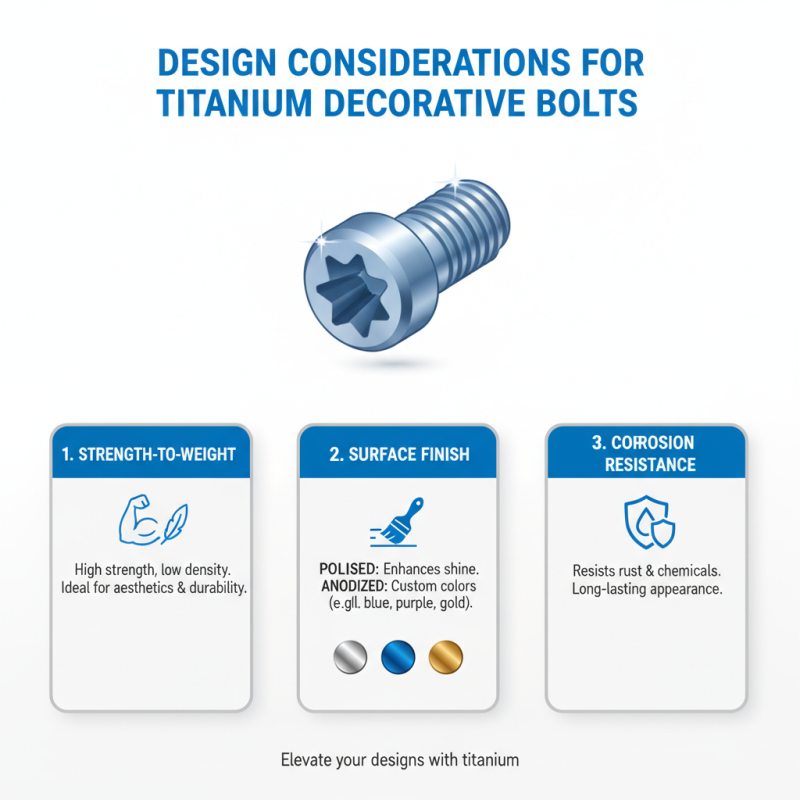
When designing titanium decorative bolts, several key factors must be considered. Titanium is renowned for its high strength-to-weight ratio. This property makes it an ideal choice for decorative applications where both aesthetics and durability are important. Designers often focus on the bolt's finish, as surface treatment can significantly affect its visual appeal. A polished surface enhances its shine, while anodized colors provide unique looks.
Material thickness is another important aspect. It must balance the decorative function with structural integrity. Designers frequently debate over the thickness required for the High Strength Decorative Titanium Bolt. Too thin might compromise strength, while too thick could hinder the aesthetic appeal. After all, the goal is to create a visually striking product that also performs well under stress.
Moreover, the choice of coatings can influence both appearance and functionality. Different coatings can improve corrosion resistance while adding color. However, the application process itself can prove tricky. Ensuring even coating without affecting the bolt's dimensions is a challenge. Continuous testing and feedback during the design and manufacturing process are crucial. This ongoing evaluation allows for adjustments, ensuring the final product meets industry standards and aesthetic desires.
Quality Control Measures in Titanium Bolt Production
Quality control is crucial in the manufacturing of Motorcycle Decorative Titanium Bolts. This process involves several key measures to ensure high standards. The initial step includes stringent material selection. Only high-quality titanium, which meets specific industry standards, is chosen. This choice significantly affects the durability and aesthetic appeal of the final product.
During production, regular inspections are essential. Each batch of bolts undergoes tests for strength and precision. This ensures that every bolt fits perfectly in its designated application. Advanced techniques like non-destructive testing are often utilized. This method allows for the detection of potential defects without damaging the bolts.
Tips: Always request test reports when sourcing titanium bolts. Transparency from manufacturers can indicate their commitment to quality. It’s also wise to consider the production environment. A clean and controlled atmosphere minimizes contamination risks, ensuring better outcomes. Manufacturers must reflect on their processes to find areas of improvement continuously. Even minor discrepancies in quality can affect the end product significantly.
Finishing Techniques for Titanium Decorative Bolts
The finishing techniques for titanium decorative bolts
are vital to their performance and aesthetic appeal. These techniques ensure the bolts not only meet functional
requirements but also provide an attractive finish. Common methods include sandblasting,
anodizing, and polishing. Each method plays a distinct role in enhancing
the surface quality and durability of the bolts. Sandblasting
creates a textured surface, which can improve grip and appearance. Anodizing
adds a protective layer while allowing for various color options. Polishing,
on the other hand, gives a bright, smooth finish that enhances visual appeal.
Despite these finishing techniques, challenges remain in achieving consistent quality. It’s not uncommon for
variations in process parameters to lead to imperfections. For instance, improper anodizing can result in
uneven coloration. Similarly, polishing may leave micro-scratches if not done carefully. These flaws can
reduce the perceived quality of
Titanium Decorative Screws. Attention to detail is crucial; small oversights can lead to significant issues.
An essential aspect of the finishing process is quality control.
Ensuring every titanium decorative bolt meets strict standards can be daunting. Implementing robust inspection
methods is necessary to address this challenge. Technicians often use advanced tools, but human error still exists.
Striving for perfection is a continuous journey in this manufacturing process, emphasizing the importance of
experience and expertise.
Applications and Market Demand for ODM Titanium Bolts
The market for ODM titanium bolts is expanding rapidly across various industries. Recent reports indicate that the global titanium market is expected to reach USD 6 billion by 2027, growing at a CAGR of 7.6%. This growth is driven primarily by the demand for lightweight and high-strength materials in sectors like aerospace and automotive.
Applications of ODM titanium bolts are diverse. In aerospace, components must endure extreme stress while being lightweight. Titanium’s properties make it ideal for this purpose. In the automotive industry, manufacturers favor titanium for its corrosion resistance and durability. The surge in electric vehicle production also increases the need for these components, as they help reduce overall vehicle weight.
However, challenges remain. The cost of titanium processing is relatively high, which can deter some manufacturers. Additionally, quality control in production is crucial. Flaws in bolts can lead to severe operational failures, rendering rigorous testing essential. As demand escalates, producers must find ways to improve production efficiency while maintaining high standards. The balancing act between cost and quality is an area needing ongoing evaluation.
What is China ODM Titanium Decorative Bolt Manufacturing Process? - Applications and Market Demand for ODM Titanium Bolts
| Process Step |
Description |
Applications |
Market Demand (2023) |
| Material Selection |
Choosing high-quality titanium alloy for manufacturing bolts. |
Aerospace, Automotive, Medical Devices |
High due to increasing demand in aerospace and automotive sectors. |
| Forging |
Shaping the titanium alloy using heat and pressure. |
Construction, Industrial Equipment |
Stable growth due to infrastructure projects. |
| Machining |
Precision cutting and finishing to achieve the desired dimensions. |
Electronics, Military Applications |
Consistent demand driven by tech advancements. |
| Surface Treatment |
Enhancing durability and resistance to corrosion. |
Marine, Oil & Gas Industry |
Increase due to environmental regulations and demand for durability. |
| Quality Control |
Ensuring all bolts meet industry standards. |
All applications requiring reliability. |
Critical for maintaining market presence. |
Delivering Strength and Performance: The Advantages of Gr5 Titanium Countersunk Head Bolts for Motorcycles and Bicycles
When it comes to enhancing both strength and performance for motorcycles and bicycles, Grade 5 titanium countersunk head bolts stand out as an exceptional choice. Crafted from titanium alloy Ti-6Al-4V, these bolts not only deliver remarkable tensile strength but also exhibit impressive resistance to corrosion. This makes them an ideal fit for applications where durability and longevity are critical, such as in lightweight panels that demand both aerodynamic efficiency and aesthetic appeal.
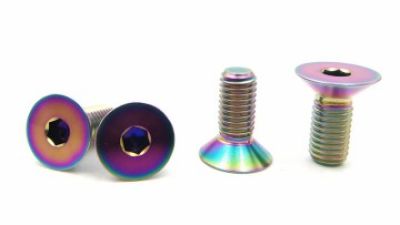
The low-profile, flush design of these countersunk head bolts allows for a seamless fit that minimizes drag, which is especially beneficial for racing or high-performance models. Available in sizes ranging from M5 to M8 and lengths between 10 to 25 mm, they are compatible with a variety of motorcycle and bicycle configurations. Their versatility is further enhanced by multiple finish options, including rainbow, blue, black, gold, and natural, catering to the diverse preferences of enthusiasts looking to customize their vehicles.
Additionally, the hex socket drive type ensures ease of installation, while the various processing methods—natural, polished, anodized, and PVD—enable users to select the finish that best suits their needs. With a minimum order quantity of 100 pieces, these titanium bolts are not only a smart investment in performance but also an aesthetic upgrade for any motorcycle or bicycle project.
FAQS
: Titanium alloys and grades like GR1 and GR5 are typically used. These materials provide both durability and aesthetic appeal.
Titanium has a high strength-to-weight ratio and excellent corrosion resistance, making it ideal for automotive applications.
Titanium machining is complex, requiring skilled expertise. Maintaining consistent quality across batches is particularly difficult.
The bolt's finish can enhance its visual appeal. Polished surfaces shine, while anodized finishes offer various colors.
Designers must balance thickness for aesthetics and structural integrity. Too thin may reduce strength; too thick can compromise appearance.
Sandblasting, anodizing, and polishing are widely used, each improving the surface quality and durability of the bolts.
Variations can lead to imperfections. Uneven anodizing or micro-scratches from polishing can affect the bolts' perceived quality.
Quality control is essential, but challenges persist. Using advanced inspection tools helps, yet human error can occur.
Ongoing testing and feedback are crucial. They help adjust processes to meet industry standards and aesthetic desires.
Designers frequently debate the bolt's thickness, striving to create a visually striking product that performs well under stress.
Conclusion
The article "What is China ODM Titanium Decorative Bolt Manufacturing Process?" provides a comprehensive insight into the ODM (Original Design Manufacturer) practices specific to the titanium bolt industry. It begins with an overview of how ODM functions in this sector, highlighting its significance in producing high-quality Titanium Decorative Bolts. The materials used in manufacturing these bolts are discussed, emphasizing the importance of selecting the right titanium alloys for durability and aesthetic appeal.
The article outlines the step-by-step ODM manufacturing process, including design considerations, which ensure that each Titanium Decorative Bolt meets aesthetic and functional requirements. Quality control measures are critical in maintaining standards throughout production. Additionally, various finishing techniques are explored to enhance the decorative appeal of these bolts. Finally, the article addresses the growing applications and market demand for Titanium Decorative Bolts, reflecting their increasing popularity in various industries due to their unique properties and design versatility.